





- Get Well
- Best Sellers
- Lilies
 $54.90
- $54.90
- $79.90
- $54.90
- $49.90
- $49.90


- $49.90

June 1, 2026
Miami June Floral Selection
The Bloom Central flower delivery of the month for June in Miami is the Into the Woods Bouquet
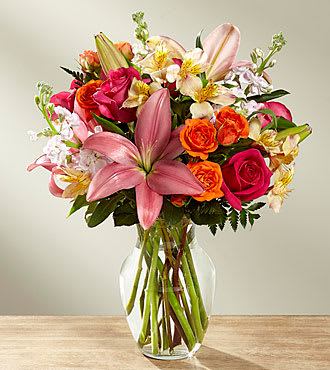
The Into the Woods Bouquet floral arrangement from Bloom Central is simply enchanting. The rustic charm and natural beauty will captivate anyone who is lucky enough to receive this bouquet.
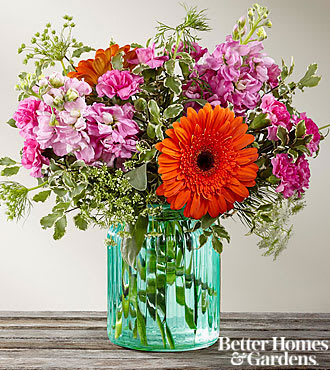
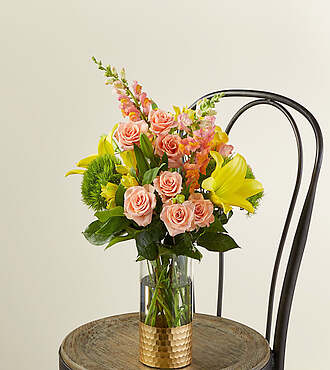
The Into the Woods Bouquet consists of hot pink roses, orange spray roses, pink gilly flower, pink Asiatic Lilies and yellow Peruvian Lilies. The combination of vibrant colors and earthy tones create an inviting atmosphere that every can appreciate. And don't worry this dazzling bouquet requires minimal effort to maintain.
Let's also talk about how versatile this bouquet is for various occasions. Whether you're celebrating a birthday, hosting a cozy dinner party with friends or looking for a unique way to say thinking of you or thank you - rest assured that the Into the Woods Bouquet is up to the task.
One thing everyone can appreciate is longevity in flowers so fear not because this stunning arrangement has amazing staying power. It will gracefully hold its own for days on end while still maintaining its fresh-from-the-garden look.
When it comes to convenience, ordering online couldn't be easier thanks to Bloom Central's user-friendly website. In just a few clicks, you'll have your very own woodland wonderland delivered straight to your doorstep!
So treat yourself or someone special to a little piece of nature's serenity. Add a touch of woodland magic to your home with the breathtaking Into the Woods Bouquet. This fantastic selection will undoubtedly bring peace, joy, and a sense of natural beauty that everyone deserves.
Miami Arizona Flower Delivery
Miami Flower Delivery - Frequently Asked Questions
- Does Bloom Central offer same-day flower delivery in Miami?
- Yes. Place your order online before 1:00 PM and a local Miami florist will hand-deliver your arrangement the same day. Orders can also be scheduled up to one month in advance.
- Is it safe to order flowers online?
- Absolutely! We utilize a secure, encrypted checkout to protect your personal and payment information. Visa, Mastercard, American Express, Discover, PayPal and Klarna are all accepted.
- What funeral homes does Bloom Central deliver sympathy flowers to in Miami?
- We hand-deliver sympathy and memorial floral arrangements to all funeral homes near Miami, including: A Wise Choice Cremation & Funeral Services, At Seasons End Mortuary, Mariposa Gardens Memorial Park and Funeral Care, Melcher Mortuary Mission Chapel & Crematory, Mountain View Funeral Home & Cemetery, San Tan Memorial Gardens, San Tan Mountain View Funeral Home, Western Monument.
- What churches does Bloom Central deliver flowers to in Miami?
- We deliver fresh floral arrangements to all churches and places of worship in Miami, including: First Baptist Church.
- What nearby cities does Bloom Central also deliver flowers to?
- In addition to Miami, we deliver fresh flowers to many nearby cities including: Claypool, Central Heights-Midland City, Globe, Superior, Kearny, San Carlos, Peridot, Gold Canyon
- What are the most popular flower arrangements at the Miami florist?
- Three of our most popular arrangements at our Miami florist are: Loving Light Dishgarden ($69.90), Outdoors Bouquet ($54.90), True Charm Bouquet ($49.90). All are available for same-day delivery.
More About Miami
Are looking for a Miami florist because you are not local to the area? If so, here is a brief travelogue of what Miami has to offer. Who knows, perhaps you'll be intrigued enough to come visit soon, partake in some of the fun activities Miami has to offer and deliver flowers to your loved one in person!
Miami, Arizona sits in the high desert like a sun-bleached postcard from another century, its edges blurred by heat waves rising off the asphalt. The town is a study in paradoxes. It is both frontier and relic, a place where the past doesn’t so much linger as stomp its boots on the porch and demand a glass of iced tea. The air smells of creosote and dust, of diesel from trucks hauling copper ore, of fry oil from the diner on Sullivan Street where the waitress knows everyone’s order before they slide into the booth. People here move with the unhurried certainty of those who understand heat, who’ve made peace with a climate that could crisp a lizard.
The land itself feels like a character. To the east, the Pinal Mountains rise jagged and blue, their peaks dusted with snow in winter, a sight so incongruous with the desert below it feels like a prank played by geology. The streets are lined with buildings that refuse to die, old mercantile facades flaking mint-green paint, a theater marquee advertising a 1972 double feature, a library where the air conditioning hums like a lullaby. Every surface tells a story. The walls of the Bullion Plaza Cultural Center, once a school for miners’ children, still bear the scuffs of generations of shoes. The Miami Historical Society operates out of a converted 1920s service station, its volunteers swapping tales of Apache raids and copper barons as if these events happened last Tuesday.

Same day service available. Order your Miami floral delivery and surprise someone today!
What defines Miami isn’t its scars but its stubbornness. The open-pit mines that pockmark the hills are less wounds than tattoos, proof of endurance. Mining isn’t just an industry here. It’s a rhythm. You hear it in the clang of machinery at dawn, see it in the way men and women in hard hats nod to each other at the gas station, their faces streaked with grins and grit. The town’s heartbeat syncs with shifts at the smelter, with the whistle that splits the afternoon into manageable chunks. Yet this isn’t some fossilized company town. The high school’s robotics team competes in state championships. The art gallery on Live Oak Street sells pottery glazed in hues of turquoise and sunset. At the weekly farmers’ market, a retired geologist hawks jars of local honey while explaining, to anyone who’ll listen, how the nectar’s flavor changes with the bloom of mesquite.
Community here isn’t an abstraction. It’s the woman who leaves baskets of lemons from her tree on neighbors’ doorsteps. It’s the way the entire block turns out to repaint the community center when the monsoons fade each fall. It’s the annual Copper Camp Days festival, where third-graders dress as 19th-century prospectors and old-timers judge the chili cook-off with merciless glee. Even the landscape conspires to connect. The desert sky is so vast it makes you feel small but not alone, every star visible, every sunset a shared spectacle. When thunderstorms roll in, the whole town pauses to watch lightning stitch the clouds to the hills.
There’s a particular beauty in places the world assumes are forgotten. Miami’s charm isn’t in its polish but in its texture. The cracks in the sidewalk where globemallow flowers push through. The way the post office still has a brass mailbox from 1936, its slot worn smooth by a century of fingers. The teenagers who loiter under the neon sign of the Miami Pharmacy, their laughter bouncing off adobe walls, their futures a tangle of possibilities. To visit is to witness a quiet defiance, a refusal to be reduced to nostalgia or kitsch. This is a town that works, that adapts, that remembers without being trapped.
You leave Miami with your shoes full of sand and the sense that you’ve glimpsed something essential about survival. It’s a town built on copper, but its real currency is resilience. The kind that turns scars into landmarks, that finds poetry in a dented pickup trundling down a dirt road, trailing a comet’s tail of dust.