




- Anniversary
- Best Sellers
- Lilies
 $69.90




- $49.90

July 1, 2026
Howey-in-the-Hills July Floral Selection
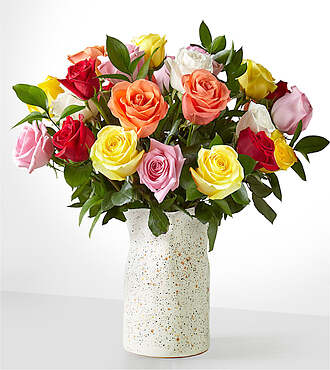
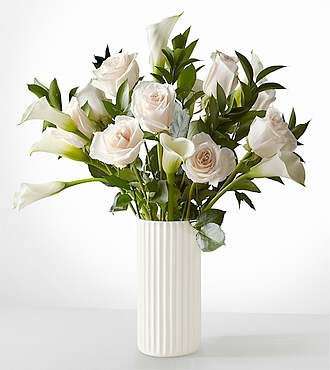
The Bloom Central flower delivery of the month for July in Howey-in-the-Hills is the Graceful Grandeur Rose Bouquet
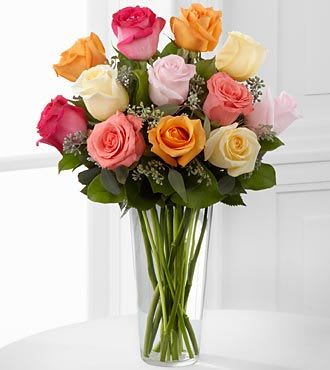
The Graceful Grandeur Rose Bouquet from Bloom Central is simply stunning. With its elegant and sophisticated design, it's sure to make a lasting impression on the lucky recipient.
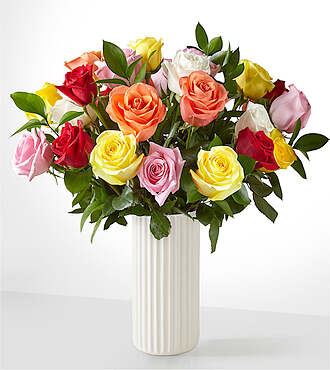
This exquisite bouquet features a generous arrangement of lush roses in shades of cream, orange, hot pink, coral and light pink. This soft pastel colors create a romantic and feminine feel that is perfect for any occasion.
The roses themselves are nothing short of perfection. Each bloom is carefully selected for its beauty, freshness and delicate fragrance. They are hand-picked by skilled florists who have an eye for detail and a passion for creating breathtaking arrangements.
The combination of different rose varieties adds depth and dimension to the bouquet. The contrasting sizes and shapes create an interesting visual balance that draws the eye in.
What sets this bouquet apart is not only its beauty but also its size. It's generously sized with enough blooms to make a grand statement without overwhelming the recipient or their space. Whether displayed as a centerpiece or placed on a mantelpiece the arrangement will bring joy wherever it goes.
When you send someone this gorgeous floral arrangement, you're not just sending flowers - you're sending love, appreciation and thoughtfulness all bundled up into one beautiful package.
The Graceful Grandeur Rose Bouquet from Bloom Central exudes elegance from every petal. The stunning array of colorful roses combined with expert craftsmanship creates an unforgettable floral masterpiece that will brighten anyone's day with pure delight.
Local Flower Delivery in Howey-in-the-Hills
Howey-in-the-Hills Flower Delivery - Frequently Asked Questions
- Does Bloom Central offer same-day flower delivery in Howey-in-the-Hills?
- Yes. Place your order online before 1:00 PM and a local Howey-in-the-Hills florist will hand-deliver your arrangement the same day. Orders can also be scheduled up to one month in advance.
- Is it safe to order flowers online?
- Absolutely! We utilize a secure, encrypted checkout to protect your personal and payment information. Visa, Mastercard, American Express, Discover, PayPal and Klarna are all accepted.
- What funeral homes does Bloom Central deliver sympathy flowers to in Howey-in-the-Hills?
- We hand-deliver sympathy and memorial floral arrangements to all funeral homes near Howey-in-the-Hills, including: Allen J Harden Funeral Home, Baldwin Brothers A Funeral & Cremation Society, Baldwin-Fairchild Winter Garden Funeral Home, Brewer & Sons Funeral Homes & Cremation Services, Crevasses Pet Cremation, Greenbrier Memory Gardens For Pets, Hillcrest Memorial Gardens, Integrity Funeral Services, Lakeside Memory Gardens, National Cremation Society, Page-Theus Funeral Home, Steverson Hamlin & Hilbish Funerals and Cremations.
- What nearby cities does Bloom Central also deliver flowers to?
- In addition to Howey-in-the-Hills, we deliver fresh flowers to many nearby cities including: Astatula, Tavares, Minneola, Leesburg, Silver Lake, Montverde, Tangerine, Mascotte
- What are the most popular flower arrangements at the Howey-in-the-Hills florist?
- Three of our most popular arrangements at our Howey-in-the-Hills florist are: Peachy Pumpkin ($59.90), Fate Luxury Rose Bouquet - 48 Stems of 24-inch Premium Long-Stemmed Roses ($299.90), Gracefuls Bouquet ($49.90). All are available for same-day delivery.
More About Howey-in-the-Hills
Are looking for a Howey-in-the-Hills florist because you are not local to the area? If so, here is a brief travelogue of what Howey-in-the-Hills has to offer. Who knows, perhaps you'll be intrigued enough to come visit soon, partake in some of the fun activities Howey-in-the-Hills has to offer and deliver flowers to your loved one in person!
Howey-in-the-Hills sits cradled in the soft green folds of central Florida like a secret the state forgot to tell. The town’s name sounds like a punchline until you drive through it, past the lakes that wink silver under the sun, past the live oaks whose branches twist into gothic arches over streets so quiet you can hear the rustle of your own jacket. This is not the Florida of neon or palm fronds or beaches thrumming with existential dread. This is a place where time moves at the speed of a golf cart puttering uphill, where Spanish moss hangs like ancient lace, where the air smells of citrus and damp earth and something unnameable that sticks to your ribs.
The town’s founder, William John Howey, envisioned a citrus empire here in the 1920s, a utopia of groves and genteel living. What remains is less empire than heirloom: a cluster of clapboard houses, a post office the size of a thimble, streets named after daughters and dreams. The Howey Mansion still presides over the landscape, its Mediterranean Revival bones glowing peach at sunset, a relic of ambition that now hosts brides and tourists who wander its halls touching the walls as if proximity to history might clarify their own.

Same day service available. Order your Howey-in-the-Hills floral delivery and surprise someone today!
The people here speak in unhurried sentences. They wave from porches, sell tomatoes at roadside stands with honor-system coffee cans for cash, pause mid-conversation to watch herons glide over Little Lake Harris. There is a particular rhythm to their days, a syncopation of lawn mowers and church bells and the distant hum of boats cutting across lakes so vast they mimic the sea. Kids pedal bikes past the Academy, a boarding school whose stone gates frame a campus so idyllic it feels plucked from a novel about the kind of adolescence everyone wishes they’d had.
To walk the Misener Trail is to see Florida as it existed before it became a metaphor. The path curls through oak hammocks, past cypress knees poking from tea-colored water, under a canopy so dense it turns noon into twilight. Dragonflies hover like biplanes. Butterflies flirt with wildflowers. The air thrums with cicadas, a sound so loud and layered it becomes a kind of silence. You half-expect to round a bend and find a Seminole campfire smoldering, or a conquistador’s lost helmet rusting in the ferns.
Golf courses sprawl across the hills, actual hills, a geographic quirk that defies the state’s flatness. The greens roll and dip like waves, and retirees in visors murmur over putts while sandhill cranes stalk the fairways with Jurassic poise. There is a democracy here: millionaires and mechanics share carts, united by the futile pursuit of a tiny ball and the pleasure of complaining about the heat.
Downtown is three blocks long. A diner serves pie under a sign that says “Eat.” A hardware store sells rakes and nostalgia. The library, housed in a cottage, smells of paper and rain. Someone has painted a mural of the town’s history on the side of the community center, steamboats and citrus crates and a Seminole woman cradling a child, as if to remind everyone that progress is just a word for things that haven’t happened yet.
At dusk, the lakes turn to liquid mercury. Fishermen cast lines into the glow, their voices carrying across the water. Bats dip and swirl. The sky becomes a watercolor of pinks and purples so intense you wonder if maybe the world isn’t trying to tell you something. Howey-in-the-Hills does not shout. It whispers. It asks you to sit on a bench and watch the light change. It suggests that happiness might be a thing you notice, not a thing you chase.
The town has 2,000 residents, give or take. Some stay for life. Others pass through and find themselves returning years later, unable to explain why. There are no traffic lights. No parking meters. No queues. The stress here is the good kind, the ache of a day spent in sun, the thrill of a fish tugging your line, the weight of a book in your lap as you rock on a porch that someone built by hand in 1925. It feels both lost and found, a place where the past isn’t dead or even past, just sitting quietly, waiting for you to catch up.