


- New Baby
- Best Sellers
- Lilies




 $49.90
July 1, 2026
Clarkston July Floral Selection
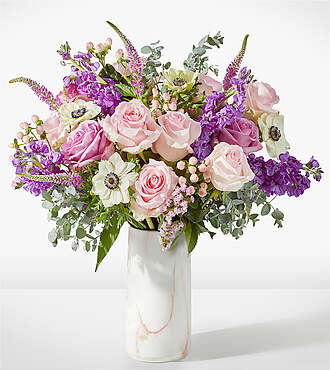
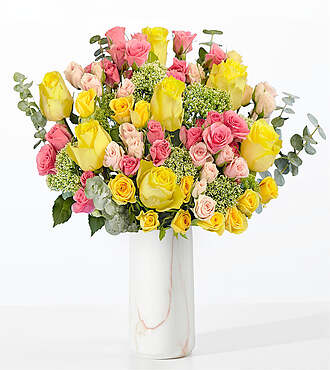
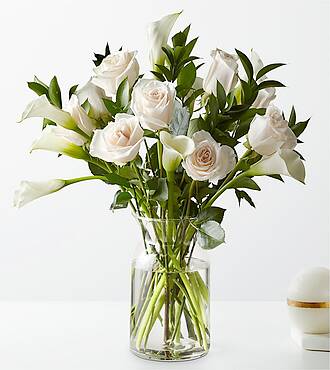
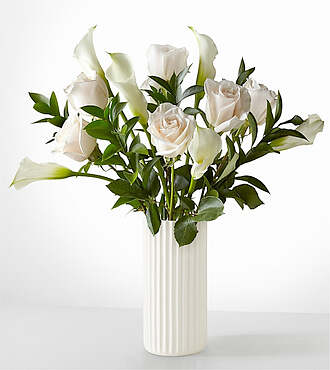
The Bloom Central flower delivery of the month for July in Clarkston is the Graceful Grandeur Rose Bouquet
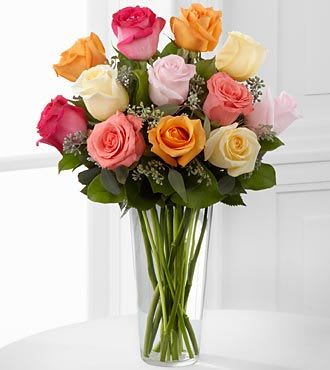
The Graceful Grandeur Rose Bouquet from Bloom Central is simply stunning. With its elegant and sophisticated design, it's sure to make a lasting impression on the lucky recipient.
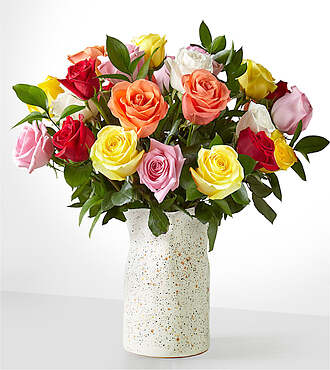
This exquisite bouquet features a generous arrangement of lush roses in shades of cream, orange, hot pink, coral and light pink. This soft pastel colors create a romantic and feminine feel that is perfect for any occasion.
The roses themselves are nothing short of perfection. Each bloom is carefully selected for its beauty, freshness and delicate fragrance. They are hand-picked by skilled florists who have an eye for detail and a passion for creating breathtaking arrangements.
The combination of different rose varieties adds depth and dimension to the bouquet. The contrasting sizes and shapes create an interesting visual balance that draws the eye in.
What sets this bouquet apart is not only its beauty but also its size. It's generously sized with enough blooms to make a grand statement without overwhelming the recipient or their space. Whether displayed as a centerpiece or placed on a mantelpiece the arrangement will bring joy wherever it goes.
When you send someone this gorgeous floral arrangement, you're not just sending flowers - you're sending love, appreciation and thoughtfulness all bundled up into one beautiful package.
The Graceful Grandeur Rose Bouquet from Bloom Central exudes elegance from every petal. The stunning array of colorful roses combined with expert craftsmanship creates an unforgettable floral masterpiece that will brighten anyone's day with pure delight.
Clarkston Florist
Clarkston Flower Delivery - Frequently Asked Questions
- Does Bloom Central offer same-day flower delivery in Clarkston?
- Yes. Place your order online before 1:00 PM and a local Clarkston florist will hand-deliver your arrangement the same day. Orders can also be scheduled up to one month in advance.
- Is it safe to order flowers online?
- Absolutely! We utilize a secure, encrypted checkout to protect your personal and payment information. Visa, Mastercard, American Express, Discover, PayPal and Klarna are all accepted.
- What funeral homes does Bloom Central deliver sympathy flowers to in Clarkston?
- We hand-deliver sympathy and memorial floral arrangements to all funeral homes near Clarkston, including: AS Turner & Sons, Advantage Funeral & Cremation Services - Lilburn, Atlanta Casket Store, Bill Head Funeral Homes & Crematory, Crowell Brothers Funeral Homes & Crematory, Eternal Hills Funeral Home and Cremation, Fischer Funeral Care and Cremation Services, Gregory B Levett & Sons Funeral Homes & Crematory, Grissom-Eastlake Funeral Home, Haugabrooks Funeral Home, Meadows Mortuary, Rucker Raleigh Funeral Home, Tri-Cities Funeral Home, Trimble Donald Mortuary, Wages And Sons Funeral Home & Crematory, Wages Tom M Funeral Service, Willie a Watkins Funeral Home, Young Funeral Home.
- What churches does Bloom Central deliver flowers to in Clarkston?
- We deliver fresh floral arrangements to all churches and places of worship in Clarkston, including: Bochasanwasi Shri Akshar Purushottam Swaminarayan Temple, Christ Community African Methodist Episcopal Church Incorporated, Clarkston First Baptist Church, Masjid Al-Momineen Of Stone Mountain, Negashi Community Center Of Atlanta.
- What nearby cities does Bloom Central also deliver flowers to?
- In addition to Clarkston, we deliver fresh flowers to many nearby cities including: Scottdale, Avondale Estates, Tucker, Stone Mountain, North Decatur, Decatur, Belvedere Park, North Druid Hills
- What are the most popular flower arrangements at the Clarkston florist?
- Three of our most popular arrangements at our Clarkston florist are: Soft Persuasion Bouquet ($54.90), Tranquil Bouquet ($59.90), Special Request 100 ($100.00). All are available for same-day delivery.
More About Clarkston
Are looking for a Clarkston florist because you are not local to the area? If so, here is a brief travelogue of what Clarkston has to offer. Who knows, perhaps you'll be intrigued enough to come visit soon, partake in some of the fun activities Clarkston has to offer and deliver flowers to your loved one in person!
There is a small city just east of Atlanta where the world converges in a way that feels both quietly miraculous and unflinchingly ordinary. Clarkston, Georgia, population 14,000, sits beneath the humid, pine-scented skies of DeKalb County, its streets lined with apartment complexes and strip malls that hum with a linguistic cacophony, Swahili, Nepali, Arabic, Burmese, a living atlas of displacement and renewal. To walk these blocks is to witness something rare: an America not merely tolerating difference but metabolizing it, transforming the abstract ideal of a “melting pot” into a series of small, daily acts of mutual adjustment.
The Clarkston Community Farmers Market operates every Saturday in a parking lot behind City Hall. Here, a Somali woman in a hijab sells okra and Scotch bonnet peppers next to a Vietnamese grandmother bundling lemongrass. A Congolese father discusses soil pH with a third-generation Georgian whose family once grew cotton. Transactions double as language lessons. Children dart between stalls, swapping slang and candy. The air smells of cumin and fried plantains, collard greens and fresh turmeric. It is not utopia. It is better: real people figuring it out.

Same day service available. Order your Clarkston floral delivery and surprise someone today!
A mile east, the Thornhill Nature Trail loops through 30 acres of forest preserved by residents who argued that green space matters most to those with the least access to escape. On any given afternoon, Bhutanese teens in soccer jerseys thread through the pines, laughing as they Instagram-filter sunlight through oak leaves. A group of Afghan women in flowing dresses picnics beside a creek, their toddlers stacking pebbles into unstable towers. The trail’s existence feels like a quiet rebuttal to the notion that diversity dilutes tradition. Instead, traditions accumulate. A Syrian refugee teaches her neighbor to bake ma’amoul; the neighbor reciprocates with peach cobbler.
At the Clarkston Community Center, citizenship classes overflow with students from 50 countries. Volunteers drill English verb conjugations while toddlers nap in a makeshift daycare. Down the hall, a sewing collective stitches graduation gowns for high school seniors, this year’s class includes valedictorians born in Eritrea, Iraq, and the Democratic Republic of Congo. The center’s director, a former refugee herself, speaks of “building bridges you can walk across,” a phrase that sounds motivational-poster trite until you see a Liberian teenager help a elderly Ukrainian man spell “checking account” on a government form.
Critics sometimes frame Clarkston as a social experiment, a test tube for multicultural policy. Locals reject this. They point to the annual Community Cup soccer tournament, where teams representing eight nations compete under banners sewn by a coalition of resettlement agencies and church groups. They mention the public library, where tattered paperbacks share shelves with tattered Qurans and tattered Buddhist sutras. They note the police chief’s insistence on hiring officers who speak at least two languages, a policy born not of idealism but practicality: when crisis comes, clarity saves time.
What Clarkston embodies is neither naive optimism nor bureaucratic coercion. It is something simpler and harder: the recognition that survival here depends on a kind of radical neighborliness. A Burmese family attends a Pentecostal potluck. A Somali shopkeeper stocks Goya beans and tamarind paste. A retired schoolteacher from Iowa tutors a Yazidi girl in algebra. The city’s rhythm is syncopated, uneven, alive.
To outsiders, the question lingers: How does it work? The answer hides in plain sight. At the Global Growers Network farm, refugees tend plots of amaranth and eggplant, tomatillos and bitter melon. They trade seeds and stories. They argue over irrigation. They sweat. They laugh. They persist. In this, Clarkston is neither exception nor parable. It is a mirror. What it reflects is fragile, unfinished, and worth seeing.