



- Anniversary
- Best Sellers
- Under $100
 $69.90
July 1, 2026
East Honolulu July Floral Selection
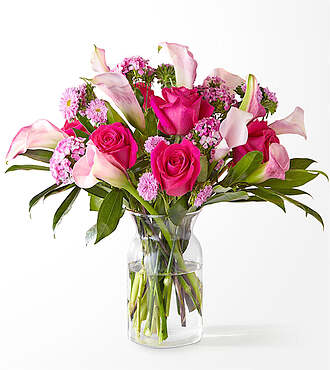
The Bloom Central flower delivery of the month for July in East Honolulu is the Bright and Beautiful Bouquet
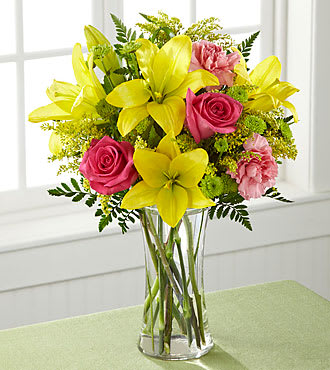
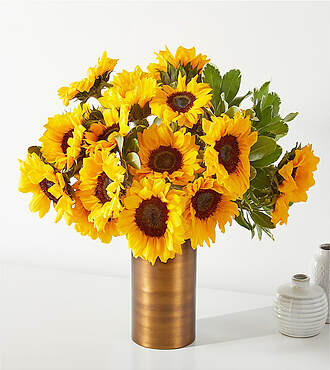
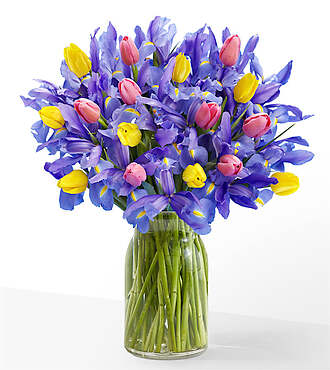
Introducing the Bright and Beautiful Bouquet from Bloom Central! This delightful floral arrangement is sure to brighten up any room with its vibrant colors and charming blooms. The bouquet features a lovely mix of fresh flowers that will bring joy to your loved ones or add a cheerful touch to any occasion.
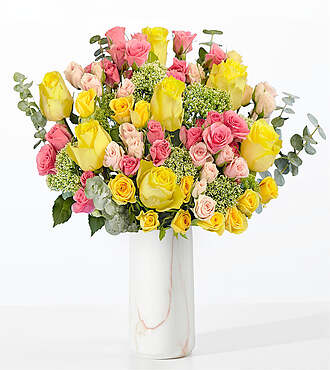
With its simple yet stunning design, this bouquet captures the essence of happiness. Bursting with an array of colorful petals, it instantly creates a warm and inviting atmosphere wherever it's placed. From the soft pinks to the sunny yellows, every hue harmoniously comes together, creating harmony in bloom.
Each flower in this arrangement has been carefully selected for their beauty and freshness. Lush pink roses take center stage, exuding elegance and grace with their velvety petals. They are accompanied by dainty pink carnations that add a playful flair while symbolizing innocence and purity.
Adding depth to this exquisite creation are delicate Asiatic lilies which emanate an intoxicating fragrance that fills the air as soon as you enter the room. Their graceful presence adds sophistication and completes this enchanting ensemble.
The Bright and Beautiful Bouquet is expertly arranged by skilled florists who have an eye for detail. Each stem is thoughtfully positioned so that every blossom can be admired from all angles.
One cannot help but feel uplifted when gazing upon these radiant blossoms. This arrangement will surely make everyone smile - young or old alike.
Not only does this magnificent bouquet create visual delight it also serves as a reminder of life's precious moments worth celebrating together - birthdays, anniversaries or simply milestones achieved. It breathes life into dull spaces effortlessly transforming them into vibrant expressions of love and happiness.
The Bright and Beautiful Bouquet from Bloom Central is a testament to the joys that flowers can bring into our lives. With its radiant colors, fresh fragrance and delightful arrangement, this bouquet offers a simple yet impactful way to spread joy and brighten up any space. So go ahead and let your love bloom with the Bright and Beautiful Bouquet - where beauty meets simplicity in every petal.
Local Flower Delivery in East Honolulu
East Honolulu Flower Delivery - Frequently Asked Questions
- Does Bloom Central offer same-day flower delivery in East Honolulu?
- Yes. Place your order online before 1:00 PM and a local East Honolulu florist will hand-deliver your arrangement the same day. Orders can also be scheduled up to one month in advance.
- Is it safe to order flowers online?
- Absolutely! We utilize a secure, encrypted checkout to protect your personal and payment information. Visa, Mastercard, American Express, Discover, PayPal and Klarna are all accepted.
- What funeral homes does Bloom Central deliver sympathy flowers to in East Honolulu?
- We hand-deliver sympathy and memorial floral arrangements to all funeral homes near East Honolulu, including: Ballard Family Moanalua Mortuary, Borthwick Mortuary, Diamond Head Memorial Park, Diamond Head Mortuary, Flowers by Fletcher, Hawaii Ash Scatterings, Hawaii State Veterans Cemetery, Hawaiian Memorial Park Cemetery, Hawaiian Memorial Park Mortuary, Hosoi Garden Mortuary, Kyoto Gardens of Honolulu Memorial Park, Leeward Funeral Home, Mililani Downtown Mortuary, Mililani Memorial Park & Mortuary, Nuuanu Memorial Park & Mortuary, Oahu Mortuary, Ultimate Cremation Services, Valley of the Temples.
- What nearby cities does Bloom Central also deliver flowers to?
- In addition to East Honolulu, we deliver fresh flowers to many nearby cities including: Waimanalo Beach, Waimanalo, Maunawili, Kailua, Honolulu, Kaneohe, Kaneohe Station, Heeia
- What are the most popular flower arrangements at the East Honolulu florist?
- Three of our most popular arrangements at our East Honolulu florist are: Darling Bouquet ($59.90), Sunshine Daydream Bouquet ($49.90), Radiant Citrus Bouquet ($64.90). All are available for same-day delivery.
More About East Honolulu
Are looking for a East Honolulu florist because you are not local to the area? If so, here is a brief travelogue of what East Honolulu has to offer. Who knows, perhaps you'll be intrigued enough to come visit soon, partake in some of the fun activities East Honolulu has to offer and deliver flowers to your loved one in person!
East Honolulu does not so much announce itself as unfold, layer by layer, in the manner of a complex flower that reveals its center only to those who lean close enough to notice the nectar trembling at its heart. The place resists the postcard reductions applied to so much of Hawaii, presenting instead a paradox of proximity and remove, a suburban enclave where the rhythms of island life pulse not in service to tourism’s gaudy clock but to something quieter, more rooted, almost shy. Drive east from Waikiki’s chromatic frenzy and the road narrows, the air softens, the ocean’s blue deepens into a shade that seems to hold within it every secret the Pacific has ever whispered to the moon. Here, the sprawl of Honolulu yields to a mosaic of neighborhoods clinging to the leeward curves of the Koʻolau Range, their rooftops angled like a congregation of faces turned sunward, grateful and unashamed.
Morning in East Honolulu arrives as a slow exhalation. Joggers trace the contours of Kalanianaʻole Highway, their shadows stretching toward beaches where green sea turtles hoist themselves onto warm sand, indifferent to the human spectators who gather, hushed, as if witnessing a sacred rite. At Hanauma Bay, snorkelers float above coral gardens, their fins stirring light into kaleidoscopic patterns that dissolve the boundary between air and water. The bay’s curved embrace, a volcanic crater flooded by millennia of tides, feels less a geographic feature than a living organism, breathing in swimmers and breathing out stories of reef fish that dart like synchronized sparks. Up the slope, the Koko Crater Trail ascends 1,048 railroad ties, remnants of a World War II rail line now serving as stairway to a summit where the wind carries the scent of plumeria and the faint, salt-kissed laughter of children below.

Same day service available. Order your East Honolulu floral delivery and surprise someone today!
What distinguishes this place is not its beauty, though beauty saturates every crevice, but the way its residents move within that beauty as stewards rather than consumers. At the weekly farmers’ market in Hawaii Kai, grandmothers in floral muʻumuʻu sift through baskets of papaya and lilikoʻi, their hands swift and sure, while teenagers hawk trays of poke seasoned with inamona and limu, the recipes older than the pavements beneath them. Surf instructors at Portlock Beach teach eight-year-olds to read the waves’ syntax, their patience a kind of pedagogy that binds generations. Along the coastline, volunteers replant native naupaka to fortify dunes against erosion, their labor a quiet rebuttal to the idea that humans only take.
The genius of East Honolulu lies in its refusal to be any one thing. It is a place where the mundane and the sublime share checkout lines at Foodland, where the drone of leaf blowers mingles with the crescendo of myna birds at dusk, where the American Dream wears flip-flops and carries a reusable bag. To live here is to navigate a daily negotiation between preservation and progress, a balance struck not through policy alone but through small, relentless acts of care: a father teaching his daughter to husk a coconut, a retiree clearing invasive weeds from a public trail, a chef sourcing luau leaves from a cousin’s backyard patch.
At sunset, the horizon ignites in hues that defy Crayola’s grasp, and the beaches fill with families grilling mochiko chicken over portable hibachis, their laughter syncopating with the rustle of ironwood trees. Later, when the stars emerge, sharp and shameless in the absence of city glare, the rhythm of the waves seems to slow time itself, as if the ocean were reminding anyone still listening that some things endure. East Honolulu knows what it is. It does not need you to notice. But if you do, it will reward you with the glimpse of a truth too easily forgotten elsewhere: that paradise is not a place one visits, but a habit of attention, a way of belonging to the world without demanding it belong to you.