





- New Baby
- Best Sellers
- Under $80













 $69.90



July 1, 2026
Piasa July Floral Selection
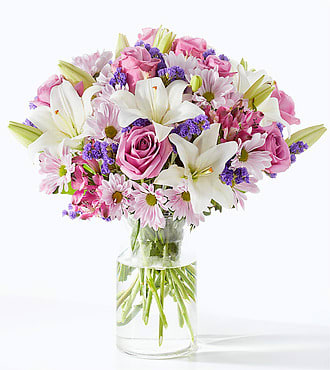
The Bloom Central flower delivery of the month for July in Piasa is the Beyond Blue Bouquet
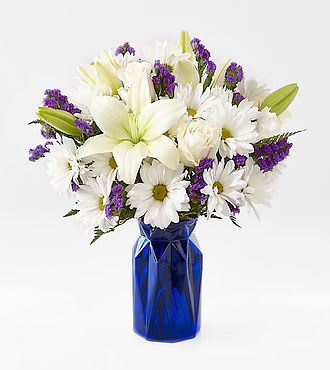
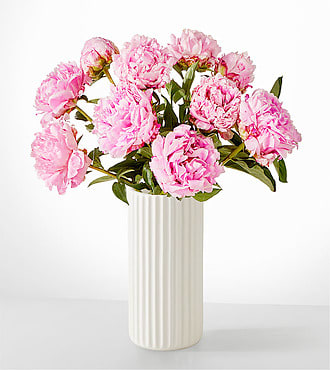
The Beyond Blue Bouquet from Bloom Central is the perfect floral arrangement to brighten up any room in your home. This bouquet features a stunning combination of lilies, roses and statice, creating a soothing and calming vibe.
The soft pastel colors of the Beyond Blue Bouquet make it versatile for any occasion - whether you want to celebrate a birthday or just show someone that you care. Its peaceful aura also makes it an ideal gift for those going through tough times or needing some emotional support.
What sets this arrangement apart is not only its beauty but also its longevity. The flowers are hand-selected with great care so they last longer than average bouquets. You can enjoy their vibrant colors and sweet fragrance for days on end!
One thing worth mentioning about the Beyond Blue Bouquet is how easy it is to maintain. All you need to do is trim the stems every few days and change out the water regularly to ensure maximum freshness.
If you're searching for something special yet affordable, look no further than this lovely floral creation from Bloom Central! Not only will it bring joy into your own life, but it's also sure to put a smile on anyone else's face.
So go ahead and treat yourself or surprise someone dear with the delightful Beyond Blue Bouquet today! With its simplicity, elegance, long-lasting blooms, and effortless maintenance - what more could one ask for?
Local Flower Delivery in Piasa
Piasa Flower Delivery - Frequently Asked Questions
- Does Bloom Central offer same-day flower delivery in Piasa?
- Yes. Place your order online before 1:00 PM and a local Piasa florist will hand-deliver your arrangement the same day. Orders can also be scheduled up to one month in advance.
- Is it safe to order flowers online?
- Absolutely! We utilize a secure, encrypted checkout to protect your personal and payment information. Visa, Mastercard, American Express, Discover, PayPal and Klarna are all accepted.
- What funeral homes does Bloom Central deliver sympathy flowers to in Piasa?
- We hand-deliver sympathy and memorial floral arrangements to all funeral homes near Piasa, including: Austin Layne Mortuary, Barry Wilson Funeral Home, Baue Funeral & Memorial Center, Bopp Chapel Funeral Directors, Crawford Funeral Home, Granberry Mortuary, Hutchens-Stygar Funeral & Cremation Center, Irwin Chapel Funeral Home, Kassly Herbert A Funeral Home, McClendon Teat Mortuary & Cremation Services, McLaughlin Funeral Home, Ortmann-Stipanovich Funeral Home, Schrader Funeral Home, Shepard Funeral Chapel, Sunset Hill Funeral Home, Cemetery & Cremation Services, Thomas Saksa Funeral Home, Weber & Rodney Funeral Home, William C Harris Funeral Dir & Cremation Srvc.
- What nearby cities does Bloom Central also deliver flowers to?
- In addition to Piasa, we deliver fresh flowers to many nearby cities including: Brighton, Mississippi, Godfrey, Foster, Shipman, Elsah, Jerseyville, Jersey
- What are the most popular flower arrangements at the Piasa florist?
- Three of our most popular arrangements at our Piasa florist are: Color Rush Bouquet ($49.90), Beautiful Expressions Bouquet ($64.90), Countryside Bouquet ($44.90). All are available for same-day delivery.
More About Piasa
Are looking for a Piasa florist because you are not local to the area? If so, here is a brief travelogue of what Piasa has to offer. Who knows, perhaps you'll be intrigued enough to come visit soon, partake in some of the fun activities Piasa has to offer and deliver flowers to your loved one in person!
The river does not care about time. It moves past Piasa, Illinois, with the same liquid indifference it carried when the Illiniwek artists first painted their mythic bird high on the limestone bluffs, a creature of claws and scales, wings splayed as if frozen mid-descent, eyes that follow you like the sun. The Piasa’s story is not gentle. It was a beast that fed on men, they say, until a chief named Ouatoga tricked it into a poisoned ambush. Today, the bird is still there, or a version of it, repainted decades ago by hands less ancient but no less earnest, its colors refreshed by locals who treat the legend not as relic but resident. You can stand on the Great River Road, asphalt warm underfoot, and feel the thing’s gaze like a finger tracing your spine. It is easy, here, to understand how a myth becomes a mirror.
Piasa itself is small, the kind of town where the postmaster knows your name before you do, where the diner’s pie rotation is both ritual and news. The Mississippi dominates conversation, commerce, the very rhythm of days. At dawn, fishermen idle near the docks, their lines breaking the water’s silver skin. By noon, kids pedal bikes down streets that curve like tributaries, past clapboard houses and the lone hardware store whose owner still repairs screen doors for free if you smile twice. There’s a park where the sycamores lean conspiratorially, their leaves whispering in a language older than the railroad. People gather here for potlucks, fireworks, to watch the river swallow the sky each evening. You get the sense that everyone knows how to fix something, a leak, a carburetor, a broken fence, a heart.

Same day service available. Order your Piasa floral delivery and surprise someone today!
What’s compelling isn’t nostalgia, though. It’s the quiet insistence on continuity. The mural fades; they repaint it. The river floods; they rebuild. A farmer two miles north still tends the same soil his great-grandfather did, soybeans and corn stretching toward the bluffs like green applause. At the library, children check out the same dog-eared books their parents did, while the librarian, a woman with a laugh like a porch swing, stamps due dates without looking. There’s a humility here that feels almost radical in an age of relentless self-curation. No one in Piasa pretends the town is perfect. They just keep showing up, pulling weeds from the community garden, patching potholes with the grim cheer of people who’ve made peace with the fact that some labors never end.
And always, the river. It reflects everything, the cliffs, the sky, the occasional barge hauling grain or coal, but gives nothing back. Locals will tell you the water has moods. Some days it glitters, friendly as a puppy. Others, it turns thick and dark, restless with secrets. Teenagers dare each other to swim to the Missouri side, though few make it. Old men recount near-drownings like parables. You begin to see the Mississippi not as scenery but as a character, something animate, capricious, half-wild despite the levees. It’s the town’s antagonist and lifeline, the reason Piasa exists and the force that could erase it. Yet the people stay. They adapt. They paint their bird.
Maybe that’s the lesson, if a place this unpretentious would dare teach one: Survival isn’t about defiance. It’s about tending what you have, repairing what you can, and watching the horizon with a mix of caution and hope. The Piasa bird, after all, was never truly defeated. It was just transformed, from terror to talisman, a story told to keep the dark at bay. In Piasa, they understand that some legends aren’t meant to end. They’re meant to hold you together, wing by wing, while the world changes.