





- Best Value
- Best Sellers
- Under $60
 $49.90



- $49.90


July 1, 2026
Shiloh Valley July Floral Selection
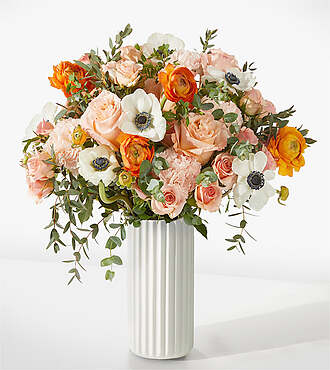
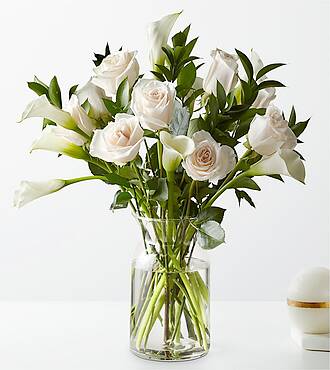
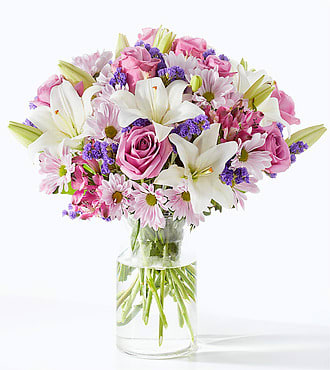
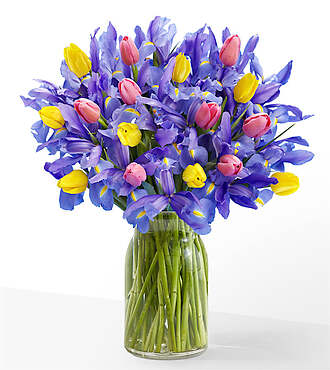
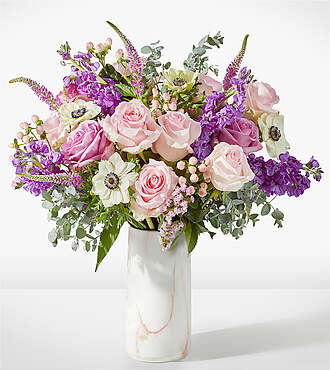
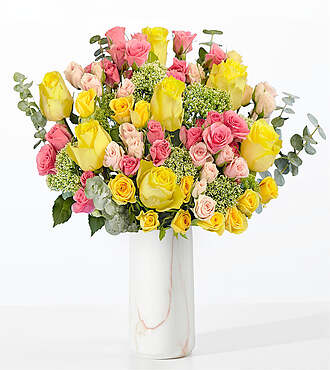
The Bloom Central flower delivery of the month for July in Shiloh Valley is the Graceful Grandeur Rose Bouquet
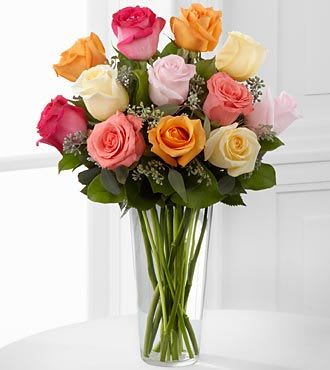
The Graceful Grandeur Rose Bouquet from Bloom Central is simply stunning. With its elegant and sophisticated design, it's sure to make a lasting impression on the lucky recipient.
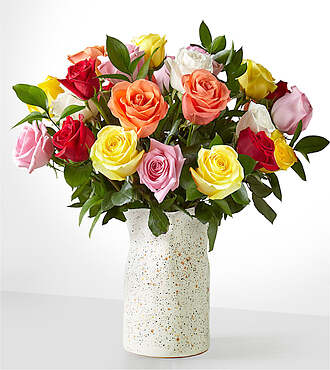
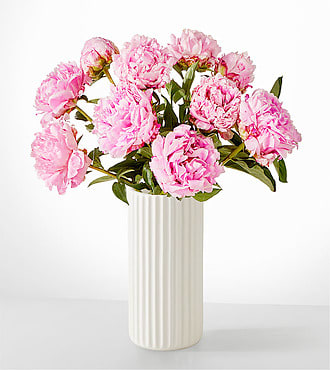
This exquisite bouquet features a generous arrangement of lush roses in shades of cream, orange, hot pink, coral and light pink. This soft pastel colors create a romantic and feminine feel that is perfect for any occasion.
The roses themselves are nothing short of perfection. Each bloom is carefully selected for its beauty, freshness and delicate fragrance. They are hand-picked by skilled florists who have an eye for detail and a passion for creating breathtaking arrangements.
The combination of different rose varieties adds depth and dimension to the bouquet. The contrasting sizes and shapes create an interesting visual balance that draws the eye in.
What sets this bouquet apart is not only its beauty but also its size. It's generously sized with enough blooms to make a grand statement without overwhelming the recipient or their space. Whether displayed as a centerpiece or placed on a mantelpiece the arrangement will bring joy wherever it goes.
When you send someone this gorgeous floral arrangement, you're not just sending flowers - you're sending love, appreciation and thoughtfulness all bundled up into one beautiful package.
The Graceful Grandeur Rose Bouquet from Bloom Central exudes elegance from every petal. The stunning array of colorful roses combined with expert craftsmanship creates an unforgettable floral masterpiece that will brighten anyone's day with pure delight.
Local Flower Delivery in Shiloh Valley
Shiloh Valley Flower Delivery - Frequently Asked Questions
- Does Bloom Central offer same-day flower delivery in Shiloh Valley?
- Yes. Place your order online before 1:00 PM and a local Shiloh Valley florist will hand-deliver your arrangement the same day. Orders can also be scheduled up to one month in advance.
- Is it safe to order flowers online?
- Absolutely! We utilize a secure, encrypted checkout to protect your personal and payment information. Visa, Mastercard, American Express, Discover, PayPal and Klarna are all accepted.
- What funeral homes does Bloom Central deliver sympathy flowers to in Shiloh Valley?
- We hand-deliver sympathy and memorial floral arrangements to all funeral homes near Shiloh Valley, including: Kassly Herbert A Funeral Home, Lake View Funeral Home, Messinger Cemetery, Renner Funeral Home, Valhalla-Gaerdner-Holten Funeral Home, Wolfersberger Funeral Home.
- What nearby cities does Bloom Central also deliver flowers to?
- In addition to Shiloh Valley, we deliver fresh flowers to many nearby cities including: Scott AFB, Shiloh, O'Fallon, St. Clair, Mascoutah, Belleville, Freeburg, Swansea
- What are the most popular flower arrangements at the Shiloh Valley florist?
- Three of our most popular arrangements at our Shiloh Valley florist are: Golden Gourd Pumpkin Bouquet ($59.90), Quality Time Bouquet ($54.90), Bright Lights Bouquet with Lavender Basket ($54.90). All are available for same-day delivery.
More About Shiloh Valley
Are looking for a Shiloh Valley florist because you are not local to the area? If so, here is a brief travelogue of what Shiloh Valley has to offer. Who knows, perhaps you'll be intrigued enough to come visit soon, partake in some of the fun activities Shiloh Valley has to offer and deliver flowers to your loved one in person!
Shiloh Valley, Illinois, exists in the way all small towns do for those who don’t live there: as a smudge on a map, a rest stop between interstates, a name muttered by GPS. But to drive into Shiloh Valley on a June morning, when the humidity hangs like a baptismal veil and the soybeans ripple in waves that mimic an inland ocean, is to witness a place so stubbornly itself that it feels less discovered than remembered. The town’s two traffic lights pulse with a rhythm older than algorithms. Farmers in seed-company caps nod from pickup windows. The air smells of cut grass and diesel and the faint cinnamon of wild clover. This is a town where the word “community” isn’t an abstraction but a shared muscle, flexed daily in ways both mundane and profound.
The railroad tracks bisect Shiloh Valley with geometric precision, a relic of the 19th century that still thrums with life. Freight cars clatter past the redbrick depot, now a museum staffed by octogenarians who can tell you about the time a young Lincoln reportedly napped here en route to a debate. Kids on bikes race the trains, legs pumping, laughter trailing behind them like streamers. The tracks are both boundary and connective tissue, a reminder that this town has always been a waypoint for stories larger than itself. Yet somehow, improbably, it remains whole.

Same day service available. Order your Shiloh Valley floral delivery and surprise someone today!
Main Street wears its history like a well-stitched quilt. The barbershop pole still spins. The diner’s neon sign buzzes faintly, advertising pie flavors that haven’t changed since Coolidge was president. At the hardware store, clerks measure nails by the pound and know every customer’s project by heart. There’s a quiet genius to this constancy, a rebuttal to the cult of disruption. Progress here isn’t about replacement but care: repainting the mural of the 1945 state champion basketball team, replanting petunias in the courthouse square each spring, relearning the same old hymns at the Methodist church. The past isn’t worshipped. It’s tended.
Out beyond the town limits, the fields stretch toward horizons so flat and vast they warp perspective. Farmers pilot combines like astronauts, crawling across amber seas of wheat. Their labor is a kind of faith, a pact with weather and soil. Tractors leave hieroglyphs of dust. Hawks pivot overhead. At dusk, the sky ignites in oranges and pinks so vivid they feel like a private gift to anyone who bothers to look up. You start to understand why people here speak of “home” not as a plot of land but as a lattice of relationships, to neighbors, to seasons, to the earth itself.
School’s-out bells ring. Kids cannonball into the public pool. Teenagers maneuver pickup trucks into secret corners of lovers’ lanes. On weekends, the park pavilion hosts potlucks where casseroles and gossip circulate in equal measure. There’s a Fourth of July parade featuring tractors draped in bunting, a high school football team that loses every game but still draws crowds, a library where the librarian recommends novels based on your zodiac sign. The rhythm is syncopated, familiar, sustaining.
To dismiss Shiloh Valley as “quaint” misses the point. What looks like simplicity is really a kind of mastery, a life lived in deliberate counterpoint to the frenzy beyond the county line. This isn’t nostalgia. It’s a low-grade miracle, a town that persists not by resisting change but by bending around it, like a river smoothing stone. You leave wondering if the rest of us are the ones who’ve gotten lost, our pockets full of apps and our eyes glued to screens, while here, in the shadow of grain elevators and under the gaze of a billion stars, people still measure time in sunsets and harvests and the reliable return of fireflies to backyards.