





- Best Value
- Best Sellers
- Under $60
 $49.90





- $49.90



July 1, 2026
Armstrong July Floral Selection
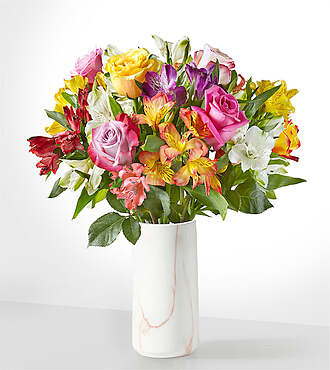
The Bloom Central flower delivery of the month for July in Armstrong is the Hello Gorgeous Bouquet
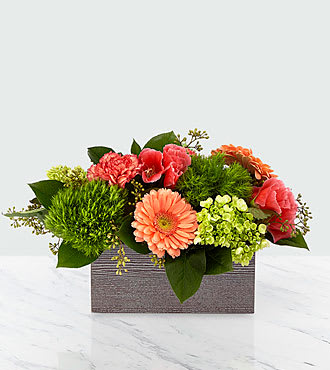
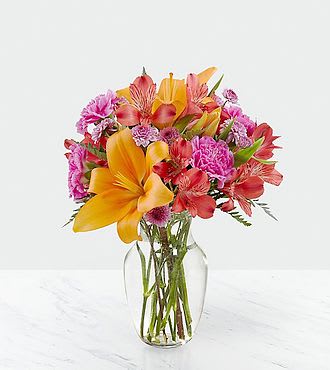
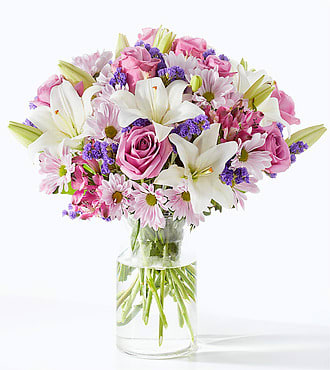
The Hello Gorgeous Bouquet from Bloom Central is a simply breathtaking floral arrangement - like a burst of sunshine and happiness all wrapped up in one beautiful bouquet. Through a unique combination of carnation's love, gerbera's happiness, hydrangea's emotion and alstroemeria's devotion, our florists have crafted a bouquet that blossoms with heartfelt sentiment.
The vibrant colors in this bouquet will surely brighten up any room. With cheerful shades of pink, orange, and peach, the arrangement radiates joy and positivity. The flowers are carefully selected to create a harmonious blend that will instantly put a smile on your face.
Imagine walking into your home and being greeted by the sight of these stunning blooms. In addition to the exciting your visual senses, one thing you'll notice about the Hello Gorgeous Bouquet is its lovely scent. Each flower emits a delightful fragrance that fills the air with pure bliss. It's as if nature itself has created a symphony of scents just for you.
This arrangement is perfect for any occasion - whether it be a birthday celebration, an anniversary surprise or simply just because the versatility of the Hello Gorgeous Bouquet knows no bounds.
Bloom Central takes great pride in delivering only the freshest flowers, so you can rest assured that each stem in this bouquet is handpicked at its peak perfection. These blooms are meant to last long after they arrive at your doorstep and bringing joy day after day.
And let's not forget about how easy it is to care for these blossoms! Simply trim the stems every few days and change out the water regularly. Your gorgeous bouquet will continue blooming beautifully before your eyes.
So why wait? Treat yourself or someone special today with Bloom Central's Hello Gorgeous Bouquet because everyone deserves some floral love in their life!
Local Flower Delivery in Armstrong
Armstrong Flower Delivery - Frequently Asked Questions
- Does Bloom Central offer same-day flower delivery in Armstrong?
- Yes. Place your order online before 1:00 PM and a local Armstrong florist will hand-deliver your arrangement the same day. Orders can also be scheduled up to one month in advance.
- Is it safe to order flowers online?
- Absolutely! We utilize a secure, encrypted checkout to protect your personal and payment information. Visa, Mastercard, American Express, Discover, PayPal and Klarna are all accepted.
- What funeral homes does Bloom Central deliver sympathy flowers to in Armstrong?
- We hand-deliver sympathy and memorial floral arrangements to all funeral homes near Armstrong, including: Alexander Memorial Park, Boone Funeral Home, Browning Funeral Home, Memory Portraits, Oak Hill Cemetery, Stodghill Funeral Home, Sunset Funeral Home, Cremation Center & Cemetery, Wade Funeral Home, Werry Funeral Homes.
- What nearby cities does Bloom Central also deliver flowers to?
- In addition to Armstrong, we deliver fresh flowers to many nearby cities including: Darmstadt, Johnson, Scott, Haubstadt, Poseyville, Robinson, Fort Branch, Owensville
- What are the most popular flower arrangements at the Armstrong florist?
- Three of our most popular arrangements at our Armstrong florist are: Eternal Affection Arrangement with Flag ($94.90), Remembrance Bouquet ($79.90), Sunny Sentiments Bouquet ($49.90). All are available for same-day delivery.
More About Armstrong
Are looking for a Armstrong florist because you are not local to the area? If so, here is a brief travelogue of what Armstrong has to offer. Who knows, perhaps you'll be intrigued enough to come visit soon, partake in some of the fun activities Armstrong has to offer and deliver flowers to your loved one in person!
Armstrong, Indiana, sits where the flatness starts to give way to something like a pulse. Dawn here isn’t a metaphor. It’s a slow unzipping of sky, pink, then gold, then the hard blue of a new baseball cap, while the bakery on Main Street releases the first breath of yeast and sugar into air so crisp it cracks. The town’s 3,412 residents move through mornings with the quiet urgency of people who know the difference between a job and work. Farmers in oil-stained jackets amble into the diner, where the waitress memorizes orders based on who forgot their gloves. School buses yawn at corners, swallowing children who will later kick soccer balls into nets their fathers built from spare lumber. The barbershop quartet that practices Thursdays in the post office parking lot harmonizes about love in a key that makes the old Lutheran ladies blush.
The Wabash River licks the town’s eastern edge, patient and brown, carrying the kind of history that doesn’t need plaques. Boys skip stones where their grandfathers once gutted catfish. Teenagers drag canoes over mudbanks in May, their laughter bouncing off water that has seen worse. In the afternoons, the retired biology teacher walks her terrier past the library, pausing to lecture anyone within earshot about the migratory patterns of monarch butterflies. The librarian nods, then stamps due dates in books that smell like attics.

Same day service available. Order your Armstrong floral delivery and surprise someone today!
Main Street is a diorama of persistence. The hardware store’s owner helps middle-aged women fix lawnmowers while explaining torque. The florist tapes carnations to prom boutonnieres without once mentioning inflation. At the diner counter, the mayor eats meatloaf and argues with the town accountant about whether the high school’s mascot, a stalwart cucumber named Pickle Pete, instills dignity or existential dread. Nobody agrees. Everybody laughs.
The park at the center of town has a gazebo where brides take photos in June. In August, it hosts a pie contest judged by a man in a hat shaped like a giant strawberry. Children sprint through sprinklers, their shrieks syncopated by the cicadas’ drone. At dusk, fathers play catch with sons using mitts softened by decades of lanolin. Mothers trade zucchini bread recipes and sunscreen tips. The ice cream truck plays “Turkey in the Straw” until the last Popsicle stick hits the trash.
Armstrong’s pulse quickens in autumn. The high school football team, helmeted and hopeful, loses every game by margins that shrink yearly. Cheerleaders invent chants about grit. The marching band’s sousaphone player trips over his own feet during halftime, then takes a bow. Fans forgive him. They forgive everything. Afterward, families drive combines through fields, harvesting soybeans under moons so bright they feel like miracles. The grain elevator hums.
Winter here is a communal project. Neighbors shovel each other’s driveways before the coffee percolates. The Methodist church hosts a sock drive that stocks every dresser in the county. At the elementary school’s holiday pageant, a kindergartener dressed as a star forgets her lines and cries. The audience claps anyway. For seven minutes, she’s the universe.
What outsiders miss, what they always miss, is the math of smallness. Armstrong’s magic isn’t in its zip code or skyline but in the way it knots lives together. The pharmacist knows which customers stash insulin in butter compartments. The UPS driver waves at dogs by name. The girl who mows lawns saves up for college by babysitting the toddler whose parents met at the town’s lone stoplight. Every “hello” here is a contract.
The town’s tallest sunflower grows beside a gas station. A 76-year-old woman talks to it daily. She swears it leans toward her voice. Maybe it does. Maybe roots here learn to bend toward warmth. At sunset, the sky bleeds orange, and the river swallows the light. Porch swings creak. Fireflies blink their semaphores. Somewhere, a screen door slams. Somewhere, a piano plays. The air smells like cut grass and possibility. You could call it ordinary. You’d be wrong.