




- Birthday
- Best Sellers
- Sympathy



 $297.90
- $64.90



July 1, 2026
Helt July Floral Selection
The Bloom Central flower delivery of the month for July in Helt is the High Style Bouquet
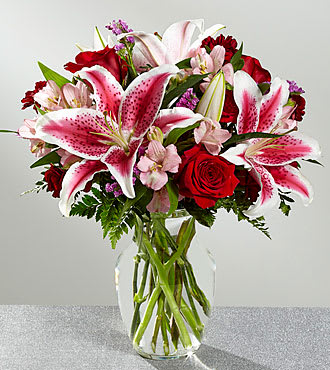
Introducing the High Style Bouquet from Bloom Central. This bouquet is simply stunning, combining an array of vibrant blooms that will surely brighten up any room.
The High Style Bouquet contains rich red roses, Stargazer Lilies, pink Peruvian Lilies, burgundy mini carnations, pink statice, and lush greens. All of these beautiful components are arranged in such a way that they create a sense of movement and energy, adding life to your surroundings.
What makes the High Style Bouquet stand out from other arrangements is its impeccable attention to detail. Each flower is carefully selected for its beauty and freshness before being expertly placed into the bouquet by skilled florists. It's like having your own personal stylist hand-pick every bloom just for you.
The rich hues found within this arrangement are enough to make anyone swoon with joy. From velvety reds to soft pinks and creamy whites there is something here for everyone's visual senses. The colors blend together seamlessly, creating a harmonious symphony of beauty that can't be ignored.
Not only does the High Style Bouquet look amazing as a centerpiece on your dining table or kitchen counter but it also radiates pure bliss throughout your entire home. Its fresh fragrance fills every nook and cranny with sweet scents reminiscent of springtime meadows. Talk about aromatherapy at its finest.
Whether you're treating yourself or surprising someone special in your life with this breathtaking bouquet from Bloom Central, one thing remains certain: happiness will blossom wherever it is placed. So go ahead, embrace the beauty and elegance of the High Style Bouquet because everyone deserves a little luxury in their life!
Helt Indiana Flower Delivery
Helt Flower Delivery - Frequently Asked Questions
- Does Bloom Central offer same-day flower delivery in Helt?
- Yes. Place your order online before 1:00 PM and a local Helt florist will hand-deliver your arrangement the same day. Orders can also be scheduled up to one month in advance.
- Is it safe to order flowers online?
- Absolutely! We utilize a secure, encrypted checkout to protect your personal and payment information. Visa, Mastercard, American Express, Discover, PayPal and Klarna are all accepted.
- What funeral homes does Bloom Central deliver sympathy flowers to in Helt?
- We hand-deliver sympathy and memorial floral arrangements to all funeral homes near Helt, including: Genda Funeral Home-Mulberry Chapel, Heath & Vaughn Funeral Home, Morgan Memorial Homes, Mt Hope Cemetery & Mausoleum, Renner Wikoff Chapel, Robison Chapel, Roselawn Memorial Park, Soller-Baker Funeral Homes, Spring Hill Cemetery & Mausoleum, Sunset Funeral Home & Cremation Center Champaign-Urbana Chap, Sunset Funeral Homes Memorial Park & Cremation.
- What nearby cities does Bloom Central also deliver flowers to?
- In addition to Helt, we deliver fresh flowers to many nearby cities including: Montezuma, Fairview Park, Reserve, Clinton, Florida, Rockville, Cayuga, Fayette
- What are the most popular flower arrangements at the Helt florist?
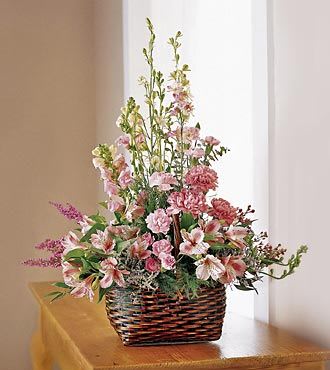
- Three of our most popular arrangements at our Helt florist are: Garden's Paradise Basket ($97.90), White Elegance Bouquet by Vera Wang - CUT GLASS VASE INCLUDED ($69.90), White Rose Bouquet ($84.90). All are available for same-day delivery.
More About Helt
Are looking for a Helt florist because you are not local to the area? If so, here is a brief travelogue of what Helt has to offer. Who knows, perhaps you'll be intrigued enough to come visit soon, partake in some of the fun activities Helt has to offer and deliver flowers to your loved one in person!
The town of Helt, Indiana does not announce itself. You find it by accident or you do not find it at all. The two-lane highway unspools like a tired joke past cornfields that stretch to the curvature of the earth, and then, just as the horizon begins to feel like a metaphor for something dire, a green sign appears: Helt, Pop. 1,412. The asphalt narrows. A single traffic light blinks yellow over an intersection where four brick buildings anchor the corners like sentries. One houses a diner whose windows steam with the breath of pie crust and gossip. Another sells fishing tackle and spiral-bound notebooks. The third is a library with a hand-painted mural of children reading under a tree. The fourth sits empty but clean, its glass swept daily by a man named Phil, who believes in readiness. Helt’s rhythm is not the rhythm of elsewhere. Mornings here smell of damp soil and diesel, of bread pulled fresh from ovens at 5 a.m. by a woman named Marie, who sings hymns in a voice that cracks like old wood. School buses yawn through streets named after trees. Children pedal bicycles with banana seats over cracks in the sidewalk, their backpacks bouncing like half-filled balloons. The air hums with cicadas in summer, with snowmelt whispers in spring, with the rustle of leaves turned gold as church icons in fall. Winter muffles everything but the scrape of shovels and the distant groan of tractors plowing drifts. What Helt lacks in urgency it replaces with a kind of granular permanence. The same families occupy the same porches, waving at the same mail carrier, who has memorized the names of every dog on his route. The hardware store still loans out tools. The barber uses no appointment book. The high school football field doubles as a gathering space for Fourth of July fireworks, which bloom over the soybeans while toddlers chase fireflies and grandparents recount the same stories they told the year before. There is a park with a gazebo where teenagers hold hands under cover of dusk, where aging men play chess with pieces carved by a local sculptor who died in 1989. His widow brings lemonade to the games and smiles at the way the knights still bear her husband’s thumbprints. The town’s lone factory produces rubber seals for tractor engines. It employs 163 people. They clock in and out with the dutiful cadence of monks, their work shirts stained with grease that never quite washes out. On weekends, they mow lawns or coach softball or tinker with motorcycles in driveways, their radios tuned to the same station that has played classic rock since the Nixon administration. The librarian, a woman with a silver braid down her back, files every overdue notice by hand. She also tutors kids in geometry, sliding peppermints across the table when they solve a proof. Helt’s gossip is gentle, more diagnostic than malicious. When the Johnsons’ barn burned down, casseroles appeared on their doorstep before the embers cooled. When old Mrs. Peyser forgot her own name, the pharmacy delivered her pills in weekly pouches labeled with sunrise stickers. The church bells ring twice a day, 7 a.m. and 7 p.m., a cadence so ingrained that dogs no longer stir at the sound. The Methodists host a potluck every third Sunday. They argue amiably over casserole recipes and vote unanimously to repair the roof. There is a quiet calculus to life here, an unspoken sense that belonging is not about extraction but accretion. To visit Helt is to feel the ghost of your own childhood, the one where the world seemed small enough to hold in your hands. You might linger at the diner counter, listening to farmers debate cloud formations, or walk the mile-long trail by the creek, where someone has built benches every hundred yards for the weary. You will not find irony here. You will not find avant-garde theater or artisanal quinoa. What you find is a place that has chosen to stay, to persist in its own particular way, like a tree that grows around a fence post, absorbing the obstacle into its rings. The sky at night is a spill of stars. Screen doors snap shut. Porch lights flicker off one by one. Somewhere, a phone rings unanswered, and the sound travels for miles.