





- Love & Romance
- Best Sellers
- Under $100
 $69.90





June 1, 2026
Fairfax June Floral Selection
The Bloom Central flower delivery of the month for June in Fairfax is the Love is Grand Bouquet
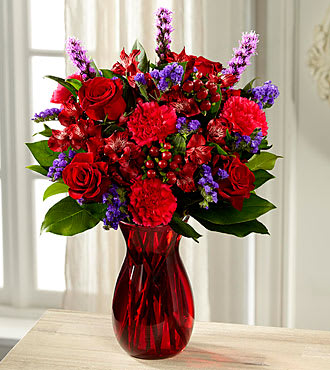
The Love is Grand Bouquet from Bloom Central is an exquisite floral arrangement that will make any recipient feel loved and appreciated. Bursting with vibrant colors and delicate blooms, this bouquet is a true showstopper.
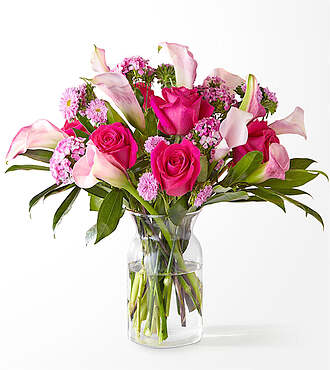
With a combination of beautiful red roses, red Peruvian Lilies, hot pink carnations, purple statice, red hypericum berries and liatris, the Love is Grand Bouquet embodies pure happiness. Bursting with love from every bloom, this bouquet is elegantly arranged in a ruby red glass vase to create an impactive visual affect.
One thing that stands out about this arrangement is the balance. Each flower has been thoughtfully selected to complement one another, creating an aesthetically pleasing harmony of colors and shapes.
Another aspect we can't overlook is the fragrance. The Love is Grand Bouquet emits such a delightful scent that fills up any room it graces with its presence. Imagine walking into your living room after a long day at work and being greeted by this wonderful aroma - instant relaxation!
What really sets this bouquet apart from others are the emotions it evokes. Just looking at it conjures feelings of love, appreciation, and warmth within you.
Not only does this arrangement make an excellent gift for special occasions like birthdays or anniversaries but also serves as a meaningful surprise gift just because Who wouldn't want to receive such beauty unexpectedly?
So go ahead and surprise someone you care about with the Love is Grand Bouquet. This arrangement is a beautiful way to express your emotions and remember, love is grand - so let it bloom!
Local Flower Delivery in Fairfax
Fairfax Flower Delivery - Frequently Asked Questions
- Does Bloom Central offer same-day flower delivery in Fairfax?
- Yes. Place your order online before 1:00 PM and a local Fairfax florist will hand-deliver your arrangement the same day. Orders can also be scheduled up to one month in advance.
- Is it safe to order flowers online?
- Absolutely! We utilize a secure, encrypted checkout to protect your personal and payment information. Visa, Mastercard, American Express, Discover, PayPal and Klarna are all accepted.
- What funeral homes does Bloom Central deliver sympathy flowers to in Fairfax?
- We hand-deliver sympathy and memorial floral arrangements to all funeral homes near Fairfax, including: Black Hawk Memorial Company, Campbell Cemetery, Cemetery Greenwood, Ciha Daniel-Funeral Director, Hrabak Funeral Home, Iowa Memorial Granite Sales Office, Lensing Funeral & Cremation Service, Morrison Cemetery, Murdoch Funeral Homes & Cremation Services, Oakland Cemetery, Parrott & Wood Funeral Home, Phillips Funeral Homes, Transamerica Occidental Life Ins, Yoder-Powell Funeral Home.
- What nearby cities does Bloom Central also deliver flowers to?
- In addition to Fairfax, we deliver fresh flowers to many nearby cities including: Walford, Atkins, Swisher, Cedar Rapids, Hiawatha, Palo, Ely, Robins
- What are the most popular flower arrangements at the Fairfax florist?
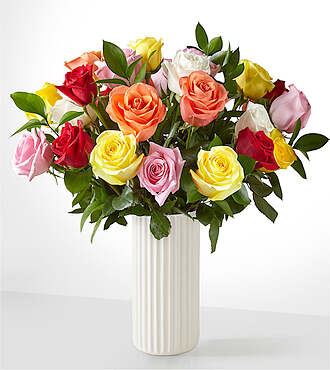
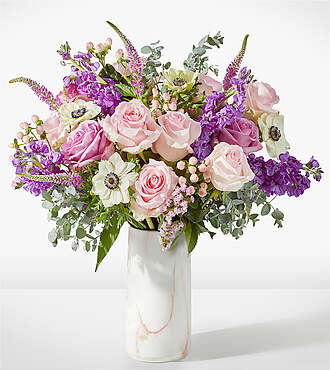
- Three of our most popular arrangements at our Fairfax florist are: French Garden ($89.90), Spring Tradition - A Florist Original ($54.90), Color of Love Bouquet ($84.90). All are available for same-day delivery.
More About Fairfax
Are looking for a Fairfax florist because you are not local to the area? If so, here is a brief travelogue of what Fairfax has to offer. Who knows, perhaps you'll be intrigued enough to come visit soon, partake in some of the fun activities Fairfax has to offer and deliver flowers to your loved one in person!
Fairfax, Iowa, exists in that rare space between memory and the present tense, a town where the past isn’t so much preserved as it is allowed to linger, like the scent of rain on freshly turned soil. The sun climbs each morning over fields that stretch toward horizons so flat and open they seem less a geographic feature than a metaphysical condition, a reminder of how small a human is, and how large the world can feel when you stand still in it. Tractors hum in the distance. Children pedal bikes down streets named after trees. An elderly man waves from a porch swing, not because he recognizes you, but because waving is what one does here. It is a place where the word “community” isn’t an abstraction but a reflex, a daily practice as unremarkable and vital as breathing.
To walk Fairfax’s quiet grid is to notice things. The way the library’s front window displays not just books but quilts stitched by local hands, each pattern a lineage of patience. The diner where the waitress knows your coffee order before you sit, not because she’s psychic, but because she’s been paying attention for 27 years. The hardware store where the owner will pause mid-sentence to squint at a loose hinge you’ve brought in, then vanish into the back and emerge with a screw that fits perfectly, no charge. These moments accumulate. They become a kind of currency, traded not for profit but for the quiet assurance that you belong to something larger than yourself.

Same day service available. Order your Fairfax floral delivery and surprise someone today!
The school here is small, K-12 under one roof, its hallways a mosaic of teenage laughter and kindergarten art taped to lockers. On Friday nights in autumn, the football field becomes a beacon, its lights pooling in the darkness as the crowd’s collective breath frosts the air. The team isn’t state champions, but no one seems to mind. What matters is the way the quarterback’s kid brother sells popcorn in the stands, how the chemistry teacher doubles as the announcer, how the loss of a game dissolves by Monday into jokes and renewed resolve. It’s a microcosm of resilience, a lesson in how to fail without being diminished.
Drive south of town and the Cedar River slips into view, its slow current flanked by trails where families bike beneath canopies of oak. Fishermen cast lines into eddies, not for trophies but for the pleasure of stillness, the way time unspools when you’re waiting for a tug at the end of a string. Nearby, a park’s playground teems with kids inventing games only they understand, their shouts blending with the rustle of leaves. Parents chat on benches, swapping casseroles and warnings about incoming weather. It’s easy to miss the significance of such scenes if you’re accustomed to louder, faster places. But stand here long enough and you start to see it: a town that has chosen, deliberately, to be a habitat for joy.
Every July, the streets shut down for a parade. Tractors tow floats made of chicken wire and tissue paper. Marching bands collide in dissonant exuberance. Children dart for candy, their pockets bulging. An hour later, everyone gathers at the community center for pie and stories about heatwaves past. These rituals aren’t nostalgic. They’re not performances of heritage. They’re alive, evolving, proof that repetition can be a form of renewal.
There’s a question that haunts modern life: How do we stay human in a world that prizes speed and scale? Fairfax, Iowa, doesn’t answer so much as sidestep the question. It exists as if the answer were obvious, as if the solution were simply to plant gardens and wave at strangers and show up, again and again, for the people beside you. The town’s population sign reads 2,000 or so, but numbers can’t capture what it means to be here. To be here is to inhabit a paradox: a place so unexceptional it becomes extraordinary, not despite its simplicity, but because of it. The fields keep yielding. The river keeps flowing. The people keep tending to both, and to each other, and in that tending, they become a kind of compass.