




- Best Value
- Best Sellers
- Thank You
 $49.90

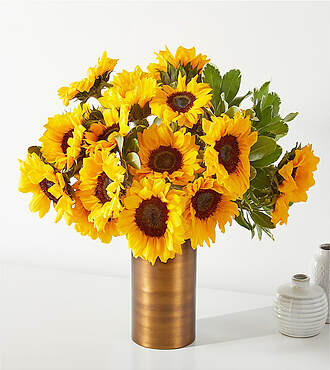
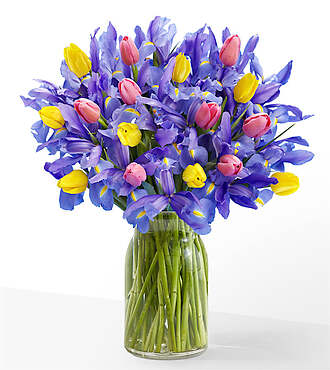

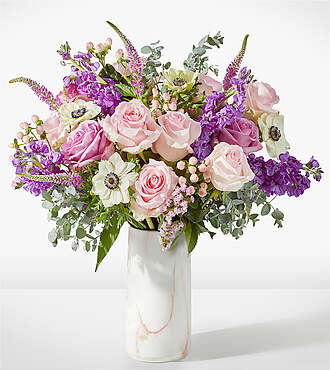
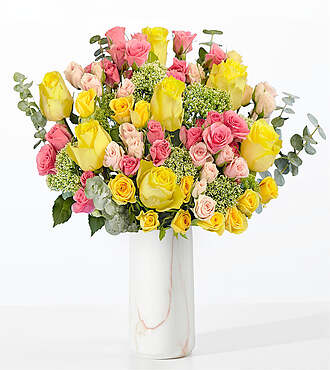
- $49.90
- $79.90
July 1, 2026
Madison July Floral Selection
The Bloom Central flower delivery of the month for July in Madison is the All For You Bouquet
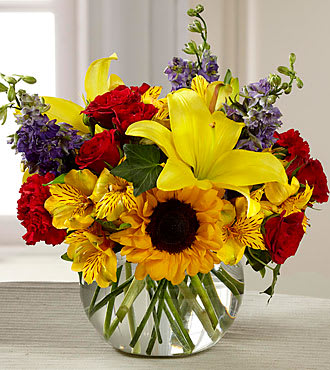
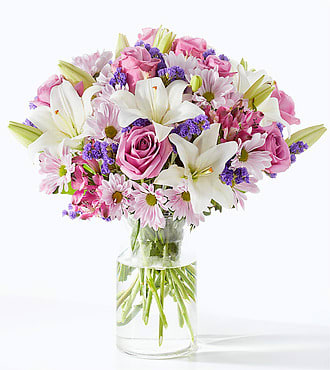
The All For You Bouquet from Bloom Central is an absolute delight! Bursting with happiness and vibrant colors, this floral arrangement is sure to bring joy to anyone's day. With its simple yet stunning design, it effortlessly captures the essence of love and celebration.
Featuring a graceful assortment of fresh flowers, including roses, lilies, sunflowers, and carnations, the All For You Bouquet exudes elegance in every petal. The carefully selected blooms come together in perfect harmony to create a truly mesmerizing display. It's like sending a heartfelt message through nature's own language!
Whether you're looking for the perfect gift for your best friend's birthday or want to surprise someone dear on their anniversary, this bouquet is ideal for any occasion. Its versatility allows it to shine as both a centerpiece at gatherings or as an eye-catching accent piece adorning any space.
What makes the All For You Bouquet truly exceptional is not only its beauty but also its longevity. Crafted by skilled florists using top-quality materials ensures that these blossoms will continue spreading cheer long after they arrive at their destination.
So go ahead - treat yourself or make someone feel extra special today! The All For You Bouquet promises nothing less than sheer joy packaged beautifully within radiant petals meant exclusively For You.
Madison Florist
Madison Flower Delivery - Frequently Asked Questions
- Does Bloom Central offer same-day flower delivery in Madison?
- Yes. Place your order online before 1:00 PM and a local Madison florist will hand-deliver your arrangement the same day. Orders can also be scheduled up to one month in advance.
- Is it safe to order flowers online?
- Absolutely! We utilize a secure, encrypted checkout to protect your personal and payment information. Visa, Mastercard, American Express, Discover, PayPal and Klarna are all accepted.
- What funeral homes does Bloom Central deliver sympathy flowers to in Madison?
- We hand-deliver sympathy and memorial floral arrangements to all funeral homes near Madison, including: Feltner Funeral Home, Heritage Funeral Home, Kirby-Morris Funeral Home, Vanarsdale Funeral Services.
- What nearby cities does Bloom Central also deliver flowers to?
- In addition to Madison, we deliver fresh flowers to many nearby cities including: Riley, Milford, Fort Riley, Ogden, Manhattan, Wakefield, Smoky Hill, Grandview Plaza
- What are the most popular flower arrangements at the Madison florist?
- Three of our most popular arrangements at our Madison florist are: Outdoors Bouquet ($54.90), True Charm Bouquet ($49.90), Loving Light Dishgarden ($69.90). All are available for same-day delivery.
More About Madison
Are looking for a Madison florist because you are not local to the area? If so, here is a brief travelogue of what Madison has to offer. Who knows, perhaps you'll be intrigued enough to come visit soon, partake in some of the fun activities Madison has to offer and deliver flowers to your loved one in person!
Madison, Kansas, sits where the horizon stretches itself thin, a place where the sky seems less a ceiling than a living thing, breathing, shifting, pressing down with the weight of all that open. The town announces itself not with a gasp of neon or the hum of interstate asphalt but with a quiet that registers first as sound: wind combing through switchgrass, the creak of a rusted tractor idling at the edge of a field, the collective murmur of people who still look up when a stranger passes. It is the kind of quiet that, if you’re from a certain kind of city, might initially feel like absence. But stay. Breathe. Absence here is not a void but an invitation.
The Flint Hills roll toward Madison like a rumor, their limestone bones jutting through bluestem prairie in ridges that have resisted plows and progress for centuries. Cattle dot the slopes, black specks against gold-green, moving with the languid certainty of creatures who know their place in the order of things. In spring, the pastures ignite with wildflowers, sunflower, aster, prairie rose, a riot so vivid it seems to apologize for winter. By August, heat hangs over the land like a veil, and the air smells of cut hay and turned earth. Farmers rise before dawn, their combines carving paths through the wheat, while children pedal bikes down gravel roads, trailing dust that settles slow as regret.

Same day service available. Order your Madison floral delivery and surprise someone today!
Downtown, the streets are wide enough to let you feel small. The storefronts, a hardware shop, a café with checkered curtains, a library housed in a converted church, wear their history without nostalgia. At the diner, the coffee is bottomless, and the pie crusts are crimped by hand. The woman behind the counter knows your order before you do. She knows everyone’s. Across the square, the old schoolhouse-turned-museum displays artifacts behind glass: a brass bell, a quilt stitched by settlers, a photo of the ’51 basketball team, their haircuts earnest, their grins timeless. The curator, a man in suspenders who quotes local poets from memory, will tell you the town’s story in chapters, railroads, droughts, revival, but the real history lives in the way he says “we” when he speaks of the flood of ’65.
On Friday nights, the high school football field becomes a cathedral. Every seat in the bleachers fills with bodies who’ve spent the week tending soil, teaching algebra, nursing newborns. They cheer not because they care about touchdowns but because they care about the boy who scores them, the one who bags groceries at the IGA, who helped fix Mrs. Lundgren’s porch last fall. When the game ends, the crowd lingers, swapping stories under stadium lights that buzz like cicadas. Teenagers loiter by pickup trucks, their laughter mixing with the chorus of crickets. No one rushes. Rushing would miss the point.
What binds Madison isn’t spectacle but continuity. The same families plant the same fields their great-great-grandparents cleared. The same oak tree shades the courthouse lawn, its branches arthritic but steady. The same river, the South Fork of the Walnut, ribbons northward, its waters patient, its banks cradling the tracks of herons and raccoons and kids with fishing poles. Time here isn’t money. It’s a shared heirloom, handled carefully, polished by repetition.
To call Madison “quaint” would be to misunderstand it. Quaintness implies performance, a stage set for outsiders. But Madison’s magic is that it persists, unselfconsciously, as itself. It is a town that wakes early, works hard, and gathers often, not out of obligation but because joy, here, is a collective project. The woman who tends the community garden also teaches piano. The man who fixes tractors quotes Twain. In winter, when snow blurs the roads, someone fires up a plow and clears every driveway, no questions asked.
There’s a term in geology: karst. It refers to land shaped by the slow dissolution of bedrock, a process invisible but relentless, leaving behind fissures and caves and springs. Madison is karst of the human variety. It has been shaped by forces unseen, loss, endurance, the faint hum of hope, and what remains is a landscape riddled with grace. You could drive through and see only a flicker on the map. Or you could stop, let the quiet seep in, and feel the weight of all that’s endured, all that persists, beneath the surface.