





- Best Value
- Best Sellers
- Thank You
 $49.90






- $49.90
- $79.90


July 1, 2026
Osborne July Floral Selection
The Bloom Central flower delivery of the month for July in Osborne is the Bountiful Garden Bouquet
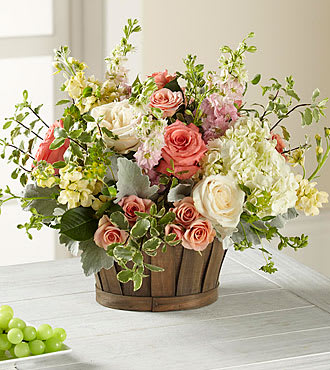
Introducing the delightful Bountiful Garden Bouquet from Bloom Central! This floral arrangement is simply perfect for adding a touch of natural beauty to any space. Bursting with vibrant colors and unique greenery, it's bound to bring smiles all around!
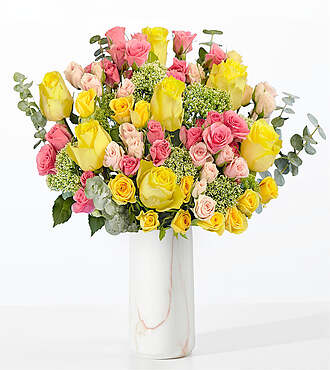
Inspired by French country gardens, this captivating flower bouquet has a Victorian styling your recipient will adore. White and salmon roses made the eyes dance while surrounded by pink larkspur, cream gilly flower, peach spray roses, clouds of white hydrangea, dusty miller stems, and lush greens, arranged to perfection.
Featuring hues ranging from rich peach to soft creams and delicate pinks, this bouquet embodies the warmth of nature's embrace. Whether you're looking for a centerpiece at your next family gathering or want to surprise someone special on their birthday, this arrangement is sure to make hearts skip a beat!
Not only does the Bountiful Garden Bouquet look amazing but it also smells wonderful too! As soon as you approach this beautiful arrangement you'll be greeted by its intoxicating fragrance that fills the air with pure delight.
Thanks to Bloom Central's dedication to quality craftsmanship and attention to detail, these blooms last longer than ever before. You can enjoy their beauty day after day without worrying about them wilting too soon.
This exquisite arrangement comes elegantly presented in an oval stained woodchip basket that helps to blend soft sophistication with raw, rustic appeal. It perfectly complements any decor style; whether your home boasts modern minimalism or cozy farmhouse vibes.
The simplicity in both design and care makes this bouquet ideal even for those who consider themselves less-than-green-thumbs when it comes to plants. With just a little bit of water daily and a touch of love, your Bountiful Garden Bouquet will continue to flourish for days on end.
So why not bring the beauty of nature indoors with the captivating Bountiful Garden Bouquet from Bloom Central? Its rich colors, enchanting fragrance, and effortless charm are sure to brighten up any space and put a smile on everyone's face. Treat yourself or surprise someone you care about - this bouquet is truly a gift that keeps on giving!
Osborne Kansas Flower Delivery
Osborne Flower Delivery - Frequently Asked Questions
- Does Bloom Central offer same-day flower delivery in Osborne?
- Yes. Place your order online before 1:00 PM and a local Osborne florist will hand-deliver your arrangement the same day. Orders can also be scheduled up to one month in advance.
- Is it safe to order flowers online?
- Absolutely! We utilize a secure, encrypted checkout to protect your personal and payment information. Visa, Mastercard, American Express, Discover, PayPal and Klarna are all accepted.
- What hospitals and care facilities does Bloom Central deliver to in Osborne?
- We deliver fresh flower arrangements to all hospitals, nursing homes and care facilities in Osborne Kansas, including: Osborne County Memorial Hospital, Parkview Care Center.
- What funeral homes does Bloom Central deliver sympathy flowers to in Osborne?
- We hand-deliver sympathy and memorial floral arrangements to all funeral homes near Osborne, including: Brocks North Hill Chapel, Schoen Funeral Home & Monuments, Smith Monuments.
- What nearby cities does Bloom Central also deliver flowers to?
- In addition to Osborne, we deliver fresh flowers to many nearby cities including: Ross, Smith Center, Center, Stockton, Beloit, Plainville, Russell, Phillipsburg
- What are the most popular flower arrangements at the Osborne florist?
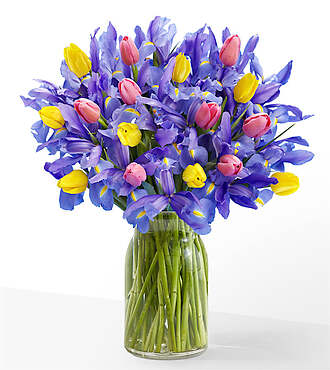
- Three of our most popular arrangements at our Osborne florist are: Bright Days Ahead Bouquet ($59.90), Sky Blue Delight Bouquet ($49.90), Oopsie Daisy Box Bouquet ($59.90). All are available for same-day delivery.
More About Osborne
Are looking for a Osborne florist because you are not local to the area? If so, here is a brief travelogue of what Osborne has to offer. Who knows, perhaps you'll be intrigued enough to come visit soon, partake in some of the fun activities Osborne has to offer and deliver flowers to your loved one in person!
In the flatulent dawn of Osborne, Kansas, the horizon is a lesson in humility. The sky does not so much arch as press down, a blue so vast it seems to mock the idea of elsewhere. The town itself, population 1,431, huddles beneath it like a child’s block arrangement, neat, unpretentious, arranged around a grid of streets named for trees that no longer grow here. To drive into Osborne is to feel the weight of American smallness, a place where the word “community” isn’t an abstraction but a daily verb. Farmers in seed-company caps nod from pickup windows. Children pedal bikes with the urgency of those who believe the next block holds everything worth racing toward. The air smells of cut grass and diesel, a scent that clings to the back of your throat like a secret.
Main Street’s brick facades wear their age without apology. Here, the Osborne Family Drug has been dispensing aspirin and advice since 1903. Next door, the Chatterbox Café serves pie slices so thick they defy geometry, the crusts flaky as old love letters. At the counter, retirees dissect high school football strategies with the intensity of men who once, decades ago, almost made varsity. The post office bulletin board announces quilting circles and tractor pulls, events where attendance is both mandatory and effortless. You show up because everyone does, and everyone does because you show up.

Same day service available. Order your Osborne floral delivery and surprise someone today!
To the east, the Solomon River carves a brown path through fields of winter wheat. Locals will tell you this water is why the town exists, but the truth feels deeper. Osborne’s persistence is a quiet rebellion against the prairie’s indifference. Summers here are crucibles, heat shimmers above the asphalt, cicadas scream from the elms, yet front porches still host lemonade pitchers and gossip. Winters bring blizzards that erase roads, but someone always fires up a snowplow, someone always checks on Mrs. Lundgren at the edge of town. The Osborne County Historical Museum, housed in a former church, catalogs this stubbornness: photos of harvests survived, parades endured, generations persisting in a landscape that offers no promises.
What outsiders miss is the texture beneath the quiet. At Friday night football games, the entire town gathers under stadium lights to watch teenagers collide under the weight of expectation. The cheerleaders’ chants sync with the rustle of corn in distant fields. Later, win or lose, the crowd disperses slowly, savoring the collective hum of presence. In the library, a mural depicts Osborne’s founding, stiff pioneers and stoic livestock, but the real story lives in the aisles, where toddlers tug picture books from shelves while octogenarians relearn email on creaking desktops.
There’s a rhythm here that resists metaphor. Sunrise at the co-op: grain trucks rumble in, their loads tested by men who taste wheat kernels to assess moisture levels. Lunch hour at the senior center: bingo tiles clack as voices debate the merits of casserole recipes. Dusk at the park: couples stroll past the Civil War monument, its inscription worn smooth by decades of weather and fingers. The monument matters less than the ritual, the walking, the talking, the way the light turns the grain elevator pink.
You could call it simplicity, but that’s a lie told by people who mistake silence for emptiness. Osborne’s magic is in its refusal to vanish, its insistence on being more than a dot on a map. It is a place where the gas station cashier knows your coffee order, where the bank closes for funerals, where the sunset is both a daily spectacle and a reason to pause. To leave is to carry this with you: the certainty that somewhere, under that endless sky, a town is still breathing, still tending, still here.