





- New Baby
- Best Sellers
- Under $100







July 1, 2026
Rockford July Floral Selection
The Bloom Central flower delivery of the month for July in Rockford is the Long Stem Red Rose Bouquet
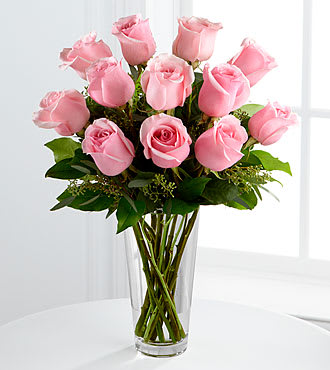
Introducing the exquisite Long Stem Red Rose Bouquet from Bloom Central, a floral arrangement that is sure to steal her heart. With its classic and timeless beauty, this bouquet is one of our most popular, and for good reason.
The simplicity of this bouquet is what makes it so captivating. Each rose stands tall with grace and poise, showcasing their velvety petals in the most enchanting shade of red imaginable. The fragrance emitted by these roses fills the air with an intoxicating aroma that evokes feelings of love and joy.
A true symbol of romance and affection, the Long Stem Red Rose Bouquet captures the essence of love effortlessly. Whether you want to surprise someone special on Valentine's Day or express your heartfelt emotions on an anniversary or birthday, this bouquet will leave the special someone speechless.
What sets this bouquet apart is its versatility - it suits various settings perfectly! Place it as a centerpiece during candlelit dinners or adorn your living space with its elegance; either way, you'll be amazed at how instantly transformed your surroundings become.
Purchasing the Long Stem Red Rose Bouquet from Bloom Central also comes with peace of mind knowing that they source only high-quality flowers directly from trusted growers around the world.
If you are searching for an unforgettable gift that speaks volumes without saying a word - look no further than the breathtaking Long Stem Red Rose Bouquet from Bloom Central! The timeless beauty, delightful fragrance and effortless elegance will make anyone feel cherished and loved. Order yours today and let love bloom!
Rockford Kansas Flower Delivery
Rockford Flower Delivery - Frequently Asked Questions
- Does Bloom Central offer same-day flower delivery in Rockford?
- Yes. Place your order online before 1:00 PM and a local Rockford florist will hand-deliver your arrangement the same day. Orders can also be scheduled up to one month in advance.
- Is it safe to order flowers online?
- Absolutely! We utilize a secure, encrypted checkout to protect your personal and payment information. Visa, Mastercard, American Express, Discover, PayPal and Klarna are all accepted.
- What funeral homes does Bloom Central deliver sympathy flowers to in Rockford?
- We hand-deliver sympathy and memorial floral arrangements to all funeral homes near Rockford, including: Baker Funeral Home, Broadway Mortuary, Central Avenue Funeral Service, Cochran Mortuary & Crematory, Downing & Lahey Mortuary Crematory, Downing, & Lahey Mortuaries, Eck Monument, Heritage Funeral Home, Heritage Funeral Home, Hillside Funeral Home East, Kirby-Morris Funeral Home, Miles Funeral Service, Old Mission Mortuary & Wichita Park Cemetery, Resthaven Mortuary, Rindt-Erdman Funeral Home, Smith Family Mortuary.
- What nearby cities does Bloom Central also deliver flowers to?
- In addition to Rockford, we deliver fresh flowers to many nearby cities including: Mulvane, Derby, Rose Hill, Gypsum, Salem, Gore, Richland, Riverside
- What are the most popular flower arrangements at the Rockford florist?
- Three of our most popular arrangements at our Rockford florist are: Remembrance Bouquet ($79.90), Sunny Sentiments Bouquet ($49.90), Eternal Affection Arrangement with Flag ($94.90). All are available for same-day delivery.
More About Rockford
Are looking for a Rockford florist because you are not local to the area? If so, here is a brief travelogue of what Rockford has to offer. Who knows, perhaps you'll be intrigued enough to come visit soon, partake in some of the fun activities Rockford has to offer and deliver flowers to your loved one in person!
In the flatulent heart of the Great Plains, where the horizon is less a boundary than a dare, sits Rockford, Kansas, population 99 or 100 depending on whether the Thompsons’ eldest has left for college yet. The town announces itself with a water tower so modest it seems embarrassed by its own necessity, and a Main Street whose brick facades have been sun-bleached to the color of weak tea. To drive through Rockford at dusk is to witness a kind of temporal magic: the grain elevators, those cathedral spires of the prairie, catch the last light and hold it like something they’re saving for later, while the streets empty in a rhythm so ancient it feels less like routine than liturgy.
What’s immediately striking is the noise, which is to say the absence of it. The wind here has a different voice. It doesn’t howl so much as hum, threading through the power lines, riffling the pages of the phone book left on the bench outside the post office. The post office itself is a shrine to analog life, its bulletin board papered with index cards advertising babysitting services and fresh corn, the ink smudged by thumbs that have known the weight of a dozen melons. Inside, Lois, the postmaster since the Reagan era, will tell you about her granddaughter’s 4H trophy while hand-canceling stamps with the focus of a monk.

Same day service available. Order your Rockford floral delivery and surprise someone today!
The people of Rockford move through their days with a gait that suggests they’ve agreed, tacitly, to outwait the sun. At the Rockford Diner, where the coffee is bottomless and the pie crusts flakier than a geometry textbook, conversation orbits the weather with the intensity of a cult. Rain isn’t just rain here; it’s a character in the town’s ongoing saga, a fickle deity whose whims dictate the tilt of heads, the depth of sighs, the way Mr. Jarvis adjusts his seed cap before saying, “Might get a sprinkle Tuesday.” The diner’s vinyl booths have absorbed decades of such prophecies, their cracks mapping the passage of time as faithfully as rings in a trunk.
Outside, the fields stretch away in all directions, geometric proof of human stubbornness. The soil here is a living thing, a collaborator. Tractors inch along the roads at dawn, their drivers waving with the solemnity of knights. You can’t help but notice how the light bends around everything, how it turns the wheat into a sheet of bronze, how it pools in the ruts of gravel roads, how it makes the white clapboard church glow like a lantern. Sundays, the congregation sings hymns loud enough to startle the crows, their voices carrying past the cemetery where the headstones face east, as if waiting for the sunrise.
Children still ride bikes to the Rockford General Store for baseball cards and popsicles, their routes unchanged since their parents’ parents did the same. The store’s screen door slams with a sound so quintessentially summer it could make a grown man weep. Inside, the floorboards creak underfoot, and the air smells of licorice and motor oil. The owner, Bud, keeps a jar of pickled eggs on the counter not because anyone buys them, but because removing it would feel like editing a sacred text.
There’s a resilience here that’s easy to mistake for stasis. The schoolhouse, its bell long silent, now hosts quilting circles and town meetings where debates over road repairs escalate into poetry. Neighbors still show up with casseroles when someone’s sick, still gather in driveways to watch storms roll in, still laugh at jokes that are older than the pavement. It’s tempting to frame Rockford as a relic, a holdout against the century’s roar. But that’s not quite right. What happens here isn’t resistance. It’s a kind of vigilance, a refusal to let the thread snap. You get the sense they’re not keeping the world out. They’re keeping something in.