





- Anniversary
- Best Sellers
- Under $100
 $69.90













June 1, 2026
Jenkins June Floral Selection
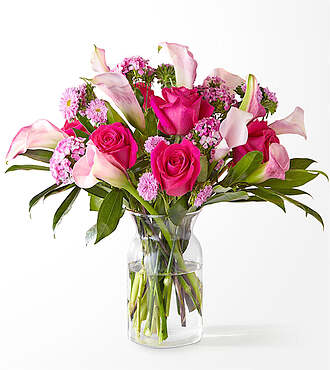
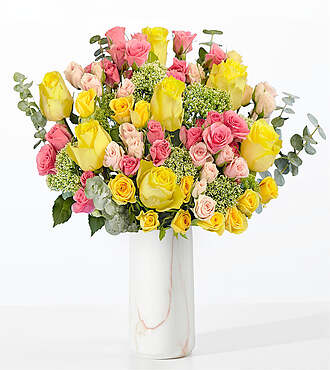
The Bloom Central flower delivery of the month for June in Jenkins is the Blooming Masterpiece Rose Bouquet

The Blooming Masterpiece Rose Bouquet from Bloom Central is the perfect floral arrangement to brighten up any space in your home. With its vibrant colors and stunning presentation, it will surely catch the eyes of all who see it.
This bouquet features our finest red roses. Each rose is carefully hand-picked by skilled florists to ensure only the freshest blooms make their way into this masterpiece. The petals are velvety smooth to the touch and exude a delightful fragrance that fills the room with warmth and happiness.
What sets this bouquet apart is its exquisite arrangement. The roses are artfully grouped together in a tasteful glass vase, allowing each bloom to stand out on its own while also complementing one another. It's like seeing an artist's canvas come to life!
Whether you place it as a centerpiece on your dining table or use it as an accent piece in your living room, this arrangement instantly adds sophistication and style to any setting. Its timeless beauty is a classic expression of love and sweet affection.
One thing worth mentioning about this gorgeous bouquet is how long-lasting it can be with proper care. By following simple instructions provided by Bloom Central upon delivery, you can enjoy these blossoms for days on end without worry.
With every glance at the Blooming Masterpiece Rose Bouquet from Bloom Central, you'll feel uplifted and inspired by nature's wonders captured so effortlessly within such elegance. This lovely floral arrangement truly deserves its name - a blooming masterpiece indeed!
Jenkins Kentucky Flower Delivery
Jenkins Flower Delivery - Frequently Asked Questions
- Does Bloom Central offer same-day flower delivery in Jenkins?
- Yes. Place your order online before 1:00 PM and a local Jenkins florist will hand-deliver your arrangement the same day. Orders can also be scheduled up to one month in advance.
- Is it safe to order flowers online?
- Absolutely! We utilize a secure, encrypted checkout to protect your personal and payment information. Visa, Mastercard, American Express, Discover, PayPal and Klarna are all accepted.
- What funeral homes does Bloom Central deliver sympathy flowers to in Jenkins?
- We hand-deliver sympathy and memorial floral arrangements to all funeral homes near Jenkins, including: Carter-Trent Funeral Homes, Community Funeral Home, East Lawn Funeral Home & East Lawn Memorial Park, Lakeview Memorial Cemetery, Nelson Frazier Funeral Homes, Phelps Funeral Services.
- What nearby cities does Bloom Central also deliver flowers to?
- In addition to Jenkins, we deliver fresh flowers to many nearby cities including: Whitesburg, Elkhorn City, Pikeville, Coal Run Village, Cumberland, Hazard, Prestonsburg, Harlan
- What are the most popular flower arrangements at the Jenkins florist?
- Three of our most popular arrangements at our Jenkins florist are: Quality Time Bouquet ($54.90), Bright Lights Bouquet with Lavender Basket ($54.90), Golden Gourd Pumpkin Bouquet ($59.90). All are available for same-day delivery.
More About Jenkins
Are looking for a Jenkins florist because you are not local to the area? If so, here is a brief travelogue of what Jenkins has to offer. Who knows, perhaps you'll be intrigued enough to come visit soon, partake in some of the fun activities Jenkins has to offer and deliver flowers to your loved one in person!
In Jenkins, Kentucky, the sun rises like a slow apology over the folded green hills, their ridges hunched and patient as old men at a diner counter. The air here smells of cut grass and distant rain, of diesel from the morning school buses idling outside red-brick buildings. To walk Jenkins’ streets at dawn is to feel time’s grip loosen, a town where the past isn’t dead so much as politely excused from the table, where the future arrives not with a bang but the creak of a porch swing. The railroad tracks, long stripped of their coal-heavy purpose, now hum with the footsteps of kids balancing on steel, backpacks swaying like pendulums. Everyone here knows your face, if not your name, and a nod from a stranger carries the weight of an unspoken pact: We’re in this together, whatever this is.
History clings to Jenkins like lichen on oak. You see it in the soot-smudged bricks of the old coal company offices, repurposed into a community center where teenagers weld sculptures from scrap metal. You hear it in the stories of retirees who gather at the library, their laughter ricocheting off shelves of donated paperbacks. Once a boomtown fueled by black rock and sweat, Jenkins now thrives on quieter kinds of excavation. Volunteers till community gardens where strip mines once gaped. Artists convert abandoned storefronts into galleries lit by thrifted lamps. The high school’s marching band practices Sousa marches in a parking lot that once staged union rallies. Progress here isn’t a bulldozer; it’s a hand-stitched quilt, each patch a minor victory, a new bike trail, a restored mural, a grant for solar streetlights.

Same day service available. Order your Jenkins floral delivery and surprise someone today!
The mountains encircle Jenkins like a mother’s arms, their slopes dense with rhododendron and the gossip of creek water. Hikers tackle the Little Shepherd Trail, pausing to squint at hawks drafting thermal currents. Fishermen wade into Elkhorn Lake, their lines slicing the surface tension between sky and reflection. Even the dogs seem to grasp the area’s quiet charisma, border collies herd nothing in particular, tails wagging metronome-like, while basset hounds doze in patches of shade that smell of warm pine. At dusk, the town pool echoes with cannonball splashes, the lifeguard’s whistle halfhearted against the din. Parents sip sweet tea on bleachers, trading rumors about a new coffee shop or the progress of the skatepark fundraiser. The ordinary becomes liturgy.
What binds Jenkins isn’t geography or nostalgia but a shared grammar of gestures. A mechanic fixes a single mother’s carburetor for free. A teacher spends Saturdays tutoring beside a window framed by oak branches. The mayor, also the town barber, gives uneven haircuts while debating zoning laws. There’s a genius to this choreography, a sense that every small act matters precisely because no one’s watching. The church bells ring twice daily, less a call to worship than a reminder: You’re here. This counts. In a nation obsessed with scale, Jenkins dares to be minor, intimate, a place where the word hope isn’t an abstraction but the smell of fresh asphalt on a repaved road, the sound of a banjo tuning up at the Friday farmers market.
To leave Jenkins is to carry its quiet with you, the way the mist settles in the hollows at dawn, how the stars hum undistracted by city glow. You realize, miles later, that the town’s truest export isn’t crafts or crops but a question: What if enough isn’t a compromise but a kind of freedom? What if the good life isn’t about accumulation but the skill of holding still, of noticing the way light pools in a pothole, how a shared laugh can bend the arc of a day? Jenkins, in its unassuming way, suggests answers without words. The hills endure. The people adapt. The world spins. You take a breath, deeper than you expected, and continue.