





- Get Well
- Best Sellers
- Thank You
 $54.90
- $54.90
- $79.90
- $54.90
- $49.90
- $49.90


- $49.90
- $79.90

July 1, 2026
Warsaw July Floral Selection
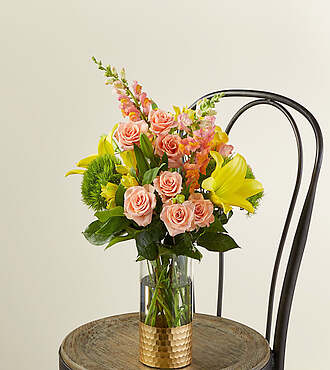
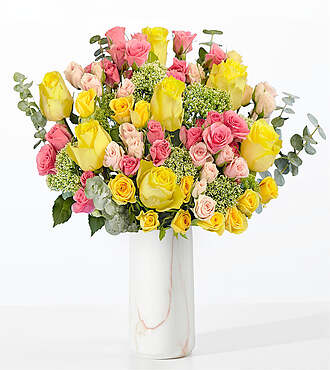
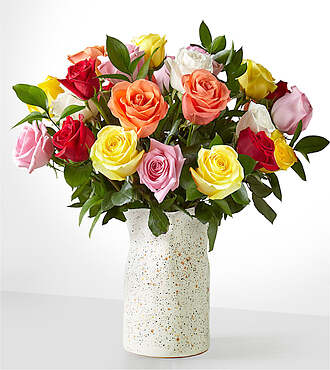
The Bloom Central flower delivery of the month for July in Warsaw is the Graceful Grandeur Rose Bouquet
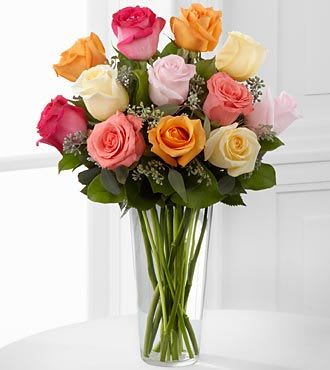
The Graceful Grandeur Rose Bouquet from Bloom Central is simply stunning. With its elegant and sophisticated design, it's sure to make a lasting impression on the lucky recipient.
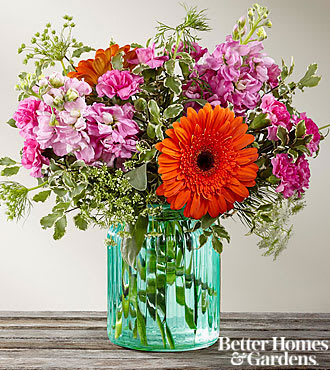
This exquisite bouquet features a generous arrangement of lush roses in shades of cream, orange, hot pink, coral and light pink. This soft pastel colors create a romantic and feminine feel that is perfect for any occasion.
The roses themselves are nothing short of perfection. Each bloom is carefully selected for its beauty, freshness and delicate fragrance. They are hand-picked by skilled florists who have an eye for detail and a passion for creating breathtaking arrangements.
The combination of different rose varieties adds depth and dimension to the bouquet. The contrasting sizes and shapes create an interesting visual balance that draws the eye in.
What sets this bouquet apart is not only its beauty but also its size. It's generously sized with enough blooms to make a grand statement without overwhelming the recipient or their space. Whether displayed as a centerpiece or placed on a mantelpiece the arrangement will bring joy wherever it goes.
When you send someone this gorgeous floral arrangement, you're not just sending flowers - you're sending love, appreciation and thoughtfulness all bundled up into one beautiful package.
The Graceful Grandeur Rose Bouquet from Bloom Central exudes elegance from every petal. The stunning array of colorful roses combined with expert craftsmanship creates an unforgettable floral masterpiece that will brighten anyone's day with pure delight.
Warsaw Kentucky Flower Delivery
Warsaw Flower Delivery - Frequently Asked Questions
- Does Bloom Central offer same-day flower delivery in Warsaw?
- Yes. Place your order online before 1:00 PM and a local Warsaw florist will hand-deliver your arrangement the same day. Orders can also be scheduled up to one month in advance.
- Is it safe to order flowers online?
- Absolutely! We utilize a secure, encrypted checkout to protect your personal and payment information. Visa, Mastercard, American Express, Discover, PayPal and Klarna are all accepted.
- What hospitals and care facilities does Bloom Central deliver to in Warsaw?
- We deliver fresh flower arrangements to all hospitals, nursing homes and care facilities in Warsaw Kentucky, including: Providence Gallatin.
- What funeral homes does Bloom Central deliver sympathy flowers to in Warsaw?
- We hand-deliver sympathy and memorial floral arrangements to all funeral homes near Warsaw, including: Brater-Winter Funeral Home, Connley Bros Funeral Home, Cooper Funeral Home, E.C. Nurre Funeral Home, Faithful Friends Pet Crematory, Fares J Radel Funeral Homes and Crematory, Heady-Radcliffe Funeral Home & Cremation Services, Linnemann Funeral Homes, Middendorf-Bullock Funeral Homes, Mihovk-Rosenacker Funeral Home, Morgan & Nay Funeral Centre, Spring Grove Cemetery and Arboretum, Stith Funeral Homes, Strawser Funeral Home, Thomas-Justin Funrl Homes, W E Lusain Funeral Home, Ware Funeral Home, Webster Funrl Home.
- What nearby cities does Bloom Central also deliver flowers to?
- In addition to Warsaw, we deliver fresh flowers to many nearby cities including: Verona, Crittenden, Walton, Union, Carrollton, Owenton, Dry Ridge, Oakbrook
- What are the most popular flower arrangements at the Warsaw florist?
- Three of our most popular arrangements at our Warsaw florist are: New Dream Basket ($59.90), Special Request 270 ($270.00), Best Day Bouquet Set of 3 ($204.90). All are available for same-day delivery.
More About Warsaw
Are looking for a Warsaw florist because you are not local to the area? If so, here is a brief travelogue of what Warsaw has to offer. Who knows, perhaps you'll be intrigued enough to come visit soon, partake in some of the fun activities Warsaw has to offer and deliver flowers to your loved one in person!
Warsaw, Kentucky, sits along the Ohio River like a comma in a long, winding sentence written by some divine hand, a pause between the green hills and the water’s steady flow. To call it a river town feels both obvious and insufficient. The Ohio here isn’t just a geographic feature but a character, a silent witness to the small human dramas unfolding daily on its banks. Mornings begin with mist rising off the water, blurring the line between Kentucky and Indiana, as if the river itself resists the idea of borders. Fishermen in aluminum boats cast lines into the current, their motions practiced and rhythmic, while onshore, the town stirs. A woman jogs past the old courthouse, its brick facade worn soft by decades of weather. A boy on a bicycle delivers newspapers, the rubber tires hissing against asphalt still damp with dew.
The heart of Warsaw is its downtown, a cluster of buildings that seem to lean toward one another like old friends sharing secrets. Here, time moves at a pace that feels almost deliberate. The hardware store has creaky wooden floors polished smooth by generations of work boots. The owner knows every customer by name and will hand you a spare key if you lock yourself out of your truck. At the diner on Main Street, the coffee is bottomless, and the bacon crackles on the griddle with a sound so familiar it could be the town’s unofficial anthem. Regulars sit at the counter, swapping stories about high school football and the mysterious fox that’s been raiding trash cans near the elementary school. The waitress calls everyone “sugar” without irony, and somehow it works.

Same day service available. Order your Warsaw floral delivery and surprise someone today!
What’s striking about Warsaw isn’t its quaintness, though it has that in spades, but its quiet resilience. Floods have come and gone, leaving waterlines on basement walls like ghostly reminders. Each time, the town rebuilds, repaints, replants. There’s a collective understanding here that survival isn’t about defiance but adaptation, a willingness to bend without breaking. The community center hosts potlucks where casserole dishes outnumber attendees, and the fire department’s annual pancake breakfast draws lines around the block. These rituals aren’t nostalgia; they’re lifelines, ways of saying, We’re still here.
Outside town, the landscape opens into fields of soybeans and tobacco, the rows so straight they could’ve been drawn with a ruler. Farmers wave from tractors, their hands rough and capable. Children play in yards dotted with tire swings and makeshift forts, their laughter carrying on the breeze. At dusk, the sky turns the color of peach flesh, and the river mirrors it, a fleeting masterpiece. People sit on porches, watching lightning bugs blink their Morse code over lawns. The air smells of cut grass and distant rain.
The ferry still runs here, a hulking metal beast that shuttles cars across the Ohio with the efficiency of a metronome. Riding it feels like stepping into a living archive. Teenagers snap selfies against the railing, while old-timers squint at the horizon, remembering when the ferry was the only way across. The pilot nods at regulars, his hands steady on the wheel. There’s something profoundly democratic about the ferry, a dollar per car, no reservations, first come, first served. It doesn’t hurry. It doesn’t need to.
To visit Warsaw is to glimpse a version of America that persists in the margins, unburdened by the feverish chase of progress. It’s a place where the past isn’t a relic but a layer, sedimented into the present. The library keeps local genealogy records in a back room, and the historical society fights cheerfully over who has the best recipe for cornbread. Yet there’s nothing backward-looking about the town’s spirit. A new skate park buzzes with kids practicing ollies, and the coffee shop offers almond milk lattes alongside classic drip. The balance feels organic, unforced.
By nightfall, the stars emerge with a clarity city dwellers forget exists. The river slips by, dark and constant, carrying the reflections of a thousand lights from both shores. Somewhere, a dog barks. A screen door slams. Warsaw, in this moment, feels less like a dot on a map than a promise, that some things endure, not by accident, but because people choose, day after day, to keep them alive.