





- Anniversary
- Best Sellers
- Sympathy
 $69.90



- $297.90
- $64.90



July 1, 2026
East Machias July Floral Selection
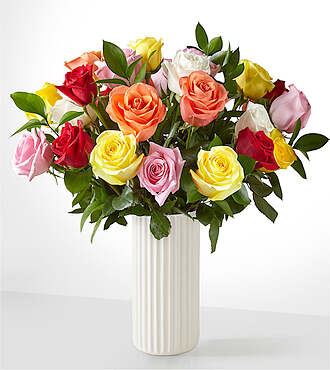
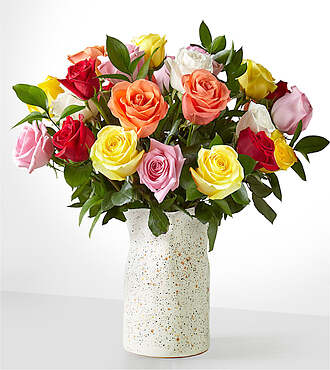
The Bloom Central flower delivery of the month for July in East Machias is the Blooming Masterpiece Rose Bouquet
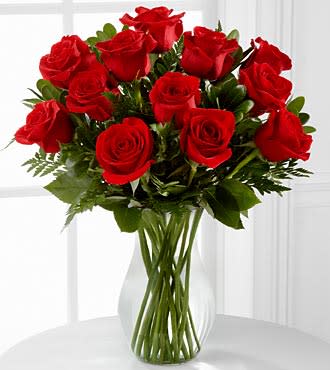
The Blooming Masterpiece Rose Bouquet from Bloom Central is the perfect floral arrangement to brighten up any space in your home. With its vibrant colors and stunning presentation, it will surely catch the eyes of all who see it.
This bouquet features our finest red roses. Each rose is carefully hand-picked by skilled florists to ensure only the freshest blooms make their way into this masterpiece. The petals are velvety smooth to the touch and exude a delightful fragrance that fills the room with warmth and happiness.
What sets this bouquet apart is its exquisite arrangement. The roses are artfully grouped together in a tasteful glass vase, allowing each bloom to stand out on its own while also complementing one another. It's like seeing an artist's canvas come to life!
Whether you place it as a centerpiece on your dining table or use it as an accent piece in your living room, this arrangement instantly adds sophistication and style to any setting. Its timeless beauty is a classic expression of love and sweet affection.
One thing worth mentioning about this gorgeous bouquet is how long-lasting it can be with proper care. By following simple instructions provided by Bloom Central upon delivery, you can enjoy these blossoms for days on end without worry.
With every glance at the Blooming Masterpiece Rose Bouquet from Bloom Central, you'll feel uplifted and inspired by nature's wonders captured so effortlessly within such elegance. This lovely floral arrangement truly deserves its name - a blooming masterpiece indeed!
East Machias Maine Flower Delivery
East Machias Flower Delivery - Frequently Asked Questions
- Does Bloom Central offer same-day flower delivery in East Machias?
- Yes. Place your order online before 1:00 PM and a local East Machias florist will hand-deliver your arrangement the same day. Orders can also be scheduled up to one month in advance.
- Is it safe to order flowers online?
- Absolutely! We utilize a secure, encrypted checkout to protect your personal and payment information. Visa, Mastercard, American Express, Discover, PayPal and Klarna are all accepted.
- What funeral homes does Bloom Central deliver sympathy flowers to in East Machias?
- We hand-deliver sympathy and memorial floral arrangements to all funeral homes near East Machias, including: All Souls by the Sea Church, McClure Funeral Services.
- What nearby cities does Bloom Central also deliver flowers to?
- In addition to East Machias, we deliver fresh flowers to many nearby cities including: Machias, Machiasport, Jonesport, Lubec, Perry, Addison, Eastport, Harrington
- What are the most popular flower arrangements at the East Machias florist?
- Three of our most popular arrangements at our East Machias florist are: Fondly Bouquet ($49.90), Pure Romance Rose Bouquet ($59.90), Beautiful Day Bouquet ($69.90). All are available for same-day delivery.
More About East Machias
Are looking for a East Machias florist because you are not local to the area? If so, here is a brief travelogue of what East Machias has to offer. Who knows, perhaps you'll be intrigued enough to come visit soon, partake in some of the fun activities East Machias has to offer and deliver flowers to your loved one in person!
East Machias sits at the edge of Washington County, Maine, where the land seems to exhale into the Atlantic, a place where the concept of “remote” transforms from abstraction to visceral fact. The town hugs the Machias River, a vein of cold, tea-colored water that carves the region’s identity as deliberately as the locals split firewood, methodical, practiced, a rhythm older than the mills that once thrived here. To drive into East Machias is to feel time slow in a way that modern life rarely permits. The road narrows. Pines tower like sentinels. The air smells of brine and turned earth. Cell service stutters, then dies. You are here, the landscape says, and here is enough.
The people of East Machias move with the quiet efficiency of those who understand their role as stewards of a fragile equilibrium. Lobstermen rise before dawn, their boats slicing through fog. Farmers coax blueberries from acidic soil, their hands stained indigo by August. Teachers in the red-brick schoolhouse lecture under the gaze of portraits of long-dead principals, their lessons punctuated by the chatter of chickadees outside open windows. There’s a sense of continuity here, a thread connecting the Passamaquoddy who first harvested these lands to the fifth-generation lobsterman who still navigates by the same tides.

Same day service available. Order your East Machias floral delivery and surprise someone today!
Downtown, a term used generously, consists of a post office, a general store with creaking wood floors, and a white-steepled church whose bells mark time more reliably than any smartphone. The store’s shelves hold essentials: Bundt pans, fishing line, maple syrup in glass jugs. The clerk knows your name by day two. Conversations orbit the weather, the price of bait, the progress of the high school soccer team. No one hurries. No one interrupts. Eye contact lingers. In a world where “community” often connotes algorithmic overlap, East Machias insists on the original definition: a shared fate, literal and unpretentious.
The river is the town’s central nervous system. In spring, it swells with snowmelt, churning over rocks worn smooth by centuries. Kids dare each other to leap from the railway trestle, their shouts echoing off the water. In autumn, salmon fight upstream, their bodies flickering silver beneath the surface. Artists set up easels on the banks, trying to capture the way light filters through hemlocks at golden hour. Fishermen cast lines with the patience of monks, their solitude punctuated only by the occasional loon’s cry. The river doesn’t care about deadlines or dopamine hits. It flows. You adjust.
History here isn’t confined to plaques or museums. It’s in the cellar holes of homesteads reclaimed by forest, the stone walls that crisscross the woods like forgotten fences. It’s in the stories exchanged at the annual Wild Blueberry Festival, where pie-eating contests and fiddle music coexist without a trace of irony. It’s in the way old-timers still refer to the “Fire of ’47” as if it happened last week, their voices tinged with awe at the memory of flames lighting the sky from miles away. The past isn’t archived. It’s breathed.
What East Machias lacks in convenience it repays in clarity. Nights are so dark the Milky Way seems within reach. Winters are brutal but honest, a test of preparation and grit. Summers hum with lupine and lady’s slipper, the fields a riot of color. Visitors sometimes ask locals, “But what do you do here?” The answer is often a shrug, a smile, a gesture toward the horizon where the river meets the sea. The question contains its own misunderstanding. In East Machias, you don’t do. You are. And being, fully, uncuratedly, is a rare currency in an age of relentless performance.
To leave is to feel the place cling like a burr to your sock. You’ll remember the way the fog lifted at noon, revealing the river’s silver bend. The way the cashier waved off your last dollar, saying, “Next time.” The way the stars hummed. East Machias doesn’t shout. It whispers. And somehow, that whisper carries.