





- Birthday
- Best Sellers
- Under $60




 $49.90


June 1, 2026
Montague June Floral Selection
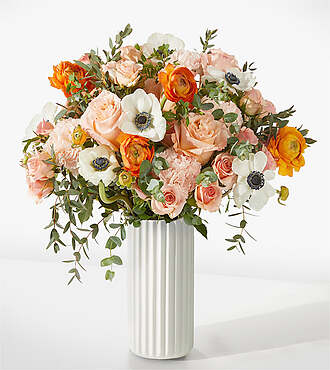
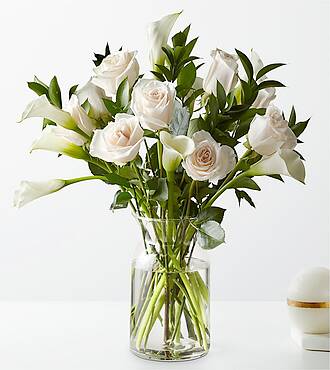
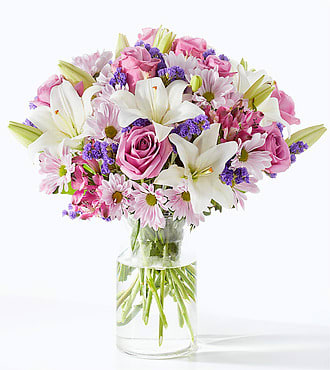
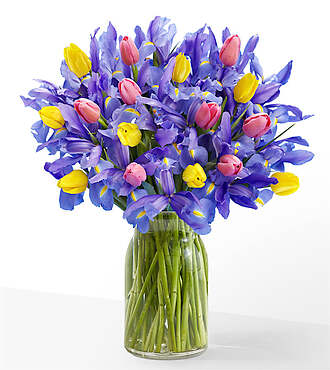
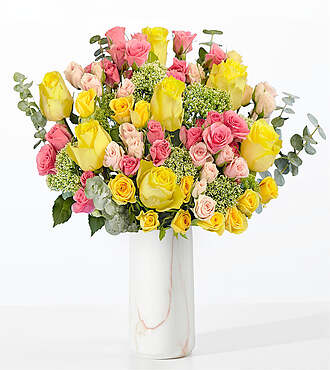
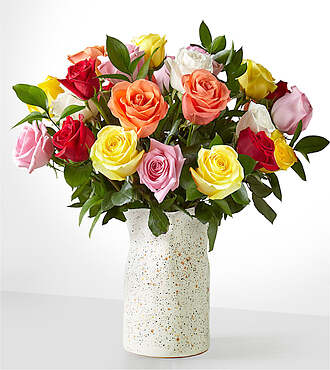
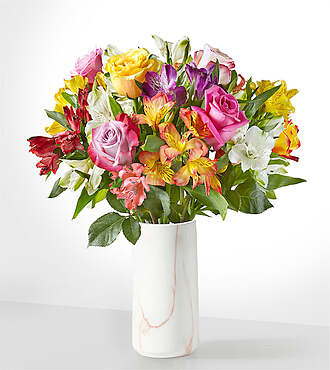
The Bloom Central flower delivery of the month for June in Montague is the Blooming Masterpiece Rose Bouquet

The Blooming Masterpiece Rose Bouquet from Bloom Central is the perfect floral arrangement to brighten up any space in your home. With its vibrant colors and stunning presentation, it will surely catch the eyes of all who see it.
This bouquet features our finest red roses. Each rose is carefully hand-picked by skilled florists to ensure only the freshest blooms make their way into this masterpiece. The petals are velvety smooth to the touch and exude a delightful fragrance that fills the room with warmth and happiness.
What sets this bouquet apart is its exquisite arrangement. The roses are artfully grouped together in a tasteful glass vase, allowing each bloom to stand out on its own while also complementing one another. It's like seeing an artist's canvas come to life!
Whether you place it as a centerpiece on your dining table or use it as an accent piece in your living room, this arrangement instantly adds sophistication and style to any setting. Its timeless beauty is a classic expression of love and sweet affection.
One thing worth mentioning about this gorgeous bouquet is how long-lasting it can be with proper care. By following simple instructions provided by Bloom Central upon delivery, you can enjoy these blossoms for days on end without worry.
With every glance at the Blooming Masterpiece Rose Bouquet from Bloom Central, you'll feel uplifted and inspired by nature's wonders captured so effortlessly within such elegance. This lovely floral arrangement truly deserves its name - a blooming masterpiece indeed!
Montague Michigan Flower Delivery
Montague Flower Delivery - Frequently Asked Questions
- Does Bloom Central offer same-day flower delivery in Montague?
- Yes. Place your order online before 1:00 PM and a local Montague florist will hand-deliver your arrangement the same day. Orders can also be scheduled up to one month in advance.
- Is it safe to order flowers online?
- Absolutely! We utilize a secure, encrypted checkout to protect your personal and payment information. Visa, Mastercard, American Express, Discover, PayPal and Klarna are all accepted.
- What funeral homes does Bloom Central deliver sympathy flowers to in Montague?
- We hand-deliver sympathy and memorial floral arrangements to all funeral homes near Montague, including: Beacon Cremation and Funeral Service, Clock Funeral Home, Harris Funeral Home, Mouth Cemetary, Sytsema Funeral Homes, Sytsema Funeral Home, Toombs Funeral Home.
- What churches does Bloom Central deliver flowers to in Montague?
- We deliver fresh floral arrangements to all churches and places of worship in Montague, including: Grace Bible Church.
- What nearby cities does Bloom Central also deliver flowers to?
- In addition to Montague, we deliver fresh flowers to many nearby cities including: Whitehall, White River, Fruitland, Lakewood Club, Blue Lake, Dalton, Laketon, Twin Lake
- What are the most popular flower arrangements at the Montague florist?
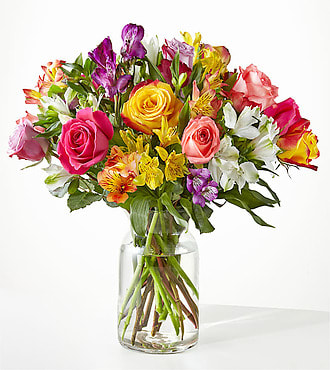
- Three of our most popular arrangements at our Montague florist are: Light of My Life Bouquet and Happy Birthday Topper ($54.90), Feast of Color A Florist Original ($54.90), Only The Best Luxury Bouquet- VASE INCLUDED ($147.90). All are available for same-day delivery.
More About Montague
Are looking for a Montague florist because you are not local to the area? If so, here is a brief travelogue of what Montague has to offer. Who knows, perhaps you'll be intrigued enough to come visit soon, partake in some of the fun activities Montague has to offer and deliver flowers to your loved one in person!
Montague, Michigan, sits on the edge of White Lake like a child’s forgotten toy, sun-bleached and unassuming, yet impossible to discard once you’ve noticed how its edges catch the light. The town’s defining feature, a 48-foot steel cross planted at the water’s edge in 1976, rises over the harbor with the quiet insistence of a punctuation mark nobody agreed on but everyone accepts. You can see it from the fishing pier, where retirees cast lines into the shallows, their postures bent into commas by decades of repetition. The cross doesn’t proselytize. It just is. A local once told me it’s there “to remind the lake who’s in charge,” which feels both profoundly silly and weirdly correct, a blend of humility and hubris that defines this place.
White Lake itself is a liquid paradox, part industrial channel, part pristine playground. Freighters glide through the channel like slow-motion dinosaurs, hauling aggregate to places with names you’ll never google, while kayakers paddle past their wakes, waving at crews who wave back as if this symbiosis were the most natural thing in the world. The dunes here are not the postcard dunes of Saugatuck, their curves airbrushed by tourism boards. Montague’s dunes are rougher, wilder, their sand littered with driftwood that twists into shapes resembling arthritic hands. Kids climb them anyway, sneakers slipping, laughter ricocheting off the marram grass, and at the top, they’re rewarded with a view that stretches all the way to Wisconsin, or so the legend goes.

Same day service available. Order your Montague floral delivery and surprise someone today!
Downtown Montague has the vibe of a cassette tape you’d find in a thrift store, slightly warped but still playable. The storefronts wear their histories like faded tattoos: a bakery that’s been kneading dough since the ’50s, a bookstore where the owner recommends novels based on your shoes. At the farmers market, held every Thursday in a parking lot that doubles as a seagull convention center, vendors hawk honey and heirloom tomatoes with the intensity of Wall Street traders, except here the currency is gossip. A woman selling zucchini will tell you about her grandson’s soccer game before you’ve even handed her a dollar. The tomatoes, she assures you, are “so ripe they’ll explode in your car,” and you believe her because the alternative, doubt, feels like violating some unspoken pact.
The real magic happens at the edge of town, where the Pere Marquette River slips into Lake Michigan. This is where fishermen in waders stand hip-deep in current, their lines scribbling the water, and where every autumn, salmon surge upstream in a frenzy that turns the river silver. People gather to watch, not because it’s spectacular, though it is, but because it’s a ritual, a reminder that some forces still operate beyond human schedules. Teenagers skip stones. Toddlers throw pebbles and scream when they splash. An old man in a lawn chair nods at the fish as they pass, as if acknowledging old friends.
Summers here are a temporary tattoo, vivid but fleeting. The population doubles with tourists who come for the sunsets, which don’t so much fade as perform, streaking the sky with colors Crayola hasn’t invented yet. But winter is when Montague reveals its bones. The cross wears a cap of snow. The lake freezes into a jagged mosaic, and the streets empty into a silence so thick you can hear the creak of porch swings rocking in the wind. It’s a season for shoveling and introspection, for realizing that a town this small doesn’t survive by accident. It survives because people choose, daily, to keep its heart beating.
What Montague understands, what it whispers in the clatter of sail rigging and the hiss of sprinklers watering flower beds, is that ordinary life, observed closely enough, becomes extraordinary. The woman who paints watercolors of the cross at dawn. The barber who gives free haircuts to high school grads. The librarian who stocks beach reads and Proust. It’s a town that refuses to be a metaphor, even as it invites you to project meaning onto its every pebble. Come here, and you’ll leave with sand in your shoes and a question you can’t quite articulate: Is it the place that’s special, or the way it teaches you to see?