





- New Baby
- Best Sellers
- Under $100




July 1, 2026
Canby July Floral Selection
The Bloom Central flower delivery of the month for July in Canby is the Long Stem Red Rose Bouquet
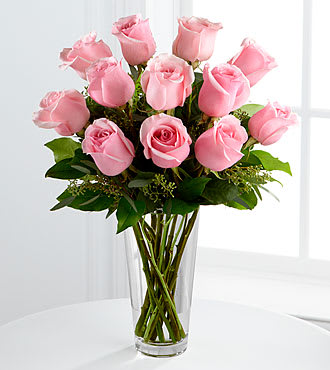
Introducing the exquisite Long Stem Red Rose Bouquet from Bloom Central, a floral arrangement that is sure to steal her heart. With its classic and timeless beauty, this bouquet is one of our most popular, and for good reason.
The simplicity of this bouquet is what makes it so captivating. Each rose stands tall with grace and poise, showcasing their velvety petals in the most enchanting shade of red imaginable. The fragrance emitted by these roses fills the air with an intoxicating aroma that evokes feelings of love and joy.
A true symbol of romance and affection, the Long Stem Red Rose Bouquet captures the essence of love effortlessly. Whether you want to surprise someone special on Valentine's Day or express your heartfelt emotions on an anniversary or birthday, this bouquet will leave the special someone speechless.
What sets this bouquet apart is its versatility - it suits various settings perfectly! Place it as a centerpiece during candlelit dinners or adorn your living space with its elegance; either way, you'll be amazed at how instantly transformed your surroundings become.
Purchasing the Long Stem Red Rose Bouquet from Bloom Central also comes with peace of mind knowing that they source only high-quality flowers directly from trusted growers around the world.
If you are searching for an unforgettable gift that speaks volumes without saying a word - look no further than the breathtaking Long Stem Red Rose Bouquet from Bloom Central! The timeless beauty, delightful fragrance and effortless elegance will make anyone feel cherished and loved. Order yours today and let love bloom!
Local Flower Delivery in Canby
Canby Flower Delivery - Frequently Asked Questions
- Does Bloom Central offer same-day flower delivery in Canby?
- Yes. Place your order online before 1:00 PM and a local Canby florist will hand-deliver your arrangement the same day. Orders can also be scheduled up to one month in advance.
- Is it safe to order flowers online?
- Absolutely! We utilize a secure, encrypted checkout to protect your personal and payment information. Visa, Mastercard, American Express, Discover, PayPal and Klarna are all accepted.
- What hospitals and care facilities does Bloom Central deliver to in Canby?
- We deliver fresh flower arrangements to all hospitals, nursing homes and care facilities in Canby Minnesota, including: Sanford Canby Medical Center, Sanford Canby Medical Center.
- What funeral homes does Bloom Central deliver sympathy flowers to in Canby?
- We hand-deliver sympathy and memorial floral arrangements to all funeral homes near Canby, including: Wing-Bain Funeral Home.
- What nearby cities does Bloom Central also deliver flowers to?
- In addition to Canby, we deliver fresh flowers to many nearby cities including: Minneota, Dawson, Madison, Marshall, Cottonwood, Tyler, Montevideo, Appleton
- What are the most popular flower arrangements at the Canby florist?
- Three of our most popular arrangements at our Canby florist are: Remembrance Bouquet ($79.90), Sunny Sentiments Bouquet ($49.90), Eternal Affection Arrangement with Flag ($94.90). All are available for same-day delivery.
More About Canby
Are looking for a Canby florist because you are not local to the area? If so, here is a brief travelogue of what Canby has to offer. Who knows, perhaps you'll be intrigued enough to come visit soon, partake in some of the fun activities Canby has to offer and deliver flowers to your loved one in person!
To approach Canby, Minnesota from any compass point is to witness the prairie’s quiet argument with the sky. The town sits where the land flattens into a grid of soybeans and corn, a geometry so precise it feels less planted than inscribed, as if some cosmic hand drew straight lines westward toward the Yellow Medicine River. The roads here do not meander. They obey. They intersect at right angles, forming blocks so orderly they seem to whisper that chaos is not a force but a choice. Canby itself, population 1,795, though the number flexes like a muscle during harvest, resides in this logic. Its water tower rises like a steel exclamation mark, visible for miles, a beacon for combines rumbling home beneath sunsets that stretch across the horizon like taffeta.
Life in Canby is shaped by the kind of paradox only a small town can nurture: isolation and intimacy sharing the same zip code. Mornings begin with the hiss of sprinklers on Main Street’s flower beds, petunias tended with a vigilance usually reserved for national monuments. The Coffee Shop, a diner where vinyl booths have memorized the contours of regulars, serves pancakes so large they spill over the edges of plates, a culinary dare. Conversations here are not exchanges but rituals. A farmer discusses the weather with a retiree, both aware that in Canby, “dry spell” is a technical term, and “rain by Tuesday” counts as optimism. At the hardware store, teenagers in Carhartts buy nails by the pound while octogenarians debate the merits of polyurethane versus epoxy, their laughter as much a part of the inventory as the hinges and hammers.

Same day service available. Order your Canby floral delivery and surprise someone today!
The school, a redbrick fortress at the town’s edge, doubles as a cathedral of community. Friday nights in autumn belong to football, where the Canby Lancers, a team whose roster often includes brothers, cousins, the occasional niece, charge beneath lights that draw moths from three counties. The scoreboard matters less than the fact of gathering, the way the bleachers creak under the weight of grandparents who remember when the field was alfalfa. Cheers here are less about victory than continuity, a way of saying, We are still here, to the darkening fields beyond the end zone.
Summers bring parades. The Fourth of July unfurls a procession of fire trucks, tractors, and children on bicycles draped in crepe paper, pedaling furiously to avoid being upstaged by the high school band’s tuba section. The parade route ends at City Park, where picnic blankets bloom like mushrooms after rain, and the scent of grilled burgers blends with the tang of sunscreen. Strangers do not exist here, only neighbors you haven’t met yet. A toddler wobbles toward a Labrador retriever, both trailed by parents exchanging recipes for rhubarb pie.
Yet Canby’s true pulse is felt in its silences. Walk the gravel roads at dusk, past barns whose paint has faded to the color of memory, and you’ll hear it: the hum of irrigation systems, the rustle of wind through rows of corn, a symphony of growth. The horizon does not crowd you. It invites you to stand still, to consider the math of it all, how many stalks, how many stars, how many generations have worked this soil and called it enough. There’s a particular grace in knowing your place in a landscape that dwarfs you, a relief in belonging to something that does not demand you be remarkable.
In winter, when snow smoothes the fields into blank pages, the town turns inward. Front windows glow with the blue light of televisions, but the real action is at the community center, where quilting circles stitch constellations of fabric, and retired teachers tutor kids in algebra, their equations punctuated by the clatter of popcorn in the next room. The cold here is not an adversary but a collaborator, urging people closer, turning potlucks into lifelines.
To outsiders, Canby might register as a dot on a map, a place you pass en route to somewhere else. But pause awhile, let the rhythm of its days sync with your own, and you’ll sense the invisible threads that bind it: loyalty to the land, patience as a form of faith, the understanding that “community” is not a noun but a verb. It’s a town that thrives on showing up. For the harvest. For the game. For each other. In an age of frenzy, Canby’s quiet insistence on endurance feels less like an artifact than a revelation.