





- Anniversary
- Best Sellers
- Under $100
 $69.90







July 1, 2026
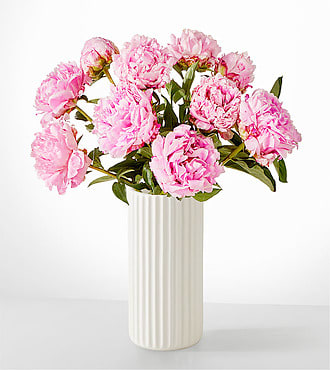
Nininger July Floral Selection
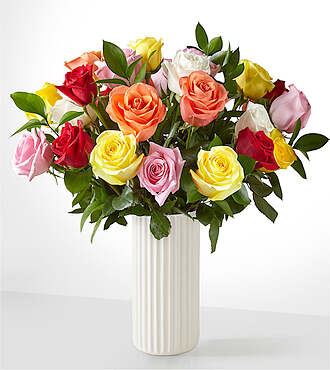
The Bloom Central flower delivery of the month for July in Nininger is the Blooming Masterpiece Rose Bouquet

The Blooming Masterpiece Rose Bouquet from Bloom Central is the perfect floral arrangement to brighten up any space in your home. With its vibrant colors and stunning presentation, it will surely catch the eyes of all who see it.
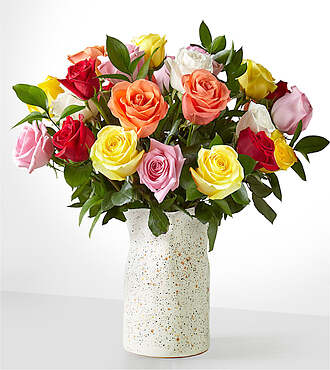
This bouquet features our finest red roses. Each rose is carefully hand-picked by skilled florists to ensure only the freshest blooms make their way into this masterpiece. The petals are velvety smooth to the touch and exude a delightful fragrance that fills the room with warmth and happiness.
What sets this bouquet apart is its exquisite arrangement. The roses are artfully grouped together in a tasteful glass vase, allowing each bloom to stand out on its own while also complementing one another. It's like seeing an artist's canvas come to life!
Whether you place it as a centerpiece on your dining table or use it as an accent piece in your living room, this arrangement instantly adds sophistication and style to any setting. Its timeless beauty is a classic expression of love and sweet affection.
One thing worth mentioning about this gorgeous bouquet is how long-lasting it can be with proper care. By following simple instructions provided by Bloom Central upon delivery, you can enjoy these blossoms for days on end without worry.
With every glance at the Blooming Masterpiece Rose Bouquet from Bloom Central, you'll feel uplifted and inspired by nature's wonders captured so effortlessly within such elegance. This lovely floral arrangement truly deserves its name - a blooming masterpiece indeed!
Nininger Minnesota Flower Delivery
Nininger Flower Delivery - Frequently Asked Questions
- Does Bloom Central offer same-day flower delivery in Nininger?
- Yes. Place your order online before 1:00 PM and a local Nininger florist will hand-deliver your arrangement the same day. Orders can also be scheduled up to one month in advance.
- Is it safe to order flowers online?
- Absolutely! We utilize a secure, encrypted checkout to protect your personal and payment information. Visa, Mastercard, American Express, Discover, PayPal and Klarna are all accepted.
- What funeral homes does Bloom Central deliver sympathy flowers to in Nininger?
- We hand-deliver sympathy and memorial floral arrangements to all funeral homes near Nininger, including: Anderson Henry W Mortuary, Crescent Tide Funeral and Cremation, Flower Delivery Twin Cities FDTC, Hill-Funeral Home & Cremation Services, Hodroff-Epstein Memorial Chapel, Huber Funeral Home, J S Klecatsky & Sons Funeral Home, Kandt Tetrick Funeral & Cremation Services, Maple Oaks Funeral Home, Mattson Funeral Home, Mueller Memorial - St. Paul, Mueller Memorial - White Bear Lake, Mueller-Bies, OHalloran & Murphy Funeral & Cremation Services, Roberts Funeral Home, Washburn McReavy Northeast Chapel, White Funeral Home, Willwerscheid Funeral Home & Cremation Service.
- What nearby cities does Bloom Central also deliver flowers to?
- In addition to Nininger, we deliver fresh flowers to many nearby cities including: Hastings, Cottage Grove, Denmark, Marshan, St. Paul Park, Vermillion, Ravenna, Newport
- What are the most popular flower arrangements at the Nininger florist?
- Three of our most popular arrangements at our Nininger florist are: Blush Crush Bouquet ($59.90), French Rouge Bouquet ($99.90), Light of My Life Box Bouquet ($59.90). All are available for same-day delivery.
More About Nininger
Are looking for a Nininger florist because you are not local to the area? If so, here is a brief travelogue of what Nininger has to offer. Who knows, perhaps you'll be intrigued enough to come visit soon, partake in some of the fun activities Nininger has to offer and deliver flowers to your loved one in person!
The town of Nininger, Minnesota, sits like a quiet comma in the long, rambling sentence of the Mississippi River Valley, a place where the sky stretches wide enough to make you forget the modern habit of hunching. To drive into Nininger today is to pass through a landscape that hums with absence, but not the sad kind. The streets, if you can call them that, are unpaved ribbons flanked by oak and maple, their branches forming a cathedral nave that leads to a single weathered church, its steeple a humble finger pointing nowhere in particular. The air smells of cut grass and river mud, a scent so primal it bypasses nostalgia and feels like a truth.
Nininger’s history is a paradox folded into itself. Founded in the 1850s by Ignatius Donnelly, a man whose ambitions included utopian socialism, planetary collision theories, and a failed bid to prove Francis Bacon wrote Shakespeare’s plays, the town was meant to be a metropolis. Donnelly printed pamphlets that promised brick factories, universities, a grid of boulevards. Settlers came, lured by the dream of a midwestern Athens. Then the Panic of 1857 arrived, and the dream curdled. Today, the population hovers around a dozen. But to focus on the gap between what was promised and what remains is to miss the point. Nininger’s magic lies in its refusal to be a cautionary tale.

Same day service available. Order your Nininger floral delivery and surprise someone today!
Walk the gravel roads in late afternoon, and you’ll see light slice through the trees in golden ropes. A child’s bicycle rests on its side in a yard, as if paused mid-revelation. Gardens burst with tomatoes and zinnias, their colors vivid against the gray of old barn wood. The Mississippi slides by a half-mile east, its current patient, inexorable. Residents here speak of the river not as scenery but as a neighbor, something alive, capricious, generous. They nod to it when describing the way frost heaves make the roads buckle in spring or how the fog in October sits so thick you can taste it.
Community here is not an abstraction. When a storm knocks a cottonwood onto someone’s fence, three trucks arrive before the rain stops. The annual town gathering, a potluck under a canopy of tiki lights, features casseroles that spark debates over paprika ratios and stories about Donnelly’s eccentricities told with the warmth usually reserved for family lore. Kids catch fireflies in jars, their laughter blending with the cicadas’ thrum. It’s easy to romanticize simplicity, but Nininger resists cliché by embodying something deeper: a continuity that doesn’t require fanfare.
The past lingers in playful whispers. A rusted plow leans against the community hall, its purpose obsolete but its presence honored. The old schoolhouse, its windows boarded, seems less a relic than a sleeper waiting to stir. Even Donnelly’s ghost feels congenial here, a figure who tried, failed, and still belongs. You get the sense that failure, in Nininger, is not an end but a kind of fertilizer. What grows from it is sturdier, quieter, more alive.
To visit is to recalibrate. In an age where “nowhere” is often synonymous with “nothing,” Nininger argues otherwise. It reminds you that scale is a choice. That a place can be both small and vast. That a town without traffic lights can still hold the light of a whole sunset in its silence. As you leave, the river winks behind the trees, and the road ahead unspools like a question you didn’t know you needed to ask.