





- Best Value
- Best Sellers
- Sympathy
 $49.90




- $297.90
- $64.90




July 1, 2026
Pipestone July Floral Selection
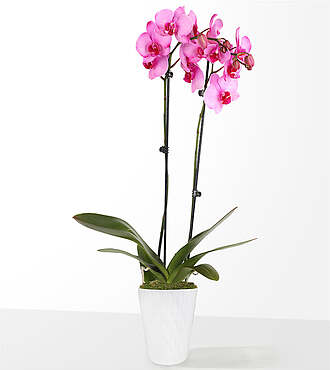
The Bloom Central flower delivery of the month for July in Pipestone is the Fuchsia Phalaenopsis Orchid
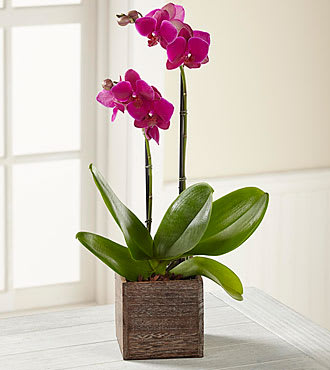
The Fuchsia Phalaenopsis Orchid floral arrangement from Bloom Central is a stunning addition to any home decor. This beautiful orchid arrangement features vibrant violet blooms that are sure to catch the eye of anyone who enters the room.
This stunning double phalaenopsis orchid displays vibrant violet blooms along each stem with gorgeous green tropical foliage at the base. The lively color adds a pop of boldness and liveliness, making it perfect for brightening up a living room or adding some flair to an entryway.
One of the best things about this floral arrangement is its longevity. Unlike other flowers that wither away after just a few days, these phalaenopsis orchids can last for many seasons if properly cared for.
Not only are these flowers long-lasting, but they also require minimal maintenance. With just a little bit of water every week and proper lighting conditions your Fuchsia Phalaenopsis Orchids will thrive and continue to bloom beautifully.
Another great feature is that this arrangement comes in an attractive, modern square wooden planter. This planter adds an extra element of style and charm to the overall look.
Whether you're looking for something to add life to your kitchen counter or wanting to surprise someone special with a unique gift, this Fuchsia Phalaenopsis Orchid floral arrangement from Bloom Central is sure not disappoint. The simplicity combined with its striking color makes it stand out among other flower arrangements.
The Fuchsia Phalaenopsis Orchid floral arrangement brings joy wherever it goes. Its vibrant blooms capture attention while its low-maintenance nature ensures continuous enjoyment without much effort required on the part of the recipient. So go ahead and treat yourself or someone you love today - you won't regret adding such elegance into your life!
Pipestone Florist
Pipestone Flower Delivery - Frequently Asked Questions
- Does Bloom Central offer same-day flower delivery in Pipestone?
- Yes. Place your order online before 1:00 PM and a local Pipestone florist will hand-deliver your arrangement the same day. Orders can also be scheduled up to one month in advance.
- Is it safe to order flowers online?
- Absolutely! We utilize a secure, encrypted checkout to protect your personal and payment information. Visa, Mastercard, American Express, Discover, PayPal and Klarna are all accepted.
- What hospitals and care facilities does Bloom Central deliver to in Pipestone?
- We deliver fresh flower arrangements to all hospitals, nursing homes and care facilities in Pipestone Minnesota, including: Good Sam Society Pipestone, Pipestone Co Med C & Ashton Cc.
- What funeral homes does Bloom Central deliver sympathy flowers to in Pipestone?
- We hand-deliver sympathy and memorial floral arrangements to all funeral homes near Pipestone, including: Miller Funeral Home, Weiland Funeral Chapel.
- What churches does Bloom Central deliver flowers to in Pipestone?
- We deliver fresh floral arrangements to all churches and places of worship in Pipestone, including: Pipestone Christian Reformed Church.
- What nearby cities does Bloom Central also deliver flowers to?
- In addition to Pipestone, we deliver fresh flowers to many nearby cities including: Edgerton, Tyler, Luverne, Slayton, Adrian, Fulda, Tracy, Marshall
- What are the most popular flower arrangements at the Pipestone florist?
- Three of our most popular arrangements at our Pipestone florist are: Yellow Brick Road Bouquet ($54.90), Birthday Surprise Bouquet ($54.90), Special Request 150 ($150.00). All are available for same-day delivery.
More About Pipestone
Are looking for a Pipestone florist because you are not local to the area? If so, here is a brief travelogue of what Pipestone has to offer. Who knows, perhaps you'll be intrigued enough to come visit soon, partake in some of the fun activities Pipestone has to offer and deliver flowers to your loved one in person!
The sun hangs low over Pipestone, Minnesota, a place where the prairie sky stretches itself into a kind of elemental argument against human smallness. You are here, let’s say, because you’ve heard whispers about the quarries, those sacred pits where the earth yields a soft red stone that has been turned into pipes for a thousand years, pipes that channel breath and prayer for the people who’ve called this land home long before it had a name like Pipestone. The air smells of cut grass and ancient dust. Cicadas thrum in the cottonwoods. Somewhere, a mallet taps against chisel, a sound both mundane and eternal, as if the rock itself is trying to speak in Morse code about patience.
The National Monument here is not like other monuments. There are no marble pillars or bronze generals. Instead, there are Ojibwe and Dakota and Lakota artisans working the quarries under an agreement older than the idea of Minnesota itself, their hands moving in rhythms that predate Columbus. The catlinite they carve is dense but yielding, a paradox that seems to forgive the slow violence of tools. Each pipe emerges less as an object than a kind of dialogue, between past and present, earth and human, sacred and daily. Watch a carver’s fingers trace the curve of a pipe bowl, and you’ll feel something unnameable prickle at the back of your neck: the recognition that some forms of beauty are also forms of survival.

Same day service available. Order your Pipestone floral delivery and surprise someone today!
Beyond the monument, the town of Pipestone clusters like a determined act of optimism. Its downtown streets are lined with limestone buildings that glow amber at dusk, their facades etched with the names of forgotten mercantile ventures. The local coffee shop steams with gossip and laughter; the library’s summer reading posters flap in the breeze. Kids pedal bikes over cracks in the sidewalk, and everyone waves, even at strangers, not out of obligation but a quiet consensus that belonging is something you build by noticing each other.
At the edge of town, the Winnewissa Falls murmurs its own kind of liturgy. Water slips over quartzite cliffs into pools fringed with maidenhair fern, and the effect is less “scenic overlook” than living tissue, a place where the planet’s pulse is audible. Hike the trail at dawn and you’ll spot turkey vultures circling in thermal drafts, their shadows rippling over the grass like dark flags. The tallgrass prairie here is a relic, a stubborn refusal of the plow, and in summer it riots with coneflowers and big bluestem, a reminder that resilience often wears petals.
What’s peculiar about Pipestone is how the ancient and the contemporary share the same air. The high school’s marching band practices near the monument’s visitor center, saxophones mingling with the whine of cicadas. Farmers in John Deere caps chat with stonecarvers about the weather. At the weekly farmers’ market, a teenager sells organic kombucha next to an elder offering braids of sweetgrass, and the transaction feels less like commerce than an exchange of dignities.
There’s a bench near the Three Maidens, glacial boulders that sit like stone sentinels east of the quarries. Sit there long enough and you’ll notice how the light shifts, the way late afternoon turns the rock from rose to crimson, as if the earth itself is blushing. A park ranger might tell you the Maidens are considered spiritual guardians, that this place has always been a crossroads of stories. But the real magic is how those stories aren’t locked in the past. They’re alive in the hands of a carver teaching his granddaughter to hold a chisel, in the laughter of kids cannonballing into the quarry’s runoff pool, in the way the wind carries the smell of rain-soaked prairie long before the clouds arrive.
To visit Pipestone is to stumble into a quiet argument against the frantic impermanence of modern life. The stone endures. The pipes endure. The prairie endures. And the people here, both those whose ancestors millennia ago unearthed the first pipe and those who came later, seem to have absorbed a lesson from the land itself: that some things are worth doing slowly, worth tending, worth passing on. You leave wondering if the rest of us have been getting time all wrong, mistaking speed for progress, efficiency for meaning. The quarries, the pipes, the unyielding prairie grass, they propose another metric. One breath at a time. One chip of stone. One summer day, wide and bright, insisting on its own small forever.