




- Best Value
- Best Sellers
- Under $80
 $49.90
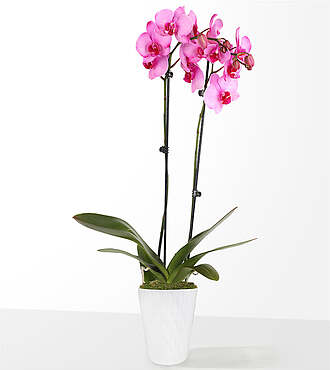
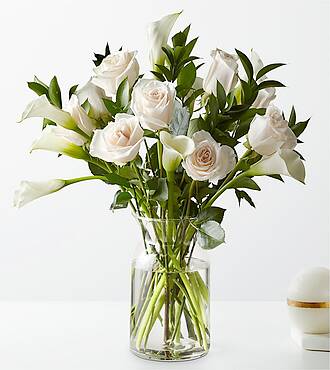
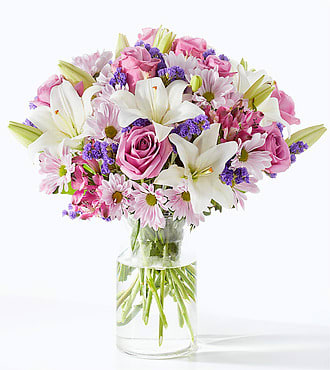
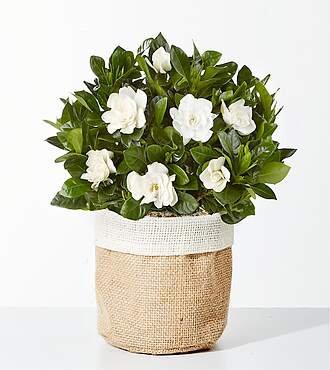

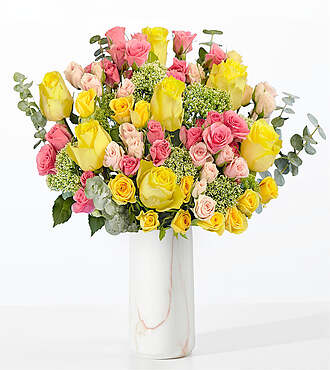
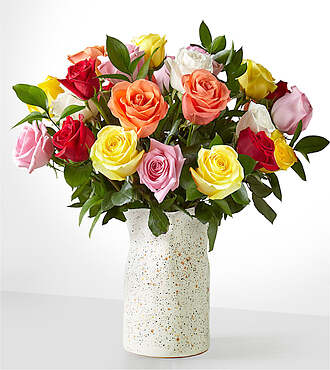
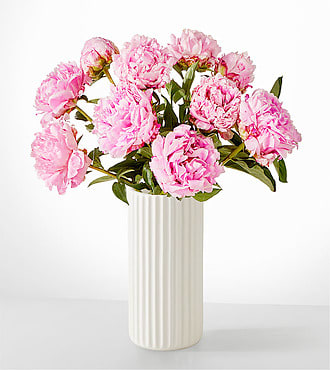
- $69.90
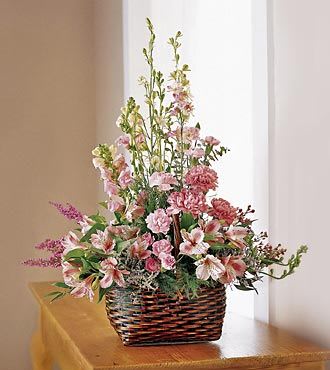

July 1, 2026
Watab July Floral Selection
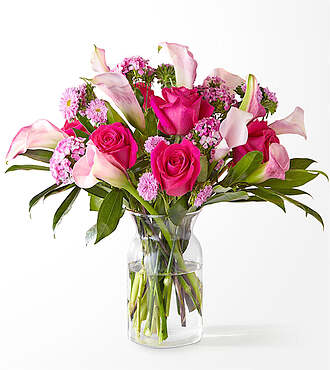
The Bloom Central flower delivery of the month for July in Watab is the Love is Grand Bouquet
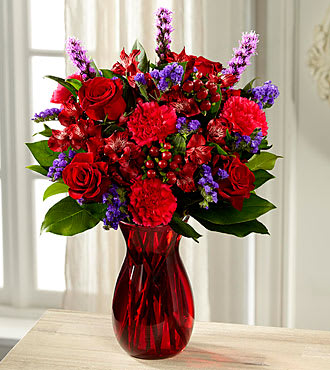
The Love is Grand Bouquet from Bloom Central is an exquisite floral arrangement that will make any recipient feel loved and appreciated. Bursting with vibrant colors and delicate blooms, this bouquet is a true showstopper.
With a combination of beautiful red roses, red Peruvian Lilies, hot pink carnations, purple statice, red hypericum berries and liatris, the Love is Grand Bouquet embodies pure happiness. Bursting with love from every bloom, this bouquet is elegantly arranged in a ruby red glass vase to create an impactive visual affect.
One thing that stands out about this arrangement is the balance. Each flower has been thoughtfully selected to complement one another, creating an aesthetically pleasing harmony of colors and shapes.
Another aspect we can't overlook is the fragrance. The Love is Grand Bouquet emits such a delightful scent that fills up any room it graces with its presence. Imagine walking into your living room after a long day at work and being greeted by this wonderful aroma - instant relaxation!
What really sets this bouquet apart from others are the emotions it evokes. Just looking at it conjures feelings of love, appreciation, and warmth within you.
Not only does this arrangement make an excellent gift for special occasions like birthdays or anniversaries but also serves as a meaningful surprise gift just because Who wouldn't want to receive such beauty unexpectedly?
So go ahead and surprise someone you care about with the Love is Grand Bouquet. This arrangement is a beautiful way to express your emotions and remember, love is grand - so let it bloom!
Local Flower Delivery in Watab
Watab Flower Delivery - Frequently Asked Questions
- Does Bloom Central offer same-day flower delivery in Watab?
- Yes. Place your order online before 1:00 PM and a local Watab florist will hand-deliver your arrangement the same day. Orders can also be scheduled up to one month in advance.
- Is it safe to order flowers online?
- Absolutely! We utilize a secure, encrypted checkout to protect your personal and payment information. Visa, Mastercard, American Express, Discover, PayPal and Klarna are all accepted.
- What funeral homes does Bloom Central deliver sympathy flowers to in Watab?
- We hand-deliver sympathy and memorial floral arrangements to all funeral homes near Watab, including: Daniel Funeral Home & Cremation Services, Dares Funeral & Cremation Service, Methven-Taylor Funeral Home, Paul Kollmann Monuments, Shelley Funeral Chapel, Williams Dingmann Funeral Home.
- What nearby cities does Bloom Central also deliver flowers to?
- In addition to Watab, we deliver fresh flowers to many nearby cities including: Rice, Sartell, Langola, Brockway, Le Sauk, Sauk Rapids, Minden, St. Wendel
- What are the most popular flower arrangements at the Watab florist?
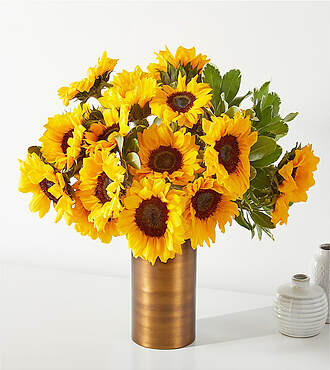
- Three of our most popular arrangements at our Watab florist are: Sunlit Meadows Bouquet ($49.90), Sweet Nothings Bouquet ($59.90), Sugarplum Bouquet with Chocolates ($74.90). All are available for same-day delivery.
More About Watab
Are looking for a Watab florist because you are not local to the area? If so, here is a brief travelogue of what Watab has to offer. Who knows, perhaps you'll be intrigued enough to come visit soon, partake in some of the fun activities Watab has to offer and deliver flowers to your loved one in person!
The thing about Watab, Minnesota, population 68, give or take a dog, is how it sits there, unbothered, like a comma in the middle of a sentence nobody’s rushing to finish. You come here on a Tuesday, say, past the soybean fields that stretch and yawn under a sky so blue it hums, past the lone stop sign that lists slightly northeast as if pointing toward some existential coordinates, and you realize Watab isn’t hiding. It’s just waiting for you to adjust your eyes. The air smells of damp earth and cut grass, a scent so specific it feels like a handshake from the land itself. Kids pedal bikes with baseball cards clothespinned to spokes, a sound like mechanized crickets. Someone’s grandma is always tending marigolds by the post office, which doubles as a bait shop, triples as a place to hear about whose nephew just got into St. Cloud State.
What’s easy to miss, initially, is the way time moves here. Not slower, exactly, but with a different kind of rhythm, a waltz where the pauses matter as much as the steps. The Watab River ribbons through town, clear and cold, flashing with sunfish that dart like liquid coins. Old-timers in seed caps sit on folding chairs by the water, not so much fishing as holding a silent dialogue with the current. They’ll nod at you, but not like they need anything. It’s a nod that says We see you, which in Watab is both a greeting and a quiet referendum on belonging.

Same day service available. Order your Watab floral delivery and surprise someone today!
The heart of town, if you can call it that, is a single-block stretch of weathered brick storefronts. There’s a diner where the coffee’s bottomless and the pie crusts are crimped by hand every dawn. The waitress knows your order before you do, not because she’s psychic but because the menu hasn’t changed since 1973, and why would it? Change, here, is less a force than a concept, like a math problem everyone agrees to ignore. At the hardware store, the owner loans out tools like library books, trusting you’ll bring back the socket wrench by Thursday. Conversations linger on porch steps, pivot around weather and yield per acre and whether the high school’s new quarterback has the arm to justify the hype.
Summers here vibrate with a kind of secular liturgy. The Fourth of July parade features tractors draped in crepe paper, Little Leaguers tossing candy, a basset hound named Duke who howls patriotically at the fire truck’s siren. Families spread quilts under oaks so vast their shade feels like a shared secret. At dusk, fireflies rise like sparks from a campfire, and the whole town seems to exhale. You notice how people show up, for pancake breakfasts, for barn raisings, for the kind of small emergencies that elsewhere might fester into isolation. A flat tire is a communal project. A snapped porch step summons three neighbors with hammers.
There’s a particular light here in October, slanting gold through the maples, turning the world into a stained-glass window. Farmers tuck their fields to bed, combing soil into neat rows, while the sky goes migratory with geese. Teenagers carve pumpkins outside the Lutheran church, guts scooped into compost piles, seeds roasted and salted in the kind of ritual that feels both ancient and improvised. Winter comes sharp and earnest, frosting windows into lace, turning the river into a glass highway. Kids sled down Cemetery Hill, shrieking as the wind steals their breath. Woodsmoke braids the air.
To call Watab quaint would miss the point. Quaint is for snow globes and gift shops. This place is alive in a way that resists metaphor, a stubborn, unshowy vitality. It’s the way the librarian waves to you through the frost-etched window. The way the soil here, when you sift it through your fingers, feels less like dirt than a ledger, each granule a record of what’s been planted and what’s been lost. You get the sense, standing at the edge of a field at twilight, that Watab understands something the rest of us are still trying to name. It’s not that life here is simpler. It’s that the complications are different, softer at the edges, like stones worn smooth by a river that knows where it’s going.