





- Birthday
- Best Sellers
- Vased



 $49.90
- $79.90
- $74.90
- $69.90
July 1, 2026
Rolling Fork July Floral Selection
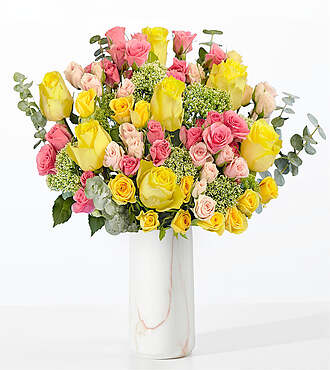
The Bloom Central flower delivery of the month for July in Rolling Fork is the Graceful Grandeur Rose Bouquet
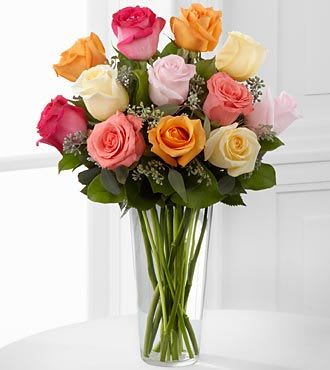
The Graceful Grandeur Rose Bouquet from Bloom Central is simply stunning. With its elegant and sophisticated design, it's sure to make a lasting impression on the lucky recipient.
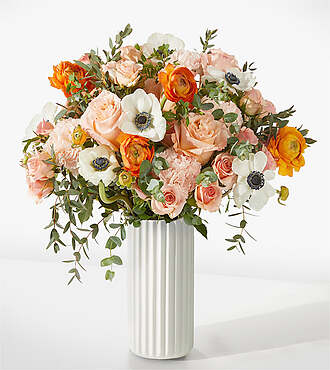
This exquisite bouquet features a generous arrangement of lush roses in shades of cream, orange, hot pink, coral and light pink. This soft pastel colors create a romantic and feminine feel that is perfect for any occasion.
The roses themselves are nothing short of perfection. Each bloom is carefully selected for its beauty, freshness and delicate fragrance. They are hand-picked by skilled florists who have an eye for detail and a passion for creating breathtaking arrangements.
The combination of different rose varieties adds depth and dimension to the bouquet. The contrasting sizes and shapes create an interesting visual balance that draws the eye in.
What sets this bouquet apart is not only its beauty but also its size. It's generously sized with enough blooms to make a grand statement without overwhelming the recipient or their space. Whether displayed as a centerpiece or placed on a mantelpiece the arrangement will bring joy wherever it goes.
When you send someone this gorgeous floral arrangement, you're not just sending flowers - you're sending love, appreciation and thoughtfulness all bundled up into one beautiful package.
The Graceful Grandeur Rose Bouquet from Bloom Central exudes elegance from every petal. The stunning array of colorful roses combined with expert craftsmanship creates an unforgettable floral masterpiece that will brighten anyone's day with pure delight.
Local Flower Delivery in Rolling Fork
Rolling Fork Flower Delivery - Frequently Asked Questions
- Does Bloom Central offer same-day flower delivery in Rolling Fork?
- Yes. Place your order online before 1:00 PM and a local Rolling Fork florist will hand-deliver your arrangement the same day. Orders can also be scheduled up to one month in advance.
- Is it safe to order flowers online?
- Absolutely! We utilize a secure, encrypted checkout to protect your personal and payment information. Visa, Mastercard, American Express, Discover, PayPal and Klarna are all accepted.
- What hospitals and care facilities does Bloom Central deliver to in Rolling Fork?
- We deliver fresh flower arrangements to all hospitals, nursing homes and care facilities in Rolling Fork Mississippi, including: Heritage Manor Of Rolling Fork, Sharkey-Issaquena Community Hospital.
- What funeral homes does Bloom Central deliver sympathy flowers to in Rolling Fork?
- We hand-deliver sympathy and memorial floral arrangements to all funeral homes near Rolling Fork, including: Best Friends of Mississippi, Garden Memorial Park, Greenwood Cemetery, Natchez Trace Funeral Home, Peoples Funeral Home, Sebrell Funeral Home, Smith Mortuary, Watson Edwards & Evans Funeral Home, Westhaven Memorial Funeral Home, Wilson & Knight Funeral Home.
- What nearby cities does Bloom Central also deliver flowers to?
- In addition to Rolling Fork, we deliver fresh flowers to many nearby cities including: Hollandale, Yazoo City, Belzoni, Leland, Inverness, Greenville, Vicksburg, Metcalfe
- What are the most popular flower arrangements at the Rolling Fork florist?
- Three of our most popular arrangements at our Rolling Fork florist are: Party Punch Bouquet ($59.90), Easter Egg Hunt Bouquet ($59.90), Hope Heals Luxury Bouquet ($149.90). All are available for same-day delivery.
More About Rolling Fork
Are looking for a Rolling Fork florist because you are not local to the area? If so, here is a brief travelogue of what Rolling Fork has to offer. Who knows, perhaps you'll be intrigued enough to come visit soon, partake in some of the fun activities Rolling Fork has to offer and deliver flowers to your loved one in person!
Rolling Fork, Mississippi, at dawn, breathes in a way that defies the abstraction of its name. The sun stretches over flatlands so vast they curve at the edges, as if the earth itself has decided to cradle the town. Shadows of water towers and grain silos elongate like sentinels. A man in faded denim walks a Labrador past clapboard houses, nodding to no one and everyone, because here the act of seeing is its own conversation. The air smells of turned soil and distant rain, a scent that clings to the back of your throat like a hymn. This is a place where the land insists on being felt, not just seen, where the Delta’s loam pulses with a quiet, vegetative ache.
To call Rolling Fork small would miss the point. Scale here is measured in gestures. A woman at the corner store hands a child a popsicle but refuses his dollar. Two farmers lean against a pickup, debating cloud formations like scholars parsing scripture. At the diner, the coffee tastes like something brewed from memory, and the waitress knows your refill before you do. The town’s rhythm is syncopated, a blues riff played on the back porch of history. It’s no accident that this soil birthed McKinley Morganfield, who left as a sharecropper and returned as Muddy Waters, his guitar strings humming with the ache and swing of the Delta. The music is still here, in the creak of porch swings and the rasp of cicadas at dusk.

Same day service available. Order your Rolling Fork floral delivery and surprise someone today!
Disaster has a way of clarifying things. Last spring, a tornado tore through like a drunk god’s tantrum, splintering homes and uprooting oaks older than the county lines. What happened next was not a miracle but something more human: neighbors emerged with chainsaws and casseroles. Strangers hauled debris in pickup beds. A teacher turned her damaged garage into a classroom, stringing Christmas lights for wattage. The hardware store sold plywood at cost. There’s a stubbornness here, a refusal to equate fragility with insignificance. When the National Guard rolled in, they found people already rebuilding, their laughter sharp and bright against the wreckage.
Drive the back roads and you’ll see combines carving geometry into fields, their blades catching the light. Soybeans and sweet potatoes rise in green waves. At the VFW hall, men play dominoes with the intensity of grandmasters, slamming tiles like exclamation points. Teenagers drag Main Street in dented Chevys, waving at cops who wave back. The library, a converted church, hosts toddlers for story hour beneath stained glass that survived the ’27 flood. Even the stray dogs seem content, trotting with purpose toward unseen appointments.
What holds Rolling Fork together isn’t nostalgia or inertia. It’s the daily choice to tend a life that’s easy to overlook. The farmer who talks to his crops. The retired postmaster who mows lawns for widows. The kids who chalk murals on the sidewalk, their art washed clean by every storm. There’s a physics to such places, a gravity born not from mass but from accretion, the weight of countless small kindnesses. You could call it resilience, but that implies a reaction. Here, it’s simpler: life insists on itself. The fields green again. The river retreats. The music lingers.
To visit is to feel the pull of a paradox: a town that exists in the minor key of American geography, yet thrums with a voltage all its own. You leave with your pockets full of stories, each one a seed. Some will grow. Others will blow away. But the soil remains.