





- New Baby
- Best Sellers
- Lilies








 $49.90
July 1, 2026
Sanbornton July Floral Selection
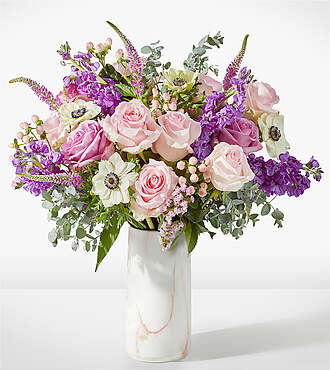
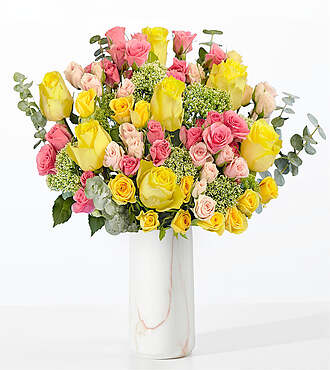
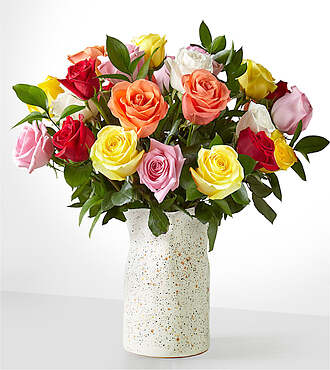
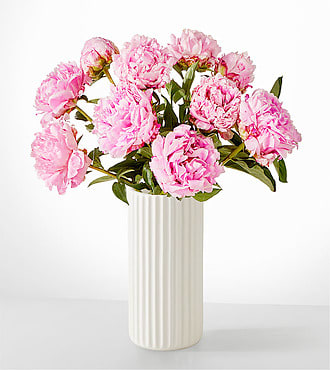
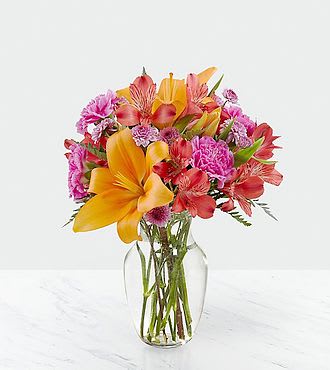
The Bloom Central flower delivery of the month for July in Sanbornton is the Happy Day Bouquet
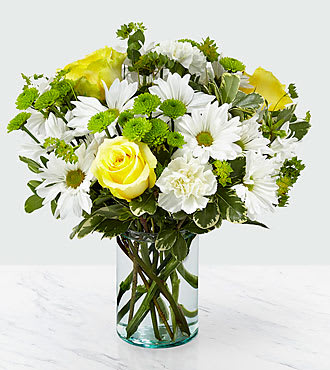
The Happy Day Bouquet from Bloom Central is simply adorable. This charming floral arrangement is perfect for brightening up any room in your home. It features a delightful mix of vibrant flowers that will instantly bring joy to anyone who sees them.
With cheery colors and a playful design the Happy Day Bouquet is sure to put a smile on anyone's face. The bouquet includes a collection of yellow roses and luminous bupleurum plus white daisy pompon and green button pompon. These blooms are expertly arranged in a clear cylindrical glass vase with green foliage accents.
The size of this bouquet is just right - not too big and not too small. It is the perfect centerpiece for your dining table or coffee table, adding a pop of color without overwhelming the space. Plus, it's so easy to care for! Simply add water every few days and enjoy the beauty it brings to your home.
What makes this arrangement truly special is its versatility. Whether you're celebrating a birthday, anniversary, or simply want to brighten someone's day, the Happy Day Bouquet fits the bill perfectly. With timeless appeal makes this arrangement is suitable for recipients of all ages.
If you're looking for an affordable yet stunning gift option look no further than the Happy Day Bouquet from Bloom Central. As one of our lowest priced arrangements, the budget-friendly price allows you to spread happiness without breaking the bank.
Ordering this beautiful bouquet couldn't be easier either. With Bloom Central's convenient online ordering system you can have it delivered straight to your doorstep or directly to someone special in just a few clicks.
So why wait? Treat yourself or surprise someone dear with this delightful floral arrangement today! The Happy Day Bouquet will undoubtedly uplift spirits and create lasting memories filled with joy and love.
Local Flower Delivery in Sanbornton
Sanbornton Flower Delivery - Frequently Asked Questions
- Does Bloom Central offer same-day flower delivery in Sanbornton?
- Yes. Place your order online before 1:00 PM and a local Sanbornton florist will hand-deliver your arrangement the same day. Orders can also be scheduled up to one month in advance.
- Is it safe to order flowers online?
- Absolutely! We utilize a secure, encrypted checkout to protect your personal and payment information. Visa, Mastercard, American Express, Discover, PayPal and Klarna are all accepted.
- What funeral homes does Bloom Central deliver sympathy flowers to in Sanbornton?
- We hand-deliver sympathy and memorial floral arrangements to all funeral homes near Sanbornton, including: Emmons Funeral Home, NH State Veterans Cemetery, Phaneuf Funeral Homes & Crematorium, Still Oaks Funeral & Memorial Home, Wilkinson-Beane Funeral Home & Cremation Services.
- What churches does Bloom Central deliver flowers to in Sanbornton?
- We deliver fresh floral arrangements to all churches and places of worship in Sanbornton, including: First Baptist Church Of Sanbornton, Second Baptist Church Of Sanbornton.
- What nearby cities does Bloom Central also deliver flowers to?
- In addition to Sanbornton, we deliver fresh flowers to many nearby cities including: Tilton, Tilton Northfield, Franklin, Laconia, Belmont, New Hampton, Hill, Northfield
- What are the most popular flower arrangements at the Sanbornton florist?
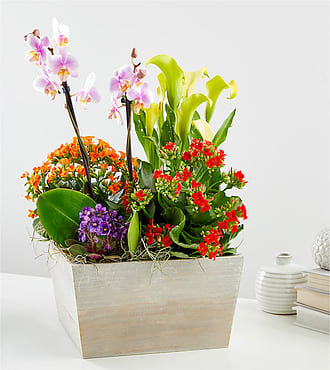
- Three of our most popular arrangements at our Sanbornton florist are: Azalea Basket ($49.90), Smooth Sailing Bouquet ($49.90), Serendipitous Blossoms Bouquet ($49.90). All are available for same-day delivery.
More About Sanbornton
Are looking for a Sanbornton florist because you are not local to the area? If so, here is a brief travelogue of what Sanbornton has to offer. Who knows, perhaps you'll be intrigued enough to come visit soon, partake in some of the fun activities Sanbornton has to offer and deliver flowers to your loved one in person!
Sanbornton, New Hampshire, sits in a valley cradled by hills that look like the knuckles of a giant who once tried to grasp the sky and settled for this. The town doesn’t so much announce itself as allow you to discover it, a place where the Winnipesaukee River flexes its muscle after rain and where stone walls, crumbling, lichen-stippled, stitch the woods into a quilt of private histories. To drive through Sanbornton is to feel time slow in a way that has nothing to do with speed limits. The air here smells of pine resin and turned earth, and the light slants through maples with the quiet insistence of a narrator who knows the story’s worth telling.
The people of Sanbornton move with the rhythm of seasons they still acknowledge as bosses. In spring, they mend fences and trade stories about the winter that tried to break them. In summer, they tend gardens that sprawl like unscripted poems, tomatoes fattening in the sun, cornstalks saluting the sky. Autumn turns the hillsides into riots of orange and crimson, a spectacle so vivid it feels like the land itself is applauding. Winter strips everything bare, and the cold becomes a shared antagonist, binding neighbors in a conspiracy of survival. They plow driveways for each other without asking. They wave at passing cars even when they don’t recognize the driver.

Same day service available. Order your Sanbornton floral delivery and surprise someone today!
There’s a general store here that sells milk in glass bottles and bait for the fishermen who haunt Hermit Lake at dawn. The floorboards creak in a language older than the town. A clerk rings up your purchases on a register that pings like a tuning fork, and you’ll notice the bulletin board cluttered with flyers for lost dogs, yoga classes, casserole fundraisers. This isn’t nostalgia. It’s a functional present, a refusal to let the texture of communal life dissolve into the ether of convenience.
The roads wind like afterthoughts, past barns whose red paint fades to pink and fields where hay rolls bask like sunning lizards. Children still bike to the town beach in summer, towels flapping from handlebars, and old-timers gather at the post office to debate the merits of diesel versus gas. The library, a white-clapboard sanctuary, hosts story hours where toddlers scream-laugh at puppets and teens borrow novels with dog-eared pages. You get the sense that everyone here is quietly, fiercely invested in the project of keeping something alive, not a monument or a myth, but a way of being that requires looking each other in the eye.
History here isn’t trapped in plaques. It’s in the cellar holes tucked into the woods, the names on mailboxes that match the roads they’re on, the way the middle school choir sings songs their great-grandparents might have known. The past isn’t worshipped. It’s leaned on, like a shovel handle.
To visit Sanbornton is to wonder, briefly, if the rest of the world might be overcomplicating things. The town hall hosts meetings where residents vote on road repairs and argue about property taxes with the urgency of philosophers debating fate. No one leaves angry. There’s a sense that the stakes are both minuscule and eternal, that showing up matters more than winning.
At dusk, the fire station’s beacon blinks like a metronome, counting the hours. Bats dip over the lake. The stars here aren’t brighter than elsewhere, but they feel closer, as if the sky has decided to stoop down and listen. You might find yourself standing in a field, struck by the silence, until you realize it isn’t silence at all, it’s the hum of crickets, the groan of oaks in the wind, the sound of a place that knows how to hold its breath and exhale at once.
Sanbornton doesn’t care if you romanticize it. It persists. It folds the chaos of modern life into something durable, a quilt patched with routines and kindnesses and the smell of woodsmoke in October. It reminds you that a town can be a verb. That belonging isn’t about roots but about tending them.