





- Birthday
- Best Sellers
- Thank You

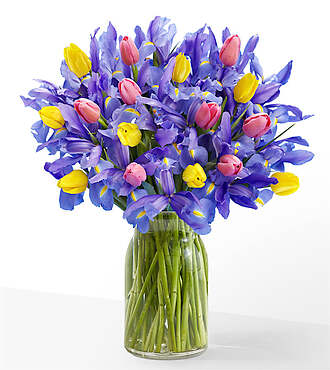

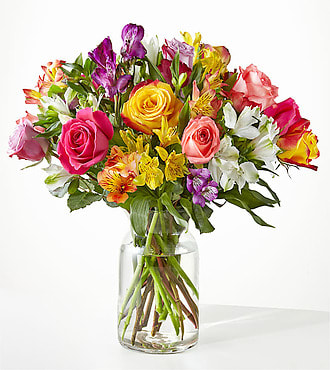
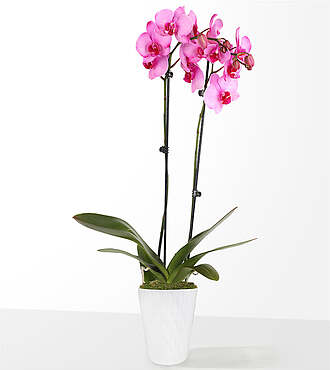
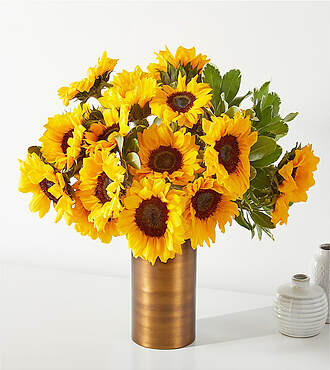
 $49.90
- $79.90
June 1, 2026
Middlebush June Floral Selection
The Bloom Central flower delivery of the month for June in Middlebush is the Long Stem Red Rose Bouquet
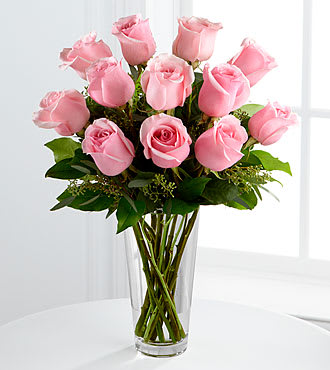
Introducing the exquisite Long Stem Red Rose Bouquet from Bloom Central, a floral arrangement that is sure to steal her heart. With its classic and timeless beauty, this bouquet is one of our most popular, and for good reason.
The simplicity of this bouquet is what makes it so captivating. Each rose stands tall with grace and poise, showcasing their velvety petals in the most enchanting shade of red imaginable. The fragrance emitted by these roses fills the air with an intoxicating aroma that evokes feelings of love and joy.
A true symbol of romance and affection, the Long Stem Red Rose Bouquet captures the essence of love effortlessly. Whether you want to surprise someone special on Valentine's Day or express your heartfelt emotions on an anniversary or birthday, this bouquet will leave the special someone speechless.
What sets this bouquet apart is its versatility - it suits various settings perfectly! Place it as a centerpiece during candlelit dinners or adorn your living space with its elegance; either way, you'll be amazed at how instantly transformed your surroundings become.
Purchasing the Long Stem Red Rose Bouquet from Bloom Central also comes with peace of mind knowing that they source only high-quality flowers directly from trusted growers around the world.
If you are searching for an unforgettable gift that speaks volumes without saying a word - look no further than the breathtaking Long Stem Red Rose Bouquet from Bloom Central! The timeless beauty, delightful fragrance and effortless elegance will make anyone feel cherished and loved. Order yours today and let love bloom!
Local Flower Delivery in Middlebush
Middlebush Flower Delivery - Frequently Asked Questions
- Does Bloom Central offer same-day flower delivery in Middlebush?
- Yes. Place your order online before 1:00 PM and a local Middlebush florist will hand-deliver your arrangement the same day. Orders can also be scheduled up to one month in advance.
- Is it safe to order flowers online?
- Absolutely! We utilize a secure, encrypted checkout to protect your personal and payment information. Visa, Mastercard, American Express, Discover, PayPal and Klarna are all accepted.
- What funeral homes does Bloom Central deliver sympathy flowers to in Middlebush?
- We hand-deliver sympathy and memorial floral arrangements to all funeral homes near Middlebush, including: Bongiovi Funeral Home, Bruce C Van Arsdale Funeral Home, Brunswick Memorial Home, Crabiel Parkwest Funeral Chapel, Franklin Memorial Park Mausoleum, Gleason Funeral Home, Goldstein Funeral Chapel, Hagan-Chamberlain Funeral Home, Hillsborough Funeral Home, Holcombe-Fisher Funeral Home, Jaqui-Kuhn Funeral Home, Kimble Funeral Home, M David DeMarco Funeral Home, Memorial Funeral Home, Mount Sinai Memorial Chapels, Old Bridge Funeral Home, Plinton Curry Funeral Home, Selover Funeral Home.
- What nearby cities does Bloom Central also deliver flowers to?
- In addition to Middlebush, we deliver fresh flowers to many nearby cities including: Franklin, Somerset, Franklin Center, Six Mile Run, East Franklin, Franklin Park, South Bound Brook, Weston
- What are the most popular flower arrangements at the Middlebush florist?
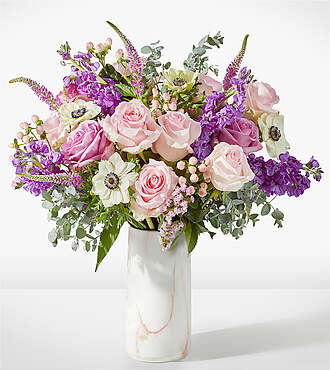
- Three of our most popular arrangements at our Middlebush florist are: Share My World Bouquet ($49.90), Cupid's Embrace Red Rose Bouquet ($94.90), Birthday Brights Bouquet ($54.90). All are available for same-day delivery.
More About Middlebush
Are looking for a Middlebush florist because you are not local to the area? If so, here is a brief travelogue of what Middlebush has to offer. Who knows, perhaps you'll be intrigued enough to come visit soon, partake in some of the fun activities Middlebush has to offer and deliver flowers to your loved one in person!
The sun rises over Middlebush, New Jersey, as it has for centuries, first touching the weathervanes of colonial-era farms still standing sentinel along Amwell Road, then spilling gold across the roofs of split-levels where families stir in half-sleep to the smell of coffee and the distant growl of a garbage truck compressing yesterday’s evidence of life lived. Here, in this unincorporated swath of Franklin Township, time behaves differently. It loops. It lingers. It allows for things like a father and son kneeling in synchronized motion to weed a garden of tomatoes and basil, or a retired postal worker waving to every passing car from a lawn chair at the edge of his driveway, or the way the cicadas’ drone in July seems to syncopate with the laughter of children cannonballing into the community pool. Middlebush is not a destination. It is a habitat. A ecosystem of sidewalks cracked by oak roots and driveways chalked with hopscotch grids that fade and reappear like tides. The town’s pulse is felt in its contradictions: the hum of Route 27’s traffic harmonizing with birdsong from the woods behind the middle school, the vinyl-sided ranch houses sitting shoulder-to-shoulder with horse farms where Dutch belted cattle graze as if unaware of the century. At the center of it all, the Middlebush Diner, a stainless-steel relic from 1956, booths patched with duct tape, counter stools spinning like tops under regulars who argue over high school football and whose zucchini yield will win the county fair. The waitresses know everyone’s order. They bring pancakes with a side of gossip and leave the coffee pot hovering, a gesture of trust and permanence. Outside, the parking lot fills and empties in rhythms older than the infrastructure: mothers jogging strollers past the post office, teens lugging cellos toward the rec center, old men playing chess under the pavilion at Jerry P. Walters Park, moving pawns as deliberately as they once moved through marriages and mortgages. The beauty of Middlebush lies in its refusal to mythologize itself. No one here calls the sky “big” or the air “clean,” but both are. No one boasts about the way the setting sun turns the Raritan River to liquid copper, or how the firehouse’s siren at noon every Wednesday unspools a collective memory of community drills and July Fourth parades. The town’s magic is accidental, earned through repetition. The same faces at the same PTA meetings. The same debates over property taxes and potholes. The same thrill when the library’s summer reading board fills with stickers, each a tiny flag planted in the soil of a child’s curiosity. Walk the aisles of the Middlebush Farmers Market on a Saturday morning and you’ll see it: tables heavy with peaches, corn, jars of honey labeled in careful cursive. Neighbors trading recipes. Gardeners comparing blight remedies. A teenager selling lemonade not because she needs the money but because she likes the way the pitcher’s condensation feels in the heat. The market’s chaos is choreographed, a dance of wagons and reusable bags, but no one trips. No one complains. They linger. They laugh. They forget the list in their pocket and buy rhubarb on a whim. To dismiss Middlebush as “quaint” is to miss the point. This is a place where life’s volume is turned down just enough to hear the subtler frequencies: the creak of a porch swing, the flick of a bicycle spoke, the shared silence of strangers waiting at a crosswalk as an ambulance rushes toward Robert Wood Johnson Hospital. Here, the ordinary becomes liturgy. A man repainting his shutters blue. A girl tying ribbons to her bike handles. A flock of geese etching hieroglyphs across the sky, insisting on patterns, insisting on home. You could drive through and see nothing remarkable. Or you could stay. Notice how the streetlights click on one by one, each a private sun for moths and memories. Notice how the dark doesn’t frighten but gathers people closer, to windows, to tables, to each other. Middlebush doesn’t dazzle. It endures. It thrives in the unspectacular, the tender, the lived-in. It reminds you that belonging isn’t something you find. It’s something you practice, daily, in a town that always leaves the porch light on.