





- New Baby
- Best Sellers
- Under $80












 $69.90



June 1, 2026
Mora June Floral Selection
The Bloom Central flower delivery of the month for June in Mora is the Graceful Grandeur Rose Bouquet

The Graceful Grandeur Rose Bouquet from Bloom Central is simply stunning. With its elegant and sophisticated design, it's sure to make a lasting impression on the lucky recipient.
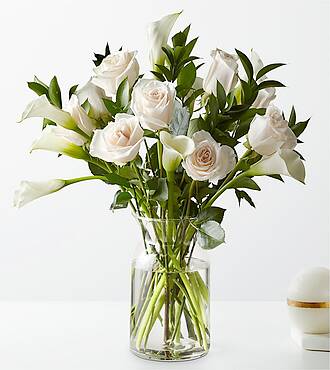
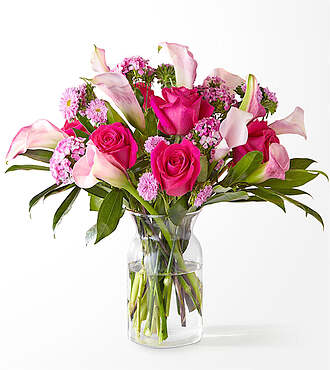
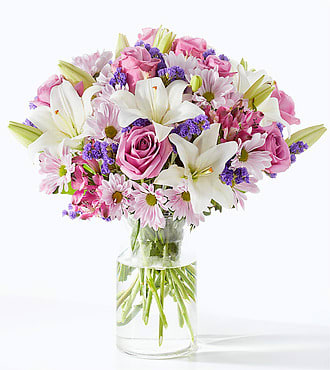
This exquisite bouquet features a generous arrangement of lush roses in shades of cream, orange, hot pink, coral and light pink. This soft pastel colors create a romantic and feminine feel that is perfect for any occasion.
The roses themselves are nothing short of perfection. Each bloom is carefully selected for its beauty, freshness and delicate fragrance. They are hand-picked by skilled florists who have an eye for detail and a passion for creating breathtaking arrangements.
The combination of different rose varieties adds depth and dimension to the bouquet. The contrasting sizes and shapes create an interesting visual balance that draws the eye in.
What sets this bouquet apart is not only its beauty but also its size. It's generously sized with enough blooms to make a grand statement without overwhelming the recipient or their space. Whether displayed as a centerpiece or placed on a mantelpiece the arrangement will bring joy wherever it goes.
When you send someone this gorgeous floral arrangement, you're not just sending flowers - you're sending love, appreciation and thoughtfulness all bundled up into one beautiful package.
The Graceful Grandeur Rose Bouquet from Bloom Central exudes elegance from every petal. The stunning array of colorful roses combined with expert craftsmanship creates an unforgettable floral masterpiece that will brighten anyone's day with pure delight.
Local Flower Delivery in Mora
Mora Flower Delivery - Frequently Asked Questions
- Does Bloom Central offer same-day flower delivery in Mora?
- Yes. Place your order online before 1:00 PM and a local Mora florist will hand-deliver your arrangement the same day. Orders can also be scheduled up to one month in advance.
- Is it safe to order flowers online?
- Absolutely! We utilize a secure, encrypted checkout to protect your personal and payment information. Visa, Mastercard, American Express, Discover, PayPal and Klarna are all accepted.
- What funeral homes does Bloom Central deliver sympathy flowers to in Mora?
- We hand-deliver sympathy and memorial floral arrangements to all funeral homes near Mora, including: Berardinelli Family Funeral Service, Fairview Cemetery, Rivera Family Funeral Home & Crematory, Riverside Funeral Home - Santa Fe, Rosario Cemetery, Santa Fe National Cemetery.
- What nearby cities does Bloom Central also deliver flowers to?
- In addition to Mora, we deliver fresh flowers to many nearby cities including: Las Vegas, Angel Fire, Ranchos de Taos, Taos, Pecos, Chimayo, Taos Pueblo, Dixon
- What are the most popular flower arrangements at the Mora florist?
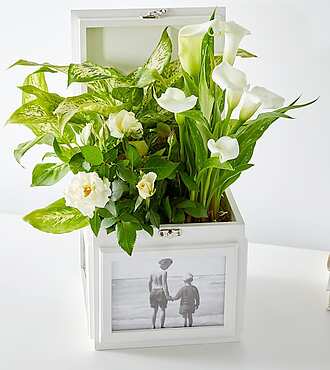
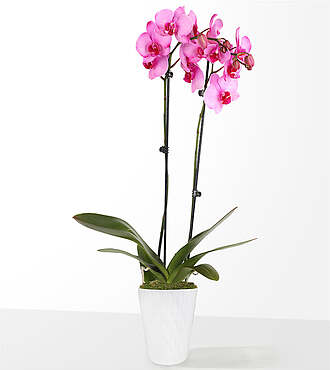
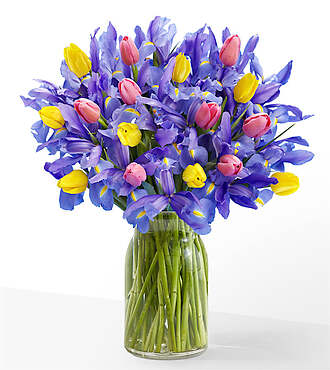
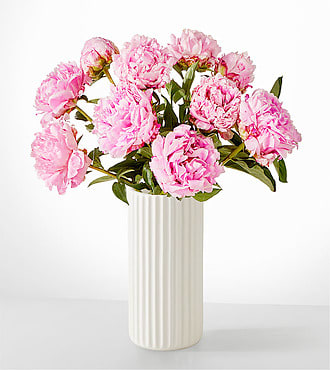
- Three of our most popular arrangements at our Mora florist are: Uplifting Moments Basket ($49.90), White Orchid Planter ($97.90), Easter Brunch Bouquet ($54.90). All are available for same-day delivery.
More About Mora
Are looking for a Mora florist because you are not local to the area? If so, here is a brief travelogue of what Mora has to offer. Who knows, perhaps you'll be intrigued enough to come visit soon, partake in some of the fun activities Mora has to offer and deliver flowers to your loved one in person!
To drive into Mora, New Mexico, is to feel the earth itself shift under your tires, not literally, but in the way the high desert gives without yielding, how the Sangre de Cristo Mountains cradle the valley like a palm around a secret. The light here does something unnameable. It falls slantwise through piñon and juniper, sharpens the adobe edges of homes that have stood for centuries, turns the grasslands into a rippling sheet of gold. You notice your breath first: thin, cool, carrying the faint tang of woodsmoke and sage. Then you notice the silence, which isn’t silence at all but a low hum, wind combing through ponderosa pines, the Mora River chuckling over stones, a distant tractor gnawing at soil that has sustained generations.
The people of Mora move with the rhythm of seasons they’ve memorized but never fully tamed. Farmers rise before dawn to tend fields where spinach and chilies grow stubbornly, as if the land itself insists on proving its resilience. Children pedal bikes down dirt roads, kicking up dust that hangs in the air like vanished memories. At the mercantile, old men in worn boots sip coffee and debate the weather’s intentions, their Spanish and English weaving into a dialect as specific as the terrain. Everyone here understands that survival is a collaboration. Winters are harsh, summers dry, but the community thrives on a paradox: isolation nurtures closeness. Neighbors are family. Strangers become guests. Doors stay unlocked not out of naivete but because trust is the oldest currency.

Same day service available. Order your Mora floral delivery and surprise someone today!
Come September, the valley erupts in a festival celebrating what outsiders might dismiss as just a leafy green. But the Spinach Festival isn’t really about spinach. It’s a ritual of continuity, generations gathering under cottonwoods to share empanadas dusted with cinnamon, to watch dancers whirl in floral skirts, to marvel at oxen pulling wooden plows as if time folds in on itself here. You glimpse a boy grinning beneath a spinach crown, his cheeks smudged with dirt, and you think: This is how traditions outlive oblivion.
The landscape insists on humility. To the west, the Pecos Wilderness sprawls untamed, its peaks scarred by lightning, meadows blanketed in wildflowers that bloom recklessly, die quietly. Hikers vanish into aspen groves where leaves quake like ghostly applause. Locals will warn you about the trails, not out of caution, but to assure you the mountains demand respect, not fear. They’ll tell you where the elk drink at dusk, how to spot the constellations hidden behind the Milky Way’s smear. You learn that “middle of nowhere” is a lie told by people who’ve forgotten how to see. Here, the middle of nowhere is the center of everything.
Mora resists easy categorization. It is both monument and living thing, a place where history isn’t archived but worn like a well-loved coat. The schoolhouse, the chapel, the collapsed homesteads, all whisper stories of migrations, droughts, births, losses. Yet the present vibrates. Artists convert barns into studios, their canvases splashed with hues the desert whispers at sunset. Teachers mold classrooms into incubators of bilingual dreams. Teenagers post TikTok videos against backdrops of peaks that predate empires. The past doesn’t haunt; it collaborates.
There’s a particular hour before twilight when the light turns the valley into a bowl of liquid amber. You’ll find yourself pausing, midstep, as if the world has inhaled sharply. In that moment, Mora feels both fleeting and eternal, a mirage anchored by the weight of its own truth. You can’t explain it, only feel it: This is what it means to be rooted, to belong to a patch of earth that belongs to you in return. The mountains watch. The river keeps singing. The road waits, patient, for whoever needs reminding that places like this still exist.