




- Love & Romance
- Best Sellers
- Lilies
 $69.90

- $49.90
July 1, 2026
Canajoharie July Floral Selection
The Bloom Central flower delivery of the month for July in Canajoharie is the Alluring Elegance Bouquet
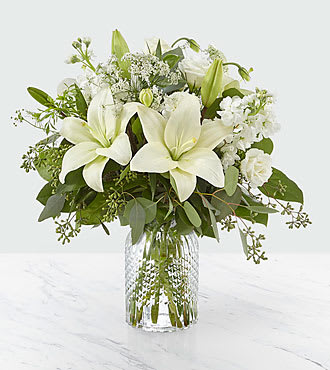
The Alluring Elegance Bouquet from Bloom Central is sure to captivate and delight. The arrangement's graceful blooms and exquisite design bring a touch of elegance to any space.
The Alluring Elegance Bouquet is a striking array of ivory and green. Handcrafted using Asiatic lilies interwoven with white Veronica, white stock, Queen Anne's lace, silver dollar eucalyptus and seeded eucalyptus.
One thing that sets this bouquet apart is its versatility. This arrangement has timeless appeal which makes it suitable for birthdays, anniversaries, as a house warming gift or even just because moments.
Not only does the Alluring Elegance Bouquet look amazing but it also smells divine! The combination of the lilies and eucalyptus create an irresistible aroma that fills the room with freshness and joy.
Overall, if you're searching for something elegant yet simple; sophisticated yet approachable look no further than the Alluring Elegance Bouquet from Bloom Central. Its captivating beauty will leave everyone breathless while bringing warmth into their hearts.
Local Flower Delivery in Canajoharie
Canajoharie Flower Delivery - Frequently Asked Questions
- Does Bloom Central offer same-day flower delivery in Canajoharie?
- Yes. Place your order online before 1:00 PM and a local Canajoharie florist will hand-deliver your arrangement the same day. Orders can also be scheduled up to one month in advance.
- Is it safe to order flowers online?
- Absolutely! We utilize a secure, encrypted checkout to protect your personal and payment information. Visa, Mastercard, American Express, Discover, PayPal and Klarna are all accepted.
- What funeral homes does Bloom Central deliver sympathy flowers to in Canajoharie?
- We hand-deliver sympathy and memorial floral arrangements to all funeral homes near Canajoharie, including: A G Cole Funeral Home, Applebee Funeral Home, Betz Funeral Home, Brewer Funeral Home, Canajoharie Falls Cemetery, Catricala Funeral Home, Compassionate Funeral Care, Daly Funeral Home, De Marco-Stone Funeral Home, Delker and Terry Funeral Home, Eannace Funeral Home, Glenville Funeral Home, Hollenbeck Funeral Home, Lester R. Grummons Funeral Home, McFee Memorials, Mohawk Valley Funerals & Cremations, New Comer Funerals & Cremations, Sturges Funeral and Cremation Service.
- What nearby cities does Bloom Central also deliver flowers to?
- In addition to Canajoharie, we deliver fresh flowers to many nearby cities including: Fort Plain, Sharon, Minden, Cherry Valley, Root, Palatine, St. Johnsville, Seward
- What are the most popular flower arrangements at the Canajoharie florist?
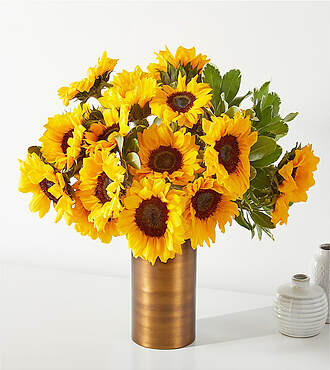
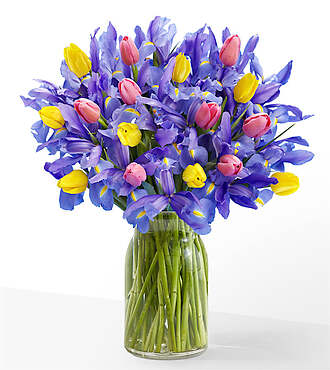
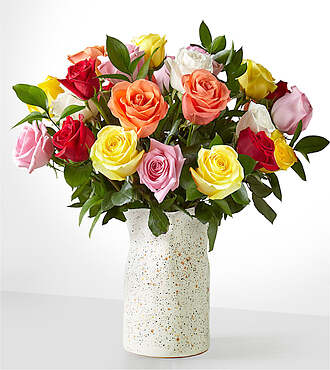
- Three of our most popular arrangements at our Canajoharie florist are: Spring's Calling Tulip Bouquet ($59.90), Yellow Colors Florist Designed Bouquet ($49.90), Autumn Harmony Centerpiece ($69.90). All are available for same-day delivery.
More About Canajoharie
Are looking for a Canajoharie florist because you are not local to the area? If so, here is a brief travelogue of what Canajoharie has to offer. Who knows, perhaps you'll be intrigued enough to come visit soon, partake in some of the fun activities Canajoharie has to offer and deliver flowers to your loved one in person!
Canajoharie, New York, sits in the Mohawk Valley like a well-kept secret, the kind of place where the sun angles through maple trees to paint the streets in gold leaf each morning, where the air smells faintly of mowed grass and river mud, and where the past isn’t so much archived as it is breathed. Drive into town on Route 5, and you’ll pass the Erie Canal, still water flanked by crumbling 19th-century locks, a relic that once thrummed with barges hauling grain, textiles, dreams. Today, the canal mirrors the sky, and cyclists glide along its towpath, nodding to locals who fish for smallmouth bass as if time here isn’t linear but a gentle loop. The town’s name, from the Mohawk Kana’tsiohareke, means “the pot that washes itself,” a reference to the Boiling Pot, a natural cauldron in the creek where water swirls and churns, sculpting bedrock into something smooth and eternal. You get the sense that Canajoharie itself is a kind of vessel, quietly holding histories, refusing to spill.
Main Street unfolds like a postcard from a bygone optimism: brick facades, awnings shading family-run shops, the Arkell Museum anchoring it all with its stoic neoclassical columns. Inside, the museum’s collection, Winslow Homer’s stormy seascapes, canvases by Hopper and Rockwell, feels both grand and intimate, as if the art knows it’s being viewed not by crowds but by neighbors. The woman at the front desk will tell you about Bartlett Arkell, the town’s patron saint of sorts, who built Beech-Nut into a titan of baby food and peanut butter, employing half the valley before the factories shifted elsewhere. She’ll say this without bitterness, because bitterness isn’t the vibe here. Instead, there’s pride in how the town adapts: the old factory buildings now house startups, artisans, a resilience that’s less about nostalgia than practicality.

Same day service available. Order your Canajoharie floral delivery and surprise someone today!
Walk east toward the creek, and you’ll find kids leaping off limestone ledges into the Boiling Pot’s icy embrace, their shouts echoing off the gorge. An older couple on the bridge above smiles, remembering their own jumps decades prior. The water’s constant motion seems to suture generations, teens texting between cannonballs, grandparents picnicking on blankets, all drawn to the same cold rush. Later, the diner on Church Street serves pie so thick with cherries it defies physics, and the waitress calls everyone “hon,” her accent a Upstate patois of dropped rs and stretched vowels. At the next booth, farmers discuss rain forecasts and soybean prices, their hands cradling mugs of coffee like talismans.
What’s striking about Canajoharie isn’t just its postcard aesthetics but the way it resists the American urge to commodify charm. There’s no self-conscious “quaintness,” no artisanal soap shops hawking authenticity. Instead, a hardware store has occupied the same corner since 1932, its shelves crammed with wrenches and seed packets, and the library hosts weekly readings where toddlers wriggle on braided rugs as a librarian acts out Goodnight Moon. On summer evenings, the park by the creek fills with families grilling burgers, teens strumming guitars, everyone lingering until fireflies rise like sparks. You realize this isn’t a town frozen in amber but alive in its ordinariness, a place where the act of gathering, for a parade, a softball game, a fish fry, becomes liturgy.
To call Canajoharie sleepy would miss the point. Its pulse is steady, unhurried, tuned to the rhythm of seasons: spring’s thaw feeding the creek, autumn’s cider donuts at the farmers market, winter’s snow softening the edges of grain silos. It’s a town that knows what it is, content to be glanced at by commuters on the Thruway but happy to stay unspoiled, curious only to those who stop long enough to see it. And if you do stop, you might feel a pang of envy for the kids biking down Chestnut Street, their laughter trailing behind like streamers, or for the way the light slants through the valley at dusk, turning everything briefly to gold. You might wonder, briefly, what it means to live in a place that doesn’t clamor for attention but earns it slowly, deeply, like water carving stone.