





- Best Value
- Best Sellers
- Under $80
 $49.90


- $69.90

July 1, 2026
Fayette July Floral Selection
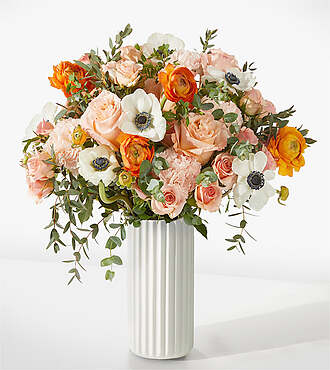
The Bloom Central flower delivery of the month for July in Fayette is the Graceful Grandeur Rose Bouquet
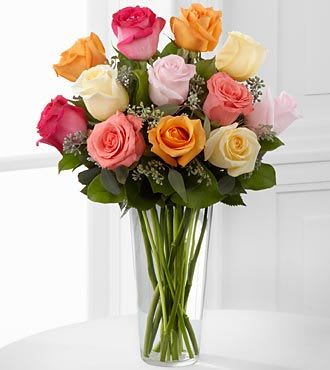
The Graceful Grandeur Rose Bouquet from Bloom Central is simply stunning. With its elegant and sophisticated design, it's sure to make a lasting impression on the lucky recipient.
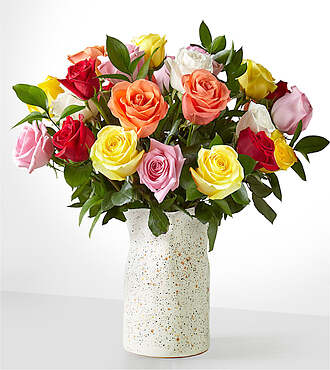
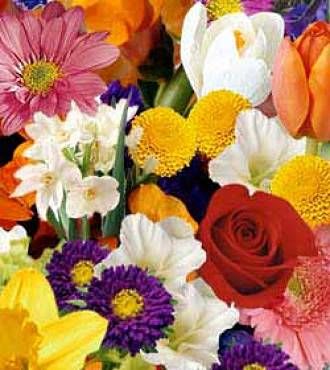
This exquisite bouquet features a generous arrangement of lush roses in shades of cream, orange, hot pink, coral and light pink. This soft pastel colors create a romantic and feminine feel that is perfect for any occasion.
The roses themselves are nothing short of perfection. Each bloom is carefully selected for its beauty, freshness and delicate fragrance. They are hand-picked by skilled florists who have an eye for detail and a passion for creating breathtaking arrangements.
The combination of different rose varieties adds depth and dimension to the bouquet. The contrasting sizes and shapes create an interesting visual balance that draws the eye in.
What sets this bouquet apart is not only its beauty but also its size. It's generously sized with enough blooms to make a grand statement without overwhelming the recipient or their space. Whether displayed as a centerpiece or placed on a mantelpiece the arrangement will bring joy wherever it goes.
When you send someone this gorgeous floral arrangement, you're not just sending flowers - you're sending love, appreciation and thoughtfulness all bundled up into one beautiful package.
The Graceful Grandeur Rose Bouquet from Bloom Central exudes elegance from every petal. The stunning array of colorful roses combined with expert craftsmanship creates an unforgettable floral masterpiece that will brighten anyone's day with pure delight.
Fayette New York Flower Delivery
Fayette Flower Delivery - Frequently Asked Questions
- Does Bloom Central offer same-day flower delivery in Fayette?
- Yes. Place your order online before 1:00 PM and a local Fayette florist will hand-deliver your arrangement the same day. Orders can also be scheduled up to one month in advance.
- Is it safe to order flowers online?
- Absolutely! We utilize a secure, encrypted checkout to protect your personal and payment information. Visa, Mastercard, American Express, Discover, PayPal and Klarna are all accepted.
- What funeral homes does Bloom Central deliver sympathy flowers to in Fayette?
- We hand-deliver sympathy and memorial floral arrangements to all funeral homes near Fayette, including: Ballweg & Lunsford Funeral Home, Bond-Davis Funeral Homes, Brew Funeral Home, Carter Funeral Home and Monuments, Claudettes Flowers & Gifts Inc., Cremation Services Of Central New York, Falardeau Funeral Home, Falvo Funeral Home, Fergerson Funeral Home, Harris Paul W Funeral Home, Hollis Funeral Home, Lamarche Funeral Home, New Comer Funeral Home, Palmisano-Mull Funeral Home Inc, Pet Passages, Richard H Keenan Funeral Home, White Oak Cremation, Zirbel Funeral Home.
- What nearby cities does Bloom Central also deliver flowers to?
- In addition to Fayette, we deliver fresh flowers to many nearby cities including: Varick, Seneca Falls, Waterloo, Geneva, Union Springs, Romulus, Junius, Springport
- What are the most popular flower arrangements at the Fayette florist?
- Three of our most popular arrangements at our Fayette florist are: Cheers to You Bouquet ($54.90), Fiesta Bouquet Set of 3 ($209.90), Beautiful Horizons Floor Basket ($134.90). All are available for same-day delivery.
More About Fayette
Are looking for a Fayette florist because you are not local to the area? If so, here is a brief travelogue of what Fayette has to offer. Who knows, perhaps you'll be intrigued enough to come visit soon, partake in some of the fun activities Fayette has to offer and deliver flowers to your loved one in person!
The town of Fayette, New York, sits quietly in the cradle of Seneca County, a place where the sky seems to press itself closer to the earth, as if trying to hear the secrets whispered between cornstalks. It is not a destination for those chasing grandeur. There are no skyscrapers here, no throngs moving in algorithmic haste. Instead, the rhythm of life syncs to the pulse of tractors idling at dawn, to the rustle of soybeans in a breeze that carries the musk of turned soil. You come to Fayette not to escape reality but to witness a different kind of it, one where the word “community” isn’t an abstraction. It’s the woman at the general store who remembers your uncle’s tomato allergy, the high school coach who mows the diamond before first light so the kids have a clean field for practice.
Drive past the clapboard houses with their American flags curling like parchment in the sun, and you’ll see gardens tended with the care of medieval scribes. Zucchini swell under July heat. Sunflowers bow like penitents. The lawns here are mowed diagonally, with stripes so precise they could be cartography. Residents wave as you pass, not because they know you, but because motion here is an event worth acknowledging. There’s a slowness that feels radical in an era of instantaneity. A man repairs his barn door for three days straight, sanding the same oak plank until it gleams. A girl sells lemonade in cups so large they demand two hands. You pay a dollar and drink it under the shade of a maple older than the town itself.

Same day service available. Order your Fayette floral delivery and surprise someone today!
The lake is the quiet protagonist. Seneca Lake doesn’t dazzle with tropical hues. It is a vast, cold mirror that holds the sky’s moods, steely under clouds, honeyed at sunset. Families fish for perch off dented docks. Retirees pilot pontoon boats at speeds suggesting they’ve made peace with time. In winter, when the water stiffens into ice, kids sprint across it, their laughter echoing over the white expanse like something from a folk tale. The lake is both boundary and connective tissue. It feeds wells, cools air, and reminds everyone that survival here has always been a negotiation with elements.
Autumn transforms the land into a carnival of pigment. Maples ignite. Pumpkins pile outside farmstands in orange mounds. School buses trundle down backroads, their cargo of children pressing faces to windows to watch combines devour fields. At the volunteer fire department’s harvest festival, teenagers race to pie-eating contests while grandparents judge pickle recipes with the gravity of sommeliers. Someone always brings a guitar. Someone always sings off-key. The pies, cherry, apple, rhubarb, vanish faster than the daylight.
What Fayette lacks in spectacle it compensates for in texture. This is a town where you can still see stars at night. Where the postmaster knows your name before you do. Where the library’s summer reading program has a waiting list. It’s a place that resists the centrifugal force of modernity not out of stubbornness, but because the alternatives seem less coherent. The hardware store stocks remedies for every agrarian ailment. The church bulletin board announces potlucks, not protests. The diner serves pie without irony.
To call it “simple” would miss the point. Complexity thrives in the details: the way a farmer deciphers soil health by taste, the precision of a quilt stitched for a grandchild’s wedding, the unspoken choreography of neighbors plowing an ailing widow’s driveway before the first snow. These are acts of continuity, small insistences that generosity need not be announced to matter. In a world that often mistakes visibility for virtue, Fayette’s quietude feels almost subversive. It does not beg to be loved. It simply endures, a testament to the fact that some of the most vital things are the ones we seldom think to name.