





- Birthday
- Best Sellers
- Thank You



 $49.90
- $79.90
July 1, 2026
Hurley July Floral Selection
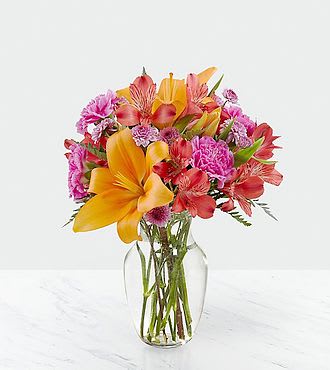
The Bloom Central flower delivery of the month for July in Hurley is the Blushing Bouquet
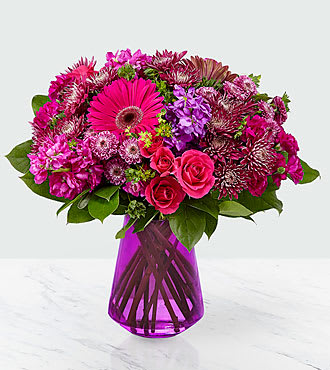
The Blushing Bouquet floral arrangement from Bloom Central is simply delightful. It exudes a sense of elegance and grace that anyone would appreciate. The pink hues and delicate blooms make it the perfect gift for any occasion.
With its stunning array of gerberas, mini carnations, spray roses and button poms, this bouquet captures the essence of beauty in every petal. Each flower is carefully hand-picked to create a harmonious blend of colors that will surely brighten up any room.
The recipient will swoon over the lovely fragrance that fills the air when they receive this stunning arrangement. Its gentle scent brings back memories of blooming gardens on warm summer days, creating an atmosphere of tranquility and serenity.
The Blushing Bouquet's design is both modern and classic at once. The expert florists at Bloom Central have skillfully arranged each stem to create a balanced composition that is pleasing to the eye. Every detail has been meticulously considered, resulting in a masterpiece fit for display in any home or office.
Not only does this elegant bouquet bring joy through its visual appeal, but it also serves as a reminder of love and appreciation whenever seen or admired throughout the day - bringing smiles even during those hectic moments.
Furthermore, ordering from Bloom Central guarantees top-notch quality - ensuring every stem remains fresh upon arrival! What better way to spoil someone than with flowers that are guaranteed to stay vibrant for days?
The Blushing Bouquet from Bloom Central encompasses everything one could desire - beauty, elegance and simplicity.
Hurley New York Flower Delivery
Hurley Flower Delivery - Frequently Asked Questions
- Does Bloom Central offer same-day flower delivery in Hurley?
- Yes. Place your order online before 1:00 PM and a local Hurley florist will hand-deliver your arrangement the same day. Orders can also be scheduled up to one month in advance.
- Is it safe to order flowers online?
- Absolutely! We utilize a secure, encrypted checkout to protect your personal and payment information. Visa, Mastercard, American Express, Discover, PayPal and Klarna are all accepted.
- What funeral homes does Bloom Central deliver sympathy flowers to in Hurley?
- We hand-deliver sympathy and memorial floral arrangements to all funeral homes near Hurley, including: Keyser Funeral & Cremation Services, Montrepose Cemetery, Mount Marion Cemetery, Old Dutch Church, Simpson-Gaus Funeral Home.
- What nearby cities does Bloom Central also deliver flowers to?
- In addition to Hurley, we deliver fresh flowers to many nearby cities including: West Hurley, Zena, Shokan, Ulster, Marbletown, Lincoln Park, Kingston, Woodstock
- What are the most popular flower arrangements at the Hurley florist?
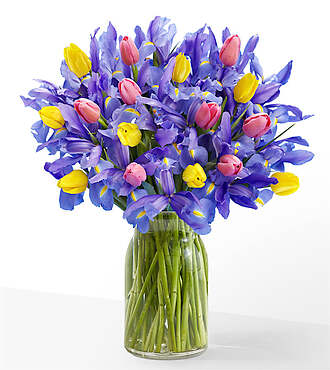
- Three of our most popular arrangements at our Hurley florist are: Bright and Beautiful Bouquet ($49.90), Cha - Cha Bouquet ($59.90), Beach Day Bouquet ($59.90). All are available for same-day delivery.
More About Hurley
Are looking for a Hurley florist because you are not local to the area? If so, here is a brief travelogue of what Hurley has to offer. Who knows, perhaps you'll be intrigued enough to come visit soon, partake in some of the fun activities Hurley has to offer and deliver flowers to your loved one in person!
Hurley, New York, sits in the Hudson Valley like a stone that’s been skipped across the surface of time, settling just where the water goes still. To drive through it is to feel the weight of centuries in the knuckled bedrock of its foundations, the low-slung fieldstone houses that line its roads like sentries who’ve forgotten their posts but not their dignity. These houses, built by Dutch settlers in the 1600s, are less structures than living fossils, their mortarless walls holding together not just limestone but a kind of stubbornness, the same stubbornness that compels a town to outlast wars, recessions, the hollowing of rural America, and the eerie quiet of a modern world that often seems to prefer forgetting. Hurley doesn’t forget. It persists. It leans into the breeze of history and stays upright.
The people here move with the unhurried rhythm of those who’ve learned the difference between existing and enduring. On Main Street, a woman tends geraniums in a planter made from a repurposed millstone. A farmer unloads crates of squash at the weekly market, his hands broad and fissured as the fields he works. Children pedal bikes past the town’s single-story library, where the librarian knows patrons by their overdue fines and the dog-eared corners of their paperbacks. There’s a particular grace to this kind of life, a sense that the rituals of community, parades, potlucks, the collective sigh of relief when the first snow melts, are not quaint relics but vital signs.

Same day service available. Order your Hurley floral delivery and surprise someone today!
To walk the Old Hurley Historic District is to traverse a palimpsest. The past isn’t buried here. It breathes. The Wynkoop House, circa 1663, wears its original beams like a veteran wears medals. The Hurley Reformed Church, rebuilt in 1836 after fire claimed its predecessor, rises white and unyielding, its spire a finger pointing less toward heaven than toward the idea of continuity. Even the local bakery, where the scent of fresh rye bread collides with the tang of apple cider from the orchard down the road, feels like a thread stitched through generations. The baker’s great-grandfather once ground flour in a mill powered by the Esopus Creek, which still snakes through town with a trout’s patience.
What’s extraordinary about Hurley isn’t merely its preservation but its refusal to ossify. The same creek that once turned millwheels now draws kayakers who weave between ripples and sunlight. Artists colonize barns, their studios cluttered with canvases that reinterpret the landscape in strokes the Dutch settlers might find blasphemous or thrilling. The town hall hosts yoga classes in a room where arguments over zoning and sewer lines still echo. This isn’t a museum. It’s a conversation, a long, slow dialogue between what was and what’s next.
The surrounding geography feels like a collaborator. The Shawangunk Ridge looms in the distance, its quartzite cliffs glowing peach at sunset, while the Catskills huddle to the north, blue and misted. Trails wind through forests that turn October into a bonfire of color. Farmers till soil that’s been fertile since the Lenape planted maize, their hands in the same earth that holds arrowheads and ceramic shards. There’s a humility in this cycle, a recognition that the land outlives everyone but belongs to no one.
To spend time here is to notice how the present tense softens. Clocks matter less. The urgency that defines so much of contemporary life dissolves into the rhythm of seasons, the repair of stone walls, the gossip exchanged over perennials at the garden center. Hurley’s gift is its insistence that smallness isn’t a limitation but a form of intimacy, that to be rooted isn’t to be stuck but to grow in three dimensions, down, up, and through.
It’s easy to romanticize places like this, to frame them as antidotes to modernity’s frenzy. But Hurley resists simplification. It’s not a postcard or a parable. It’s a town that has chosen, again and again, to pay attention, to its history, its land, its people, and in that attention, it finds a kind of immortality. You leave wondering if the secret to forever lies not in chasing something new but in tending, with care, to what’s already there.