





- Love & Romance
- Best Sellers
- Vased
 $69.90





- $49.90
- $79.90
- $74.90
- $69.90
July 1, 2026
Junius July Floral Selection
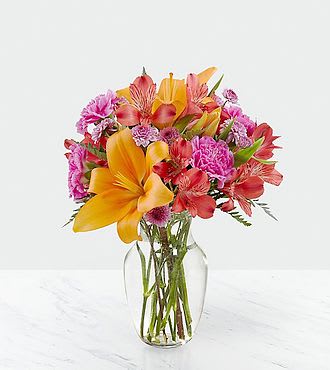
The Bloom Central flower delivery of the month for July in Junius is the Comfort and Grace Bouquet
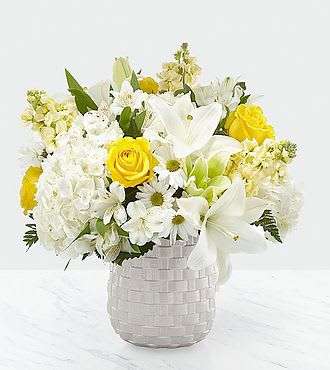
The Comfort and Grace Bouquet from Bloom Central is simply delightful. This gorgeous floral arrangement exudes an aura of pure elegance and charm making it the perfect gift for any occasion.
The combination of roses, stock, hydrangea and lilies is a timeless gift to share during times of celebrations or sensitivity and creates a harmonious blend that will surely bring joy to anyone who receives it. Each flower in this arrangement is fresh-cut at peak perfection - allowing your loved one to enjoy their beauty for days on end.
The lucky recipient can't help but be captivated by the sheer beauty and depth of this arrangement. Each bloom has been thoughtfully placed to create a balanced composition that is both visually pleasing and soothing to the soul.
What makes this bouquet truly special is its ability to evoke feelings of comfort and tranquility. The gentle hues combined with the fragrant blooms create an atmosphere that promotes relaxation and peace in any space.
Whether you're looking to brighten up someone's day or send your heartfelt condolences during difficult times, the Comfort and Grace Bouquet does not disappoint. Its understated elegance makes it suitable for any occasion.
The thoughtful selection of flowers also means there's something for everyone's taste! From classic roses symbolizing love and passion, elegant lilies representing purity and devotion; all expertly combined into one breathtaking display.
To top it off, Bloom Central provides impeccable customer service ensuring nationwide delivery right on time no matter where you are located!
If you're searching for an exquisite floral arrangement brimming with comfort and grace then look no further than the Comfort and Grace Bouquet! This arrangement is a surefire way to delight those dear to you, leaving them feeling loved and cherished.
Junius New York Flower Delivery
Junius Flower Delivery - Frequently Asked Questions
- Does Bloom Central offer same-day flower delivery in Junius?
- Yes. Place your order online before 1:00 PM and a local Junius florist will hand-deliver your arrangement the same day. Orders can also be scheduled up to one month in advance.
- Is it safe to order flowers online?
- Absolutely! We utilize a secure, encrypted checkout to protect your personal and payment information. Visa, Mastercard, American Express, Discover, PayPal and Klarna are all accepted.
- What funeral homes does Bloom Central deliver sympathy flowers to in Junius?
- We hand-deliver sympathy and memorial floral arrangements to all funeral homes near Junius, including: Arndt Funeral Home, Brew Funeral Home, Carter Funeral Home and Monuments, Claudettes Flowers & Gifts Inc., Dowdle Funeral Home, Falardeau Funeral Home, Falvo Funeral Home, Fergerson Funeral Home, Harris Paul W Funeral Home, Hollis Funeral Home, Lamarche Funeral Home, New Comer Funeral Home, Eastside Chapel, New Comer Funeral Home, Palmisano-Mull Funeral Home Inc, Pet Passages, Richard H Keenan Funeral Home, White Oak Cremation, Zirbel Funeral Home.
- What nearby cities does Bloom Central also deliver flowers to?
- In addition to Junius, we deliver fresh flowers to many nearby cities including: Waterloo, Tyre, Galen, Phelps, Seneca Falls, Clyde, Geneva, Fayette
- What are the most popular flower arrangements at the Junius florist?
- Three of our most popular arrangements at our Junius florist are: Pink Lily Bouquet by FTD ($37.90), Pop of Whimsy Bouquet and Happy Birthday Topper ($74.90), Set to Celebrate Birthday Bouquet ($54.90). All are available for same-day delivery.
More About Junius
Are looking for a Junius florist because you are not local to the area? If so, here is a brief travelogue of what Junius has to offer. Who knows, perhaps you'll be intrigued enough to come visit soon, partake in some of the fun activities Junius has to offer and deliver flowers to your loved one in person!
Junius, New York, sits in the flat palm of Seneca County like a secret the land decided to keep. The town is small enough that a person walking its roads at dawn might mistake it for a hallucination, a cluster of clapboard homes and weathered barns rising from mist-thick fields, their outlines blurred by the kind of quiet that hums. This is not the quiet of absence. It’s the quiet of a held breath, of soil settling, of roots threading deeper into earth while everyone’s looking up at the sky. The sky here is a drama. It’s wide and unashamed, staging sunrises that turn the soybean fields into sheets of copper, then draining to a blue so pure it aches. You get the sense Junius knows something about time the rest of us don’t. Maybe it’s the way the old railroad tracks, now idle, still gleam faintly under moonlight, as if waiting for a train that’s perpetually just around the bend. Or the way the Seneca River slides past, patient and brown, carrying the stories of Iroquois fishermen and Erie Canal laborers without ever pausing to explain. People here move with a rhythm that feels both deliberate and effortless. At the crossroads, where Route 414 meets something barely qualifying as a road, there’s a diner called The Spudnut. Its sign has faded to a ghostly pink, but inside, the booths are full by 6 a.m. Farmers in seed caps sip coffee, their hands cupped around mugs like they’re warming themselves on small suns. The waitress knows everyone’s order before they sit. She calls you “hon” without irony, and you believe her. Up the street, the Junius Historical Society operates out of a one-room schoolhouse built in 1887. The volunteer archivist, a woman named Marge who wears cardigans in July, will show you photos of townsfolk standing waist-deep in wheat, their faces stern but their eyes bright with pride. She’ll point to a portrait of a man holding a giant squash. “That’s my great-uncle,” she’ll say. “Grew it in ’52. Never beat the record, but he kept trying till he died.” You start to notice how often death comes up here, not as a specter but as a neighbor. The cemetery on Mill Street has headstones so weathered their names are lichen. Kids ride bikes around the plots, tracing figure eights between the markers. An old-timer mowing the grass waves at them, his smile a mix of mischief and grace. Life in Junius isn’t simple. It’s layered. The man fixing a tractor in his yard at midnight, the beam of his headlamp cutting through the dark, is the same man who coaches Little League and sings bass in the Methodist choir. The woman selling zucchinis at the farm stand, $1 a pound, honor system, teaches physics at the high school and reads Faulkner on her porch swing. There’s a hardware store that still sells penny nails, a post office where the clerk hands your mail through a slot with a joke about the weather, a library where the children’s section smells like crayons and hope. What Junius lacks in grandeur it makes up in texture. Every fencepost, every dented mailbox, every hydrangea bush exploding with pink blooms seems to whisper: Pay attention. The place resists nostalgia by insisting on being alive. Its beauty isn’t in preservation but in participation. When the fall fair arrives, the whole town crowds the firehouse to admire prizewinning jams and quilts stitched with geometric precision. Teenagers tug their caps low, trying to seem aloof as they eye the Ferris wheel. A band plays off-key covers of Creedence, and everyone dances anyway. Later, walking home under stars so dense they blur, you realize something. Junius isn’t a relic. It’s an argument, a quiet, persistent argument against the idea that progress requires erasure. The town thrives not by rejecting change but by absorbing it, the way a tree absorbs rain, turning what falls into something solid, something that reaches skyward but remains rooted. You leave wondering why that feels like a revelation. Then you remember: most truths are.