




- Love & Romance
- Best Sellers
- Under $60
 $69.90



- $49.90

July 1, 2026
Kiryas Joel July Floral Selection
The Bloom Central flower delivery of the month for July in Kiryas Joel is the High Style Bouquet
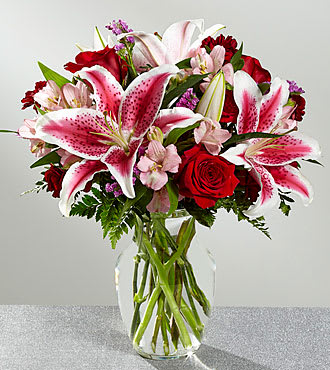
Introducing the High Style Bouquet from Bloom Central. This bouquet is simply stunning, combining an array of vibrant blooms that will surely brighten up any room.
The High Style Bouquet contains rich red roses, Stargazer Lilies, pink Peruvian Lilies, burgundy mini carnations, pink statice, and lush greens. All of these beautiful components are arranged in such a way that they create a sense of movement and energy, adding life to your surroundings.
What makes the High Style Bouquet stand out from other arrangements is its impeccable attention to detail. Each flower is carefully selected for its beauty and freshness before being expertly placed into the bouquet by skilled florists. It's like having your own personal stylist hand-pick every bloom just for you.
The rich hues found within this arrangement are enough to make anyone swoon with joy. From velvety reds to soft pinks and creamy whites there is something here for everyone's visual senses. The colors blend together seamlessly, creating a harmonious symphony of beauty that can't be ignored.
Not only does the High Style Bouquet look amazing as a centerpiece on your dining table or kitchen counter but it also radiates pure bliss throughout your entire home. Its fresh fragrance fills every nook and cranny with sweet scents reminiscent of springtime meadows. Talk about aromatherapy at its finest.
Whether you're treating yourself or surprising someone special in your life with this breathtaking bouquet from Bloom Central, one thing remains certain: happiness will blossom wherever it is placed. So go ahead, embrace the beauty and elegance of the High Style Bouquet because everyone deserves a little luxury in their life!
Kiryas Joel New York Flower Delivery
Kiryas Joel Flower Delivery - Frequently Asked Questions
- Does Bloom Central offer same-day flower delivery in Kiryas Joel?
- Yes. Place your order online before 1:00 PM and a local Kiryas Joel florist will hand-deliver your arrangement the same day. Orders can also be scheduled up to one month in advance.
- Is it safe to order flowers online?
- Absolutely! We utilize a secure, encrypted checkout to protect your personal and payment information. Visa, Mastercard, American Express, Discover, PayPal and Klarna are all accepted.
- What funeral homes does Bloom Central deliver sympathy flowers to in Kiryas Joel?
- We hand-deliver sympathy and memorial floral arrangements to all funeral homes near Kiryas Joel, including: Ballard-Durand Funeral & Cremation Services, Beecher Flooks Funeral Home, Brooks Funeral Home, Clark Funeral Home, E.O. Cury Funeral Home, Edwards-Dowdle Funeral Home, Flynn Funeral & Cremation Memorial Centers, Hannemann Funeral Home, Holt George M Funeral Home, Hoyt-Cognetta Funeral Home & Crematory, Michael J. Higgins Funeral Service, Pleasant Manor Funeral Home, Quigley Sullivan Funeral Home, Sorce Joseph W Funeral Home, Straub, Catalano & Halvey Funeral Home, T S Purta Funeral Home, Timothy P Doyle Funeral Home, Wanamaker & Carlough Funeral Home.
- What nearby cities does Bloom Central also deliver flowers to?
- In addition to Kiryas Joel, we deliver fresh flowers to many nearby cities including: South Blooming Grove, Harriman, Monroe, Mountain Lodge Park, Woodbury, Blooming Grove, Walton Park, Chester
- What are the most popular flower arrangements at the Kiryas Joel florist?
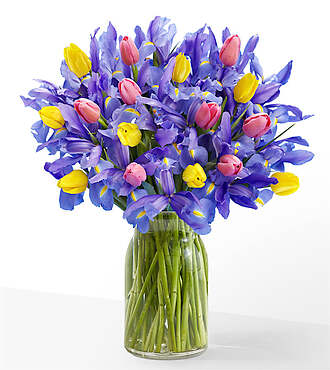
- Three of our most popular arrangements at our Kiryas Joel florist are: Blushing Beauty Bouquet ($49.90), Gift of Warmth Wreath ($244.90), Well Done Bouquet ($49.90). All are available for same-day delivery.
More About Kiryas Joel
Are looking for a Kiryas Joel florist because you are not local to the area? If so, here is a brief travelogue of what Kiryas Joel has to offer. Who knows, perhaps you'll be intrigued enough to come visit soon, partake in some of the fun activities Kiryas Joel has to offer and deliver flowers to your loved one in person!
In the lush folds of Orange County’s hills, there exists a village that defies the centrifugal forces of modern American life. Kiryas Joel, New York, is a place where time bends. The streets hum not with the white noise of commerce or the restless thrum of individualism but with the low, steady pulse of collective purpose. Founded in 1977 by a group of Satmar Hasidic Jews seeking insulation from the assimilative tides of the outside world, the community now thrives as a kind of living paradox: a separatist enclave that somehow, in its very separateness, illuminates something elemental about what it means to belong.
Walk its orderly lanes on a summer afternoon. Men in black frock coats and shtreimels move with a gait that suggests both urgency and calm, their eyes fixed ahead but their posture softened by the weight of tradition. Women push strollers with a quiet efficiency, their long sleeves and head coverings fluttering like flags of a private nation. Children, so many children, dart between sidewalks in a whirl of payos and laughter, their voices rising in Yiddish, a language that here feels less like a relic than a living thing. The air smells of challah and diesel, a blend of ancient ritual and pragmatic modernity.

Same day service available. Order your Kiryas Joel floral delivery and surprise someone today!
What strikes the outsider first is the absence of certain signifiers: no neon, no billboards hawking distraction, no screens flickering from cafés. Instead, there are modest homes clustered close, their windows open to the breeze, and public spaces that thrum with the commerce of conversation. The village operates like a single organism. Residents prioritize communal needs over personal whims, a fact evident in the shared water system, the absence of cars on Shabbat, the way every decision, from zoning laws to education, serves the collective’s continuity. This is a town built not on the illusion of endless choice but on the clarity of shared identity.
Schoolyards here burst with students, their curricula steeped in Torah and Talmud, their futures mapped not as a frontier to conquer but as a lineage to uphold. Yet to reduce Kiryas Joel to a museum of tradition misses the point. The village pulses with adaptation. Solar panels glint on rooftops. A robust public transit system ferries residents to nearby commercial hubs. Young fathers balance smartphones in one hand and ancient texts in the other, their lives a negotiation between preservation and necessity. The community’s growth, from a few hundred families to over 35,000 residents, speaks not to stagnation but to a vitality that transcends mere survival.
To visit Kiryas Joel is to confront questions about the price and promise of belonging. The village’s critics, and there are many, cite its insularity, its resistance to integration, its challenges with local governance. But these critiques often overlook the raw human truth at its core: here, no one is anonymous. Every child is watched by a dozen eyes. Every sorrow is shouldered communally. Every joy multiplies. In a nation where loneliness has become epidemic, Kiryas Joel offers a counterargument, that coherence might be worth the cost of certain freedoms.
There is a park at the village’s edge where families gather at dusk. Grandparents murmur stories. Toddlers chase fireflies. Teenagers debate Talmudic nuances with a fervor most American teens reserve for video games or TikTok. The scene feels almost prelapsarian, a pocket of continuity in a culture addicted to fracture. Yet it is not a relic. It is deliberate, sustained, alive. The people of Kiryas Joel have chosen, every day for decades, to build a world where the sacred and the mundane share the same breath. To witness it is to wonder, uncomfortably perhaps, what we ourselves have chosen, and what it might mean to choose differently.