





- Best Value
- Best Sellers
- Under $100
 $49.90



July 1, 2026
Lake Luzerne July Floral Selection
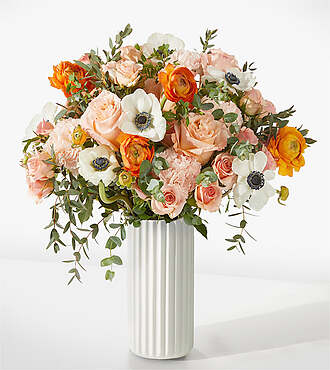
The Bloom Central flower delivery of the month for July in Lake Luzerne is the Graceful Grandeur Rose Bouquet
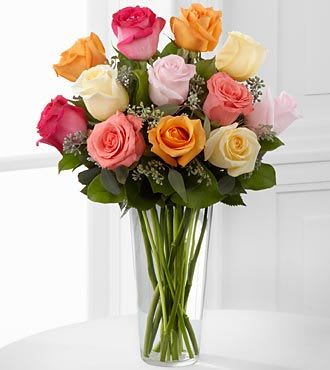
The Graceful Grandeur Rose Bouquet from Bloom Central is simply stunning. With its elegant and sophisticated design, it's sure to make a lasting impression on the lucky recipient.
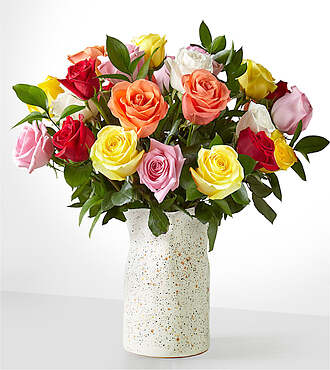
This exquisite bouquet features a generous arrangement of lush roses in shades of cream, orange, hot pink, coral and light pink. This soft pastel colors create a romantic and feminine feel that is perfect for any occasion.
The roses themselves are nothing short of perfection. Each bloom is carefully selected for its beauty, freshness and delicate fragrance. They are hand-picked by skilled florists who have an eye for detail and a passion for creating breathtaking arrangements.
The combination of different rose varieties adds depth and dimension to the bouquet. The contrasting sizes and shapes create an interesting visual balance that draws the eye in.
What sets this bouquet apart is not only its beauty but also its size. It's generously sized with enough blooms to make a grand statement without overwhelming the recipient or their space. Whether displayed as a centerpiece or placed on a mantelpiece the arrangement will bring joy wherever it goes.
When you send someone this gorgeous floral arrangement, you're not just sending flowers - you're sending love, appreciation and thoughtfulness all bundled up into one beautiful package.
The Graceful Grandeur Rose Bouquet from Bloom Central exudes elegance from every petal. The stunning array of colorful roses combined with expert craftsmanship creates an unforgettable floral masterpiece that will brighten anyone's day with pure delight.
Lake Luzerne Florist
Lake Luzerne Flower Delivery - Frequently Asked Questions
- Does Bloom Central offer same-day flower delivery in Lake Luzerne?
- Yes. Place your order online before 1:00 PM and a local Lake Luzerne florist will hand-deliver your arrangement the same day. Orders can also be scheduled up to one month in advance.
- Is it safe to order flowers online?
- Absolutely! We utilize a secure, encrypted checkout to protect your personal and payment information. Visa, Mastercard, American Express, Discover, PayPal and Klarna are all accepted.
- What funeral homes does Bloom Central deliver sympathy flowers to in Lake Luzerne?
- We hand-deliver sympathy and memorial floral arrangements to all funeral homes near Lake Luzerne, including: A G Cole Funeral Home, Baker Funeral Home, Betz Funeral Home, Brewer Funeral Home, Catricala Funeral Home, Compassionate Funeral Care, De Marco-Stone Funeral Home, De Vito-Salvadore Funeral Home, Dufresne Funeral Home, E P Mahar and Son Funeral Home, Emerick Gordon C Funeral Home, Gerald BH Solomon Saratoga National Cemetery, Glenville Funeral Home, Hanson-Walbridge & Shea Funeral Home, Hollenbeck Funeral Home, Infinity Pet Services, Riverview Funeral Home, Simple Choices Cremation Service.
- What nearby cities does Bloom Central also deliver flowers to?
- In addition to Lake Luzerne, we deliver fresh flowers to many nearby cities including: Glens Falls North, Hadley, Queensbury, West Glens Falls, Lake George, Glens Falls, South Glens Falls, Moreau
- What are the most popular flower arrangements at the Lake Luzerne florist?
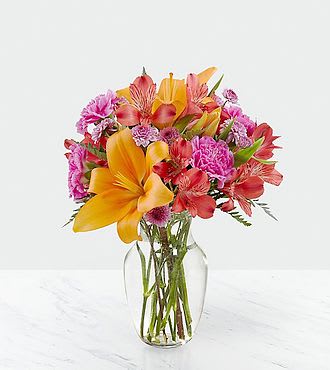
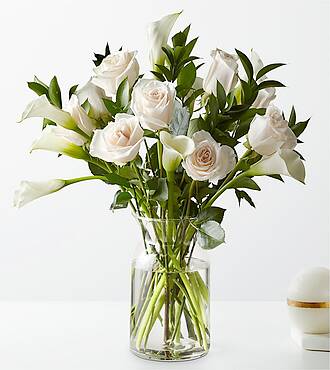
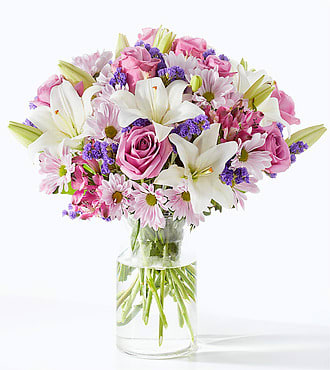
- Three of our most popular arrangements at our Lake Luzerne florist are: Country Basket Garden ($49.90), Garden Party Bouquet ($104.90), Long Stem White Rose Bouquet ($69.90). All are available for same-day delivery.
More About Lake Luzerne
Are looking for a Lake Luzerne florist because you are not local to the area? If so, here is a brief travelogue of what Lake Luzerne has to offer. Who knows, perhaps you'll be intrigued enough to come visit soon, partake in some of the fun activities Lake Luzerne has to offer and deliver flowers to your loved one in person!
Lake Luzerne, New York, sits like a quiet argument against the proposition that all small towns in America have surrendered to either decay or self-conscious nostalgia. Drive north from Saratoga Springs, past the horse farms and the Adirondack foothills thickening with pine, and you’ll find it cradled where the Hudson and Sacandaga Rivers converge, a geography that feels less like coincidence than a kind of hydrological handshake. The air here smells of damp cedar and cut grass. The light slants through trees in a way that makes you notice it. People move slowly but with purpose, as if aware that haste, here, would be a kind of trespass.
The town’s center is a modest grid of clapboard buildings, their paint chipped just enough to signal authenticity rather than neglect. A general store sells bait and homemade fudge. A librarian waves to a kid biking past. At the diner, the coffee is always fresh, and the waitress knows your order before you sit. This is not the performative quaintness of a tourist trap but the rhythm of a community that has decided, consciously or not, to preserve something essential about itself. The rivers are both the reason for this place and its defining metaphor. They bend, merge, and rush, always moving but never in a hurry. Kayakers paddle in eddies while kids scramble over rocks, their sneakers slipping on moss. Fishermen stand hip-deep in currents, casting lines with the patience of monks. The water here does not dazzle with tropical clarity; it’s tea-colored, rich with tannins, a liquid reminder of the forests it passes through.

Same day service available. Order your Lake Luzerne floral delivery and surprise someone today!
Hiking trails thread the surrounding woods, leading to overlooks where the view stretches across a quilt of evergreens and shimmering lakes. The trails are not over-signed or over-manicured. You might spot a deer, a red eft, or just the quiet evidence of growth and decay, a fallen birch becoming soil, fiddleheads rising in tight coils. In winter, cross-country skishers glide under bare maples, their breath visible in plumes. Snow muffles sound but amplifies presence. You notice the creak of branches, the crunch of your own steps.
What’s striking about Lake Luzerne is how it refuses to exoticize itself. There’s no gimmick, no branded identity. The town doesn’t need you to love it, which might be why you do. Visitors come for the scenery but return for the way time unspools here, a sense that hours are not something to fill but to inhabit. Locals gather for pancake breakfasts and summer concerts on the green. They volunteer at the food pantry and debate zoning laws with the seriousness of urban planners. Teenagers lob jokes outside the ice cream stand, their laughter carrying across the parking lot.
This is a place where the past isn’t a museum exhibit but a lived layer. The old train depot now houses a museum, its artifacts whispering of loggers and lacemakers, of an era when rivers were highways. The wooden chapel on the hill still holds services; its pews creak under the weight of generations. Yet the present feels equally vital. Artists’ studios dot back roads, their windows glowing at dusk. A yoga class meets in a barn. The elementary school’s playground echoes with shouts in English and Spanish.
To call Lake Luzerne “timeless” would miss the point. Time is very much here, in the way sunlight etches the mountains at dusk, in the rush of spring meltwater, in the slow turn of seasons. But it’s time that invites participation rather than demands surrender. You can’t help but feel, walking its streets or wading its rivers, that this is a town deeply aware of its own contingency, its fragility, and yet utterly steadfast. It exists not as an escape but as a proof of concept: that some places, like some people, manage to hold on to their essence without freezing it. The rivers keep flowing. The pines keep reaching. The world feels large and small at once.