





- Birthday
- Best Sellers
- Under $100



June 1, 2026
Rolla June Floral Selection
The Bloom Central flower delivery of the month for June in Rolla is the Light and Lovely Bouquet
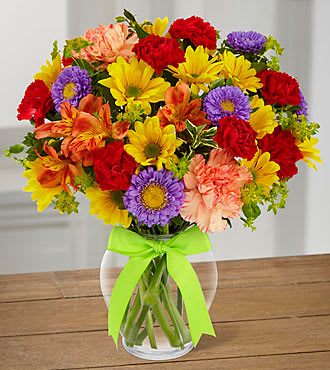
Introducing the Light and Lovely Bouquet, a floral arrangement that will brighten up any space with its delicate beauty. This charming bouquet, available at Bloom Central, exudes a sense of freshness and joy that will make you smile from ear to ear.
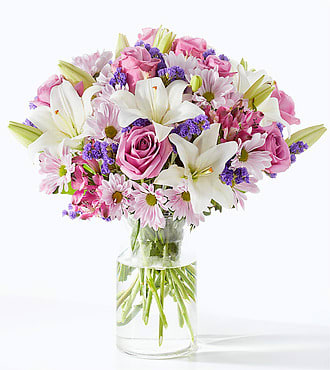
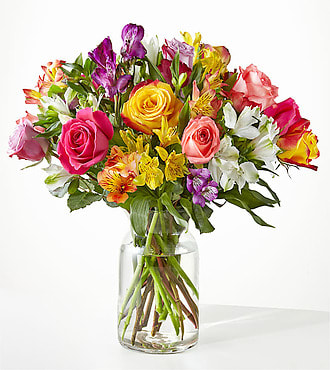
The Light and Lovely Bouquet features an enchanting combination of yellow daisies, orange Peruvian Lilies, lavender matsumoto asters, orange carnations and red mini carnations. These lovely blooms are carefully arranged in a clear glass vase with a touch of greenery for added elegance.
This delightful floral bouquet is perfect for all occasions be it welcoming a new baby into the world or expressing heartfelt gratitude to someone special. The simplicity and pops of color make this arrangement suitable for anyone who appreciates beauty in its purest form.
What is truly remarkable about the Light and Lovely Bouquet is how effortlessly it brings warmth into any room. It adds just the right amount of charm without overwhelming the senses.
The Light and Lovely Bouquet also comes arranged beautifully in a clear glass vase tied with a lime green ribbon at the neck - making it an ideal gift option when you want to convey your love or appreciation.
Another wonderful aspect worth mentioning is how long-lasting these blooms can be if properly cared for. With regular watering and trimming stems every few days along with fresh water changes every other day; this bouquet can continue bringing cheerfulness for up to two weeks.
There is simply no denying the sheer loveliness radiating from within this exquisite floral arrangement offered by the Light and Lovely Bouquet. The gentle colors combined with thoughtful design make it an absolute must-have addition to any home or a delightful gift to brighten someone's day. Order yours today and experience the joy it brings firsthand.
Rolla North Dakota Flower Delivery
Rolla Flower Delivery - Frequently Asked Questions
- Does Bloom Central offer same-day flower delivery in Rolla?
- Yes. Place your order online before 1:00 PM and a local Rolla florist will hand-deliver your arrangement the same day. Orders can also be scheduled up to one month in advance.
- Is it safe to order flowers online?
- Absolutely! We utilize a secure, encrypted checkout to protect your personal and payment information. Visa, Mastercard, American Express, Discover, PayPal and Klarna are all accepted.
- What hospitals and care facilities does Bloom Central deliver to in Rolla?
- We deliver fresh flower arrangements to all hospitals, nursing homes and care facilities in Rolla North Dakota, including: Park View Assisted Living, Presentation Medical Center.
- What churches does Bloom Central deliver flowers to in Rolla?
- We deliver fresh floral arrangements to all churches and places of worship in Rolla, including: Turtle Mountain Independent Baptist.
- What nearby cities does Bloom Central also deliver flowers to?
- In addition to Rolla, we deliver fresh flowers to many nearby cities including: Belcourt, Shell Valley, Cando, Bottineau, Rugby
- What are the most popular flower arrangements at the Rolla florist?
- Three of our most popular arrangements at our Rolla florist are: Happy Times Bouquet ($49.90), Schefflera Arboricola ($97.90), Spirit of Spring Basket ($49.90). All are available for same-day delivery.
More About Rolla
Are looking for a Rolla florist because you are not local to the area? If so, here is a brief travelogue of what Rolla has to offer. Who knows, perhaps you'll be intrigued enough to come visit soon, partake in some of the fun activities Rolla has to offer and deliver flowers to your loved one in person!
The sun hangs low over Rolla, North Dakota, a disc of pale gold in a sky so wide it seems to swallow the horizon. The land here does not so much roll as stretch, an expanse of wheat and barley fields stitched together by gravel roads that vanish into the earth’s gentle curve. To drive into Rolla is to feel the weight of the prairie lift, replaced by a quiet insistence that this place, population 1,256, matters in ways the interstates and flight paths cannot map. The town’s name, borrowed from some long-ago settler’s hometown, feels almost incidental. What sticks is the way the light falls in October, turning the silos into glowing sentinels, or how the snowdrifts in February hush the world into a kind of sacred pause.
Main Street defies decay. The shop windows gleam. A hardware store’s neon sign hums against the twilight. At the diner near the post office, regulars cluster in booths, their laughter bubbling over pie and coffee. They speak in the warm, clipped tones of people who know the sound of their own voices belong to each other. A teenager behind the counter grinds beans for a fresh pot, his movements precise, almost reverent. He knows the man at Table Four takes his coffee black, that the woman by the window adds three sugars. This is not the theater of nostalgia. It is the alive, unpretentious choreography of a community that understands proximity as a form of care.

Same day service available. Order your Rolla floral delivery and surprise someone today!
Beyond the town’s edge, the Turtle Mountains rise like a rumor. The hills cradle stands of birch and aspen that shiver in the wind, their leaves whispering stories older than county lines. The International Peace Garden lies a half-hour north, its floral mosaics and stone monuments straddling the border. Visitors come to marvel at the cairn marked “Children’s Peace Theatre” or the sunken garden where blooms erupt in kaleidoscopic bursts each July. But the real magic is subtler: the way the garden’s gates open without guards, the unspoken pact that here, amid the lilacs and lupines, the line between nations blurs into irrelevance.
Back in town, the school’s football field hosts Friday night games under stadium lights that push back the vast Midwestern dark. Teenagers sprint across the turf, their breath visible, their shouts cutting through the cold. Parents huddle under blankets, their applause a staccato rhythm beneath the stars. Later, win or lose, the team gathers at a diner where the milkshakes are thick and the jukebox plays Patsy Cline. The coach, a man with hands like tractor gears, nods as a linebacker recounts the game’s final drive. There is pride here, but not the kind that preens. It is the pride of showing up, of knowing your role in the hive.
Autumn brings the harvest. Combines crawl across the fields, their blades devouring wheat in rhythmic sweeps. Farmers wave from cabs, their faces lined but open. At the elevator on the edge of town, trucks disgorge golden streams of grain. The air smells of dust and possibility. A retired teacher, now volunteering at the heritage center, unpacks artifacts from the Turtle Mountain Band of Chippewa, beaded moccasins, a drum, a faded map of migration routes. Schoolchildren press their palms to the glass, eyes wide. History here is not a relic. It is a conversation, ongoing and necessary.
Winter strips the landscape to its bones. Snow piles in drifts. The wind howls. Yet each morning, porch lights flicker on, defiant. Neighbors shovel each other’s driveways. The library stays open, its shelves stocked with mysteries and memoirs. At the community center, women knit scarves for kids at the reservation school, their needles clicking like metronomes. The cold tries its best. It fails.
Rolla does not dazzle. It endures. It gathers. It remembers. To pass through is to witness a paradox: a town that thrives not in spite of its isolation, but because of it. The people here build something invisible yet vital, a shared understanding that belonging is less about where you are than how you are, and that the worth of a place reveals itself in the way a stranger can walk into the diner and, within minutes, feel like they might someday belong.