




- Love & Romance
- Best Sellers
- Thank You
 $69.90
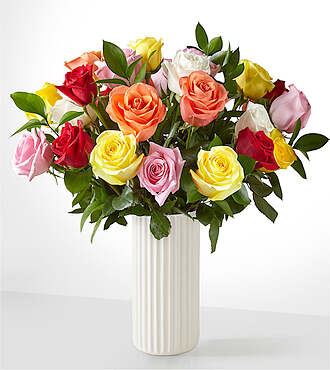
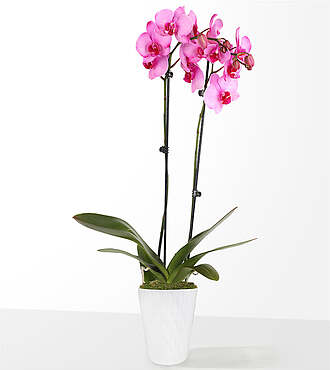
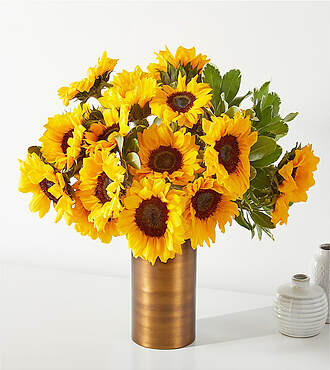
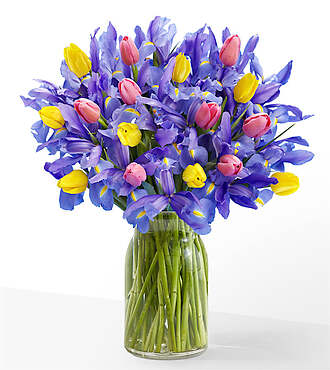
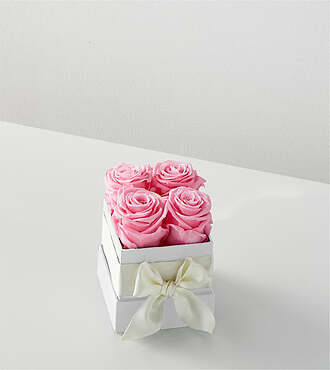
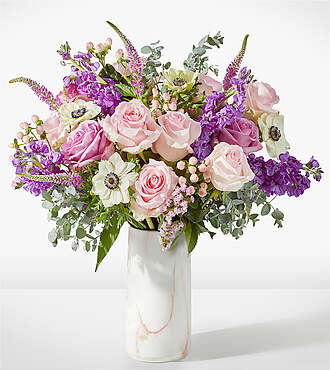
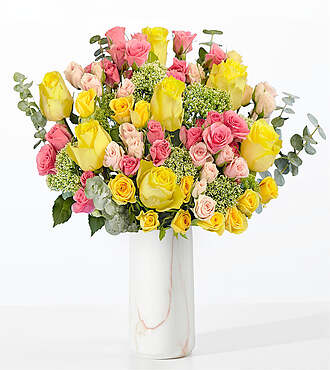
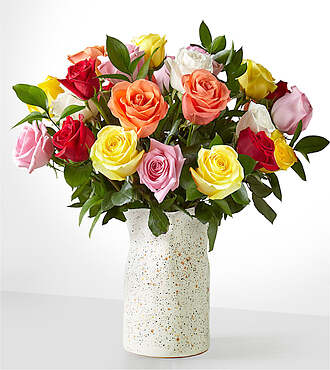
- $49.90
- $79.90
July 1, 2026
Harlem July Floral Selection
The Bloom Central flower delivery of the month for July in Harlem is the Blushing Bouquet
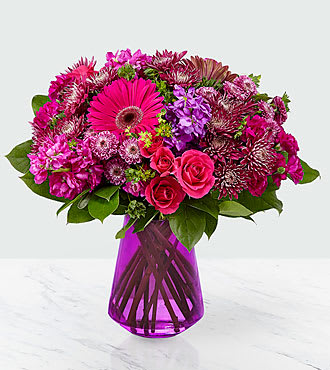
The Blushing Bouquet floral arrangement from Bloom Central is simply delightful. It exudes a sense of elegance and grace that anyone would appreciate. The pink hues and delicate blooms make it the perfect gift for any occasion.
With its stunning array of gerberas, mini carnations, spray roses and button poms, this bouquet captures the essence of beauty in every petal. Each flower is carefully hand-picked to create a harmonious blend of colors that will surely brighten up any room.
The recipient will swoon over the lovely fragrance that fills the air when they receive this stunning arrangement. Its gentle scent brings back memories of blooming gardens on warm summer days, creating an atmosphere of tranquility and serenity.
The Blushing Bouquet's design is both modern and classic at once. The expert florists at Bloom Central have skillfully arranged each stem to create a balanced composition that is pleasing to the eye. Every detail has been meticulously considered, resulting in a masterpiece fit for display in any home or office.
Not only does this elegant bouquet bring joy through its visual appeal, but it also serves as a reminder of love and appreciation whenever seen or admired throughout the day - bringing smiles even during those hectic moments.
Furthermore, ordering from Bloom Central guarantees top-notch quality - ensuring every stem remains fresh upon arrival! What better way to spoil someone than with flowers that are guaranteed to stay vibrant for days?
The Blushing Bouquet from Bloom Central encompasses everything one could desire - beauty, elegance and simplicity.
Harlem Ohio Flower Delivery
Harlem Flower Delivery - Frequently Asked Questions
- Does Bloom Central offer same-day flower delivery in Harlem?
- Yes. Place your order online before 1:00 PM and a local Harlem florist will hand-deliver your arrangement the same day. Orders can also be scheduled up to one month in advance.
- Is it safe to order flowers online?
- Absolutely! We utilize a secure, encrypted checkout to protect your personal and payment information. Visa, Mastercard, American Express, Discover, PayPal and Klarna are all accepted.
- What funeral homes does Bloom Central deliver sympathy flowers to in Harlem?
- We hand-deliver sympathy and memorial floral arrangements to all funeral homes near Harlem, including: Hill Funeral Home, Marlan Gary Funeral Home, Chapel of Peace, Newcomer Funeral Home & Crematory - Northeast Chapel, Otterbein Cemetary, Schoedinger Funeral Service & Crematory, Schoedinger Funeral Service & Crematory.
- What nearby cities does Bloom Central also deliver flowers to?
- In addition to Harlem, we deliver fresh flowers to many nearby cities including: Genoa, New Albany, Sunbury, Johnstown, Westerville, Blendon, Jersey, Berkshire
- What are the most popular flower arrangements at the Harlem florist?
- Three of our most popular arrangements at our Harlem florist are: Palm Plant ($109.90), Blooming Bounty Bouquet ($49.90), Special Request 300 ($300.00). All are available for same-day delivery.
More About Harlem
Are looking for a Harlem florist because you are not local to the area? If so, here is a brief travelogue of what Harlem has to offer. Who knows, perhaps you'll be intrigued enough to come visit soon, partake in some of the fun activities Harlem has to offer and deliver flowers to your loved one in person!
Consider the town of Harlem, Ohio. Population: a few hundred. Location: a grid of quiet streets tucked into the state’s rural midriff, a place you pass through on the way to somewhere else unless you’re from here, in which case it’s the opposite, a center, a locus, a site where the world happens in small, vital increments. The air smells of cut grass and diesel from the tractors that rumble down State Route 665. The sky is big here, a Midwestern cerulean that makes the grain silos look like monuments. The town’s single traffic light blinks yellow at night, a metronome for the rhythm of pickup trucks and minivans ferrying kids to soccer practice.
The people here know one another. Not in the performative way of cities, where recognition is transactional, but in the marrow-deep way of shared histories. At the Harlem Elementary School playground, parents trade stories about their own childhoods on the same swings, their sneakers scuffing the same gravel. The local diner, a squat brick building with neon signs advertising pie, serves as both kitchen and confessional. Waitresses call customers by name and remember how they take their coffee. Conversations here aren’t small talk; they’re updates in an ongoing oral history. A farmer discusses crop rotation with a mechanic. A retired teacher debates the merits of zucchini bread with a teenager saving for college. The clatter of plates underscores it all, a percussion track to the symphony of communal life.

Same day service available. Order your Harlem floral delivery and surprise someone today!
Drive past the edge of town and the landscape opens into fields of soy and corn, rows so straight they seem drawn by a divine ruler. Farmers move through them like chess pieces, methodical, patient. Their work is a dialogue with the land, a give-and-take older than the town itself. In spring, the soil exhales a rich, damp scent. In autumn, combines carve the earth into geometric harvests. There’s a rhythm here, too, not the frantic tempo of progress but something slower, more cyclical, a reminder that growth and rest are partners, not rivals.
Back on Main Street, the Harlem Community Library stands as a temple of quiet industry. Its shelves hold dog-eared paperbacks and local yearbooks. Children gather for story hour, cross-legged on a rug patterned with cartoon trains. The librarian, a woman with silver hair and a bottomless supply of patience, speaks of books as if they’re living things. “This one’s a real adventure,” she’ll say, handing a novel to a wide-eyed kid. The library’s windows frame a view of the town park, where retirees play checkers under a pavilion and toddlers wobble after ducks in the pond.
History here isn’t archived so much as worn lightly, like a well-loved jacket. The old train depot, now a museum, houses artifacts from the town’s founding, a rusted plow, sepia photographs of stern-faced pioneers. But the real history lives in the way a grandmother still refers to the pharmacy as “the new one” despite it opening in 1987, or how the annual Fall Festival features the same caramel apple recipe someone’s great-great-grandmother brought from Germany. Time folds in on itself here. The past isn’t dead; it’s a neighbor.
What’s most striking about Harlem isn’t its scale but its density of meaning. A single block contains a universe: the barbershop where debates over baseball stats double as philosophy seminars, the flower shop where bouquets are curated with the care of gallery exhibits, the post office where handwritten letters still outnumber Amazon packages. The town defies the irony and detachment of modern life. When someone asks, “How are you?” they mean it. When a casserole appears on your porch after a hard week, it’s both sustenance and scripture.
To visit Harlem is to witness a paradox: a place that feels timeless but isn’t stagnant, where change comes gently, like a breeze through a screen door. New families arrive, drawn by the schools or the simplicity, and are folded into the fabric. Teens graduate, leave for college, return with degrees and fresh ideas. The diner adds a vegan salad to the menu. The park gets a updated swing set. Yet the essence remains, a stubborn, beautiful refusal to let the ephemeral define value. Here, the important things are still the things you can touch: soil, hands, pie crust, the pages of a book. The rest is weather, passing through.