





- New Baby
- Best Sellers
- Under $60


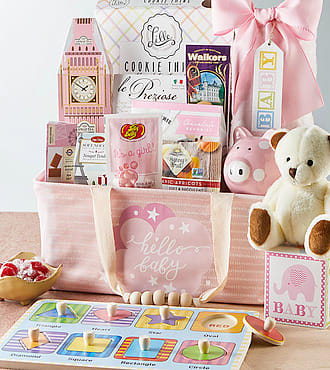
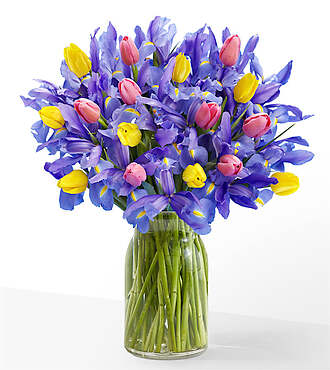
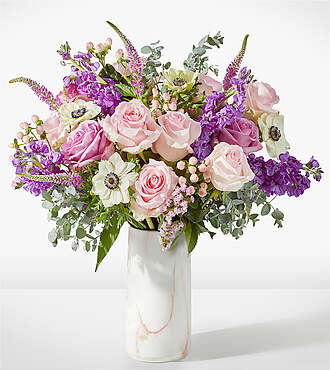
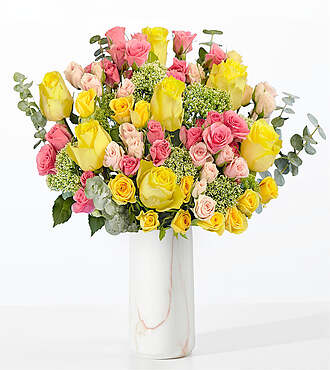
 $49.90

July 1, 2026
Payne July Floral Selection
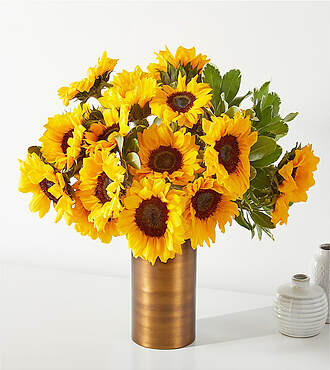
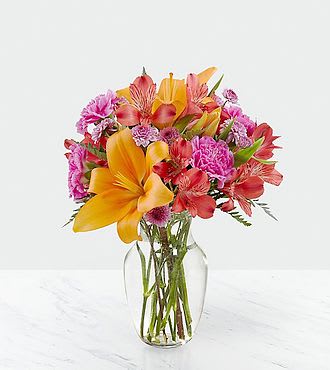
The Bloom Central flower delivery of the month for July in Payne is the Bright and Beautiful Bouquet
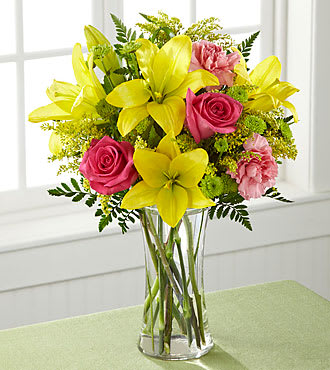
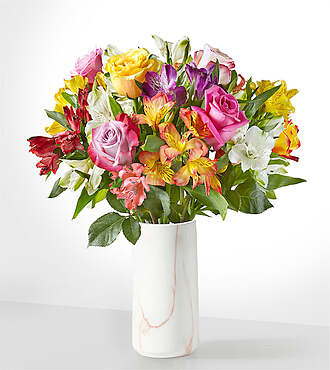
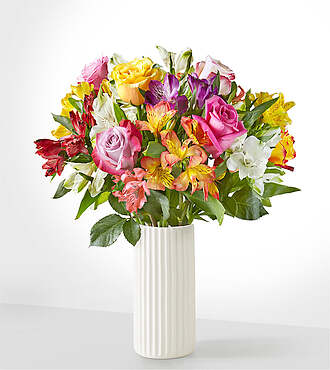
Introducing the Bright and Beautiful Bouquet from Bloom Central! This delightful floral arrangement is sure to brighten up any room with its vibrant colors and charming blooms. The bouquet features a lovely mix of fresh flowers that will bring joy to your loved ones or add a cheerful touch to any occasion.
With its simple yet stunning design, this bouquet captures the essence of happiness. Bursting with an array of colorful petals, it instantly creates a warm and inviting atmosphere wherever it's placed. From the soft pinks to the sunny yellows, every hue harmoniously comes together, creating harmony in bloom.
Each flower in this arrangement has been carefully selected for their beauty and freshness. Lush pink roses take center stage, exuding elegance and grace with their velvety petals. They are accompanied by dainty pink carnations that add a playful flair while symbolizing innocence and purity.
Adding depth to this exquisite creation are delicate Asiatic lilies which emanate an intoxicating fragrance that fills the air as soon as you enter the room. Their graceful presence adds sophistication and completes this enchanting ensemble.
The Bright and Beautiful Bouquet is expertly arranged by skilled florists who have an eye for detail. Each stem is thoughtfully positioned so that every blossom can be admired from all angles.
One cannot help but feel uplifted when gazing upon these radiant blossoms. This arrangement will surely make everyone smile - young or old alike.
Not only does this magnificent bouquet create visual delight it also serves as a reminder of life's precious moments worth celebrating together - birthdays, anniversaries or simply milestones achieved. It breathes life into dull spaces effortlessly transforming them into vibrant expressions of love and happiness.
The Bright and Beautiful Bouquet from Bloom Central is a testament to the joys that flowers can bring into our lives. With its radiant colors, fresh fragrance and delightful arrangement, this bouquet offers a simple yet impactful way to spread joy and brighten up any space. So go ahead and let your love bloom with the Bright and Beautiful Bouquet - where beauty meets simplicity in every petal.
Local Flower Delivery in Payne
Payne Flower Delivery - Frequently Asked Questions
- Does Bloom Central offer same-day flower delivery in Payne?
- Yes. Place your order online before 1:00 PM and a local Payne florist will hand-deliver your arrangement the same day. Orders can also be scheduled up to one month in advance.
- Is it safe to order flowers online?
- Absolutely! We utilize a secure, encrypted checkout to protect your personal and payment information. Visa, Mastercard, American Express, Discover, PayPal and Klarna are all accepted.
- What hospitals and care facilities does Bloom Central deliver to in Payne?
- We deliver fresh flower arrangements to all hospitals, nursing homes and care facilities in Payne Ohio, including: Vancrest Of Payne.
- What funeral homes does Bloom Central deliver sympathy flowers to in Payne?
- We hand-deliver sympathy and memorial floral arrangements to all funeral homes near Payne, including: Chiles-Laman Funeral & Cremation Services, Choice Funeral Care, Cisco Funeral Home, Covington Memorial Funeral Home & Cemetery, DO McComb & Sons Funeral Home, DO McComb & Sons Funeral Home, Elzey-Patterson-Rodak Home for Funerals, Feller & Clark Funeral Home, Feller Funeral Home, Forest Hill Cemetery, Glenwood Cemetery, Grisier Funeral Home, Hite Funeral Home, Hockemeyer & Miller Funeral Home, Lindenwood Cemetery, Midwest Funeral Home And Cremation, Schlosser Funeral Home & Cremation Services, Siferd-Orians Funeral Home.
- What nearby cities does Bloom Central also deliver flowers to?
- In addition to Payne, we deliver fresh flowers to many nearby cities including: Paulding, Antwerp, Tully, Carryall, Convoy, Latty, Hicksville, Pleasant
- What are the most popular flower arrangements at the Payne florist?
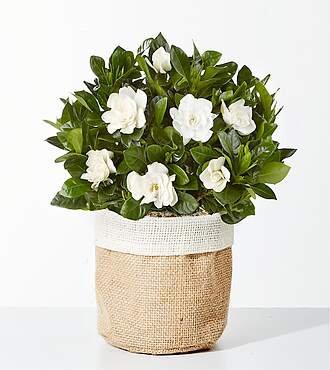
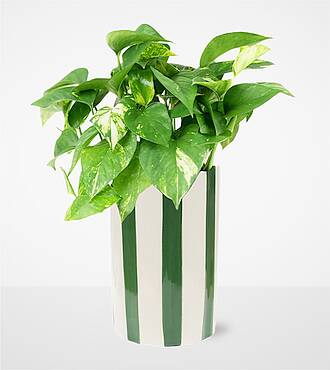
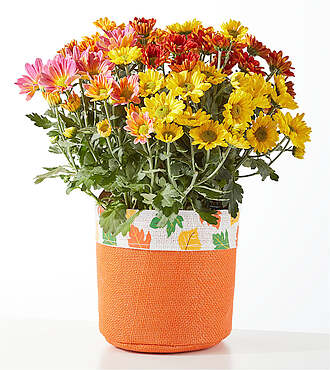
- Three of our most popular arrangements at our Payne florist are: Spirit of Spring Basket ($49.90), Happy Times Bouquet ($49.90), Schefflera Arboricola ($97.90). All are available for same-day delivery.
More About Payne
Are looking for a Payne florist because you are not local to the area? If so, here is a brief travelogue of what Payne has to offer. Who knows, perhaps you'll be intrigued enough to come visit soon, partake in some of the fun activities Payne has to offer and deliver flowers to your loved one in person!
Payne, Ohio, sits in the northwest crook of the state like a well-worn coin dropped between soybean fields and forgotten, then found, then kept for luck. The town’s name, locals will tell you, has nothing to do with hardship. It honors some obscure 19th-century railroad man, a fact that feels both fitting and quietly absurd, because Payne’s heartbeat still syncs to the rhythm of freight trains shunting through the center of town. The tracks divide Main Street from everything else, and each day, as crossing gates descend and red lights pulse, drivers idle in their cars and watch endless flatbeds of steel or grain or timber clatter past. There’s a ritual here, a patience that feels almost sacred. You wait. You listen. You count the seconds until the caboose blurs by, its rear lamp winking as if to say go on now, keep moving.
The air smells of cut grass and diesel and the faint tang of fertilizer, not unpleasant, just honest. Payne’s people move at a pace that suggests they’ve decoded some universal secret about time. Teenagers pedal bikes with baseball gloves hooked over handlebars. Retired men in seed caps linger outside the hardware store, debating the merits of hybrid tomatoes. At the lone diner, waitresses slide plates of hash browns toward regulars and call everyone “sugar,” their voices rasping like old screen doors. The coffee is bottomless, the pie is rhubarb, and the laughter crests in waves that make the windows tremble.

Same day service available. Order your Payne floral delivery and surprise someone today!
What’s extraordinary here is the absence of the extraordinary. Payne’s beauty lives in its refusal to perform. The town park has two swings, a slide, and a sign that reads PLEASE CHILDREN BE NICE. Every fall, the high school football field becomes a cathedral under Friday night lights, where boys with mud-caked jerseys sprint under passes that hang in the air like prayers. The crowd’s roar carries past the bleachers, over the parking lot, into the dark fields beyond, where combines sit idle under constellations so bright they hum.
There’s a woman here who paints watercolors of barns. Another who knits scarves for anyone who admires her work. The library, a red-brick relic with creaky floors, lets kids check out fossils, actual Devonian-era trilobites sealed in ancient shale, because the librarian believes touching the past makes the future less frightening. At the edge of town, a community garden spills over with zucchini and sunflowers, its soil tended by a rotating cast of octogenarians and third graders. Everything grows here, even when it shouldn’t.
Some afternoons, a sudden rain will sweep in from Indiana, and everyone runs for cover beneath awnings or into the post office, where the postmaster grumbles about wet floors but still hands out paper towels for damp hair. Strangers become neighbors for six minutes, sharing small talk about the weather or the Bengals’ latest loss, until the clouds break and the sun returns, glazing the streets in gold. You’ll see people pause then, squinting at the sky, as if surprised, again and again, by the world’s capacity to shift from gray to glory.
It’s easy to mistake Payne for simplicity. But stay awhile. Notice how the old barber remembers every customer’s first haircut. How the fire department hosts pancake breakfasts where the syrup flows thicker than gossip. How the annual Harvest Fest features a pie-eating contest judged by the mayor, whose face turns perpetually red, as if the role requires more courage than governance. This is a place where you’re seen, where absence gets noted, where someone will knock on your door with a casserole if you forget to wave hello for a week.
The trains keep coming. The fields keep yielding. And Payne, Ohio, stubborn, unpretentious, humming with the low-frequency magic of belonging, keeps insisting there’s wonder in the wait, in the stillness, in the ordinary act of tending to what’s right in front of you.