

- Anniversary
- Best Sellers
- Carnations
 $69.90
July 1, 2026
Maud July Floral Selection
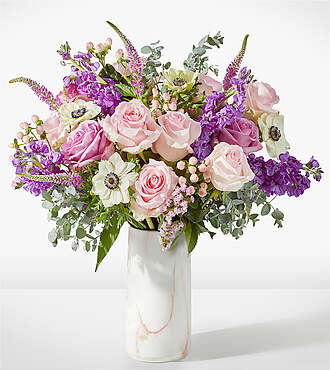
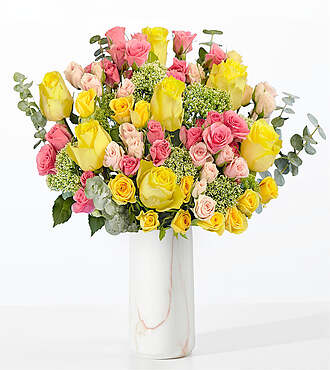
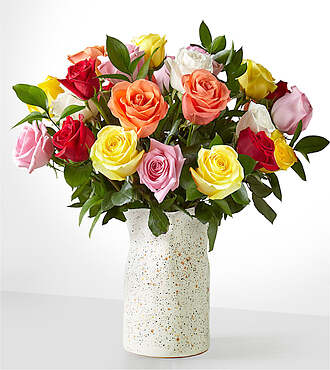
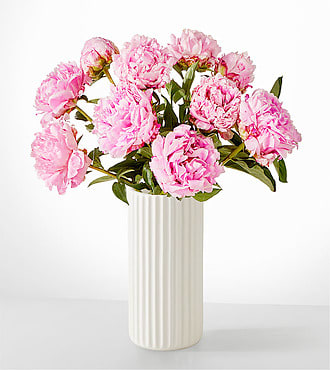
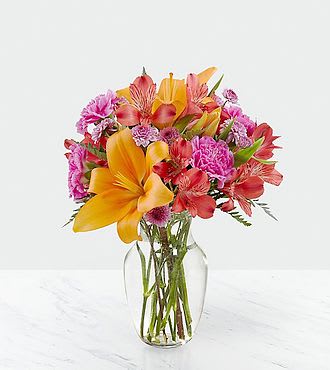
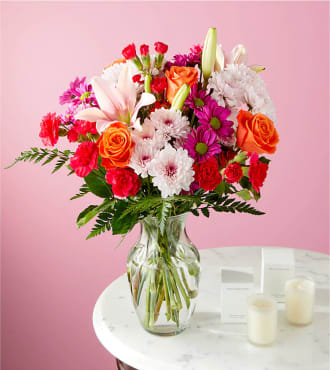
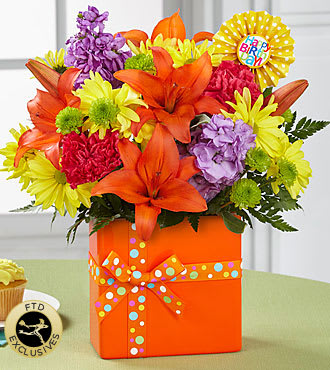
The Bloom Central flower delivery of the month for July in Maud is the Best Day Bouquet
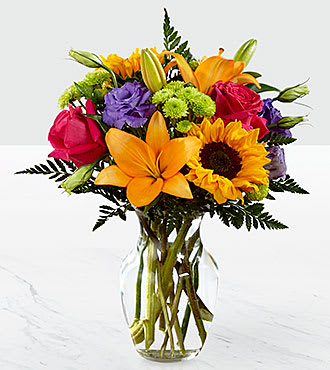
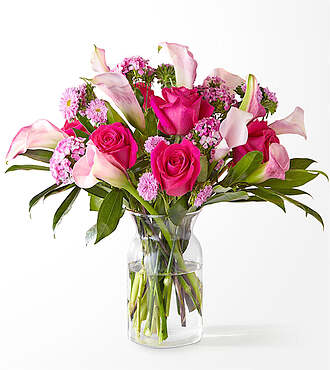
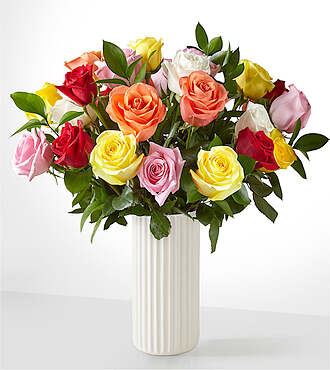
Introducing the Best Day Bouquet - a delightful floral arrangement that will instantly bring joy to any space! Bursting with vibrant colors and charming blooms, this bouquet is sure to make your day brighter. Bloom Central has truly outdone themselves with this perfectly curated collection of flowers. You can't help but smile when you see the Best Day Bouquet.
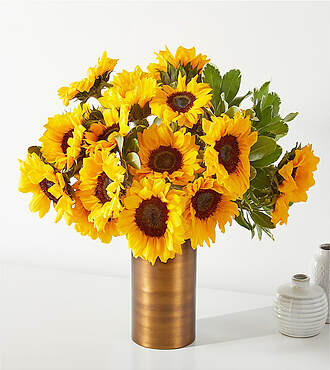
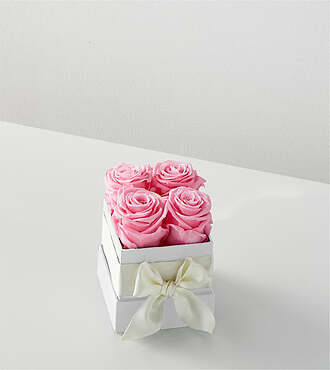
The first thing that catches your eye are the stunning roses. Soft petals in various shades of pink create an air of elegance and grace. They're complemented beautifully by cheerful sunflowers in bright yellow hues.
But wait, there's more! Sprinkled throughout are delicate purple lisianthus flowers adding depth and texture to the arrangement. Their intricate clusters provide an unexpected touch that takes this bouquet from ordinary to extraordinary.
And let's not forget about those captivating orange lilies! Standing tall amongst their counterparts, they demand attention with their bold color and striking beauty. Their presence brings warmth and enthusiasm into every room they grace.
As if it couldn't get any better, lush greenery frames this masterpiece flawlessly. The carefully selected foliage adds natural charm while highlighting each individual bloom within the bouquet.
Whether it's adorning your kitchen counter or brightening up an office desk, this arrangement simply radiates positivity wherever it goes - making every day feel like the best day. When someone receives these flowers as a gift, they know that someone truly cares about brightening their world.
What sets apart the Best Day Bouquet is its ability to evoke feelings of pure happiness without saying a word. It speaks volumes through its choice selection of blossoms carefully arranged by skilled florists at Bloom Central who have poured their love into creating such a breathtaking display.
So go ahead and treat yourself or surprise a loved one with the Best Day Bouquet. It's a little slice of floral perfection that brings sunshine and smiles in abundance. You deserve to have the best day ever, and this bouquet is here to ensure just that.
Maud Oklahoma Flower Delivery
Maud Flower Delivery - Frequently Asked Questions
- Does Bloom Central offer same-day flower delivery in Maud?
- Yes. Place your order online before 1:00 PM and a local Maud florist will hand-deliver your arrangement the same day. Orders can also be scheduled up to one month in advance.
- Is it safe to order flowers online?
- Absolutely! We utilize a secure, encrypted checkout to protect your personal and payment information. Visa, Mastercard, American Express, Discover, PayPal and Klarna are all accepted.
- What funeral homes does Bloom Central deliver sympathy flowers to in Maud?
- We hand-deliver sympathy and memorial floral arrangements to all funeral homes near Maud, including: Advantage Funeral & Cremation Service-South Chapel, Affordable Cremation Service, Arlington Memory Gardens, Barnes Friederich Funeral Home, Browns Family Furneral Home, Crawford Family Funeral & Cremation Service, Gaskill-Owens Funeral Chapel, Havenbrook Funeral Home, Heritage Funeral Home, John M Ireland Funeral Home & Chapel, Lehman Funeral Home, Matthews Funeral Home, Memorial Park Funeral Home, Moore Funeral and Cremation, Primrose Funeral Service & Sunset Memorial Park Cemetery, Resthaven Memory Gardens, Rolfe Funeral Home, Walker Funeral Service.
- What nearby cities does Bloom Central also deliver flowers to?
- In addition to Maud, we deliver fresh flowers to many nearby cities including: Seminole, Konawa, Tecumseh, Shawnee, Wewoka, Bethel Acres, Byng, Pink
- What are the most popular flower arrangements at the Maud florist?
- Three of our most popular arrangements at our Maud florist are: Cheerleader Bouquet ($54.90), Genuine Gestures Bouquet ($54.90), Light and Lovely Bouquet ($54.90). All are available for same-day delivery.
More About Maud
Are looking for a Maud florist because you are not local to the area? If so, here is a brief travelogue of what Maud has to offer. Who knows, perhaps you'll be intrigued enough to come visit soon, partake in some of the fun activities Maud has to offer and deliver flowers to your loved one in person!
The town of Maud, Oklahoma, does not announce itself. It emerges from the prairie like a secret kept between the earth and sky, a cluster of low-slung buildings and shaded porches where the wind carries stories older than the telephone poles. To stand on Main Street at dawn is to witness a kind of quiet theater: shopkeepers sweep sidewalks with brooms that have outlasted mayors. A retired teacher adjusts the cursive menu board at the diner, her hands steady as a metronome. Farmers in pickup trucks idle at the lone stoplight, nodding at neighbors whose grandparents their own grandparents once nodded at. The rhythm here is not slow so much as deliberate, a pace calibrated to the turning of seasons rather than the churn of seconds.
Maud’s history is written in the creak of its oak floors. The brick facades along Broadway Street still bear the ghostly outlines of signs advertising feed stores and five-and-dimes, their letters faded but legible to anyone inclined to squint. The railroad tracks, now mostly silent, stitch the town to a century past when steam engines carried corn and cattle and the dreams of people who believed soil could be a form of scripture. Today, the depot houses a museum where children press palms to glass cases, marveling at arrowheads and sepia photographs of men in hats that seem to defy gravity. History here is not a relic. It is the glue in the mortar, the reason every third grader learns to point to their house on a map from 1912.

Same day service available. Order your Maud floral delivery and surprise someone today!
What defines Maud is not its size but its density of connection. Conversations at the post office linger like summer humidity. The woman behind the counter knows which boxes contain medications and which hold birthday presents. At the high school football field on Friday nights, the crowd’s roar rises into the dark like a shared exhalation, parents and grandparents hoarse from cheering for boys whose names they’ve chanted since T-ball. When the Methodist church hosts a potluck, tables buckle under casserole dishes and pie tins, and nobody leaves without a handwritten recipe slipped into their pocket. The town’s affection is insistent, unsubtle, a flame kept alive by collective breath.
Autumn brings the Old Settlers Day Festival, a parade of convertibles and tractors, marching bands and Girl Scouts tossing candy to kids who dart into the street with the glee of squirrels. Strangers become neighbors beneath the carnival lights, sharing funnel cakes and stories about rainstorms that arrived just in time. The air smells of popcorn and diesel and the peculiar sweetness of fallen leaves. It is easy, in such moments, to feel the pull of something primordial, the human urge to gather and say, Here we are, together, in this spot.
To the east, the prairie stretches uninterrupted, a sea of grass that rolls toward the horizon. Families picnic at the edge of town, watching dusk paint the sky in gradients of peach and lavender. Teenagers drag sticks along the gravel, etching their initials into the dust. There is a nearness to the land here, a sense that the soil is less a resource than a relative. Gardens bloom in tidy rows, and even those without green thumbs keep potted geraniums on their stoops, as if to say, See, we are still growing.
Maud is not a destination. It is a parenthesis, a place that thrives in the unspoken spaces between milestones. Its beauty lies not in grandeur but in congruence, the way a single streetlight can cast a halo over a block of boarded-up shops and make them glow like relics in a diorama. To visit is to be reminded that some places still choose to exist as verbs rather than nouns, not locations so much as actions, ongoing and alive, insisting quietly on their own continuity.