





- Love & Romance
- Best Sellers
- Carnations
 $69.90



July 1, 2026
Yale July Floral Selection
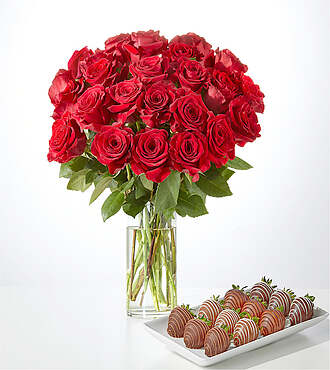
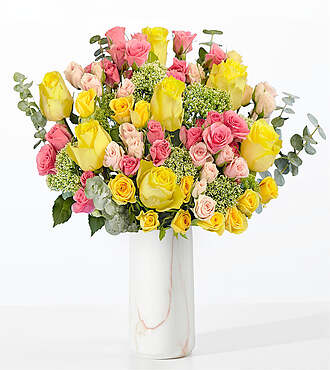
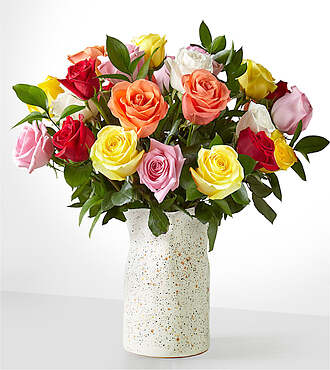
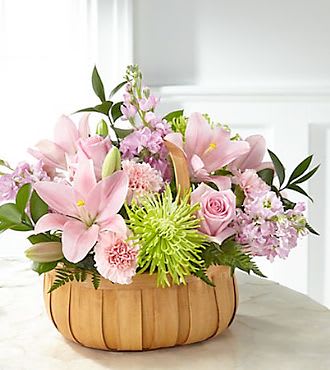
The Bloom Central flower delivery of the month for July in Yale is the Blooming Masterpiece Rose Bouquet

The Blooming Masterpiece Rose Bouquet from Bloom Central is the perfect floral arrangement to brighten up any space in your home. With its vibrant colors and stunning presentation, it will surely catch the eyes of all who see it.
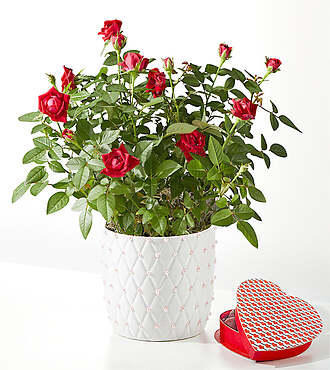
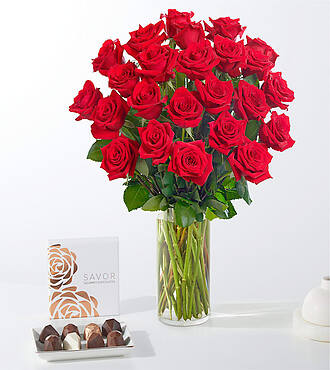
This bouquet features our finest red roses. Each rose is carefully hand-picked by skilled florists to ensure only the freshest blooms make their way into this masterpiece. The petals are velvety smooth to the touch and exude a delightful fragrance that fills the room with warmth and happiness.
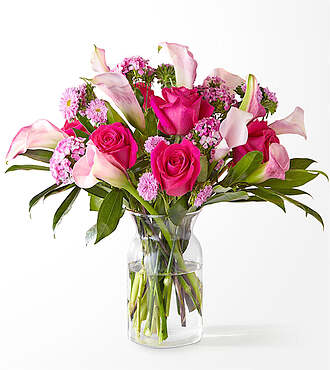
What sets this bouquet apart is its exquisite arrangement. The roses are artfully grouped together in a tasteful glass vase, allowing each bloom to stand out on its own while also complementing one another. It's like seeing an artist's canvas come to life!
Whether you place it as a centerpiece on your dining table or use it as an accent piece in your living room, this arrangement instantly adds sophistication and style to any setting. Its timeless beauty is a classic expression of love and sweet affection.
One thing worth mentioning about this gorgeous bouquet is how long-lasting it can be with proper care. By following simple instructions provided by Bloom Central upon delivery, you can enjoy these blossoms for days on end without worry.
With every glance at the Blooming Masterpiece Rose Bouquet from Bloom Central, you'll feel uplifted and inspired by nature's wonders captured so effortlessly within such elegance. This lovely floral arrangement truly deserves its name - a blooming masterpiece indeed!
Yale Oklahoma Flower Delivery
Yale Flower Delivery - Frequently Asked Questions
- Does Bloom Central offer same-day flower delivery in Yale?
- Yes. Place your order online before 1:00 PM and a local Yale florist will hand-deliver your arrangement the same day. Orders can also be scheduled up to one month in advance.
- Is it safe to order flowers online?
- Absolutely! We utilize a secure, encrypted checkout to protect your personal and payment information. Visa, Mastercard, American Express, Discover, PayPal and Klarna are all accepted.
- What funeral homes does Bloom Central deliver sympathy flowers to in Yale?
- We hand-deliver sympathy and memorial floral arrangements to all funeral homes near Yale, including: Angels Pet Funeral Home and Crematory, Baggerley Funeral Home, Biglow Funeral Directors, Calvary Cemetery, Dyer Memorial Chapel, Fitzgerald Funeral Home Burial Association, Fitzgerald Southwood Colonial Chapel, Johnson Funeral Home, Kennedy Funeral & Cremation, Lehman Funeral Home, Leonard & Marker Funeral Home, Mark Griffith Memorial Funeral Homes, Matthews Funeral Home, Rose Hill Funeral Home and Memorial Park, Schaudt Funeral Service & Cremation Care, Serenity Funerals and Crematory, Stanleys Funeral & Cremation Service, Stumpff Funeral Home & Crematory.
- What nearby cities does Bloom Central also deliver flowers to?
- In addition to Yale, we deliver fresh flowers to many nearby cities including: Oilton, Cushing, Drumright, Pawnee, Cleveland, Stillwater, Mannford, Perkins
- What are the most popular flower arrangements at the Yale florist?
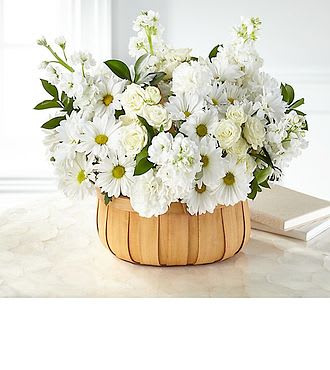
- Three of our most popular arrangements at our Yale florist are: Contemporary Dish Garden ($59.90), Wondrous Nature Bouquet ($59.90), Gentle Blossoms Basket ($117.90). All are available for same-day delivery.
More About Yale
Are looking for a Yale florist because you are not local to the area? If so, here is a brief travelogue of what Yale has to offer. Who knows, perhaps you'll be intrigued enough to come visit soon, partake in some of the fun activities Yale has to offer and deliver flowers to your loved one in person!
Yale, Oklahoma, sits where the prairie folds into itself, a town whose name evokes ivied halls and hushed libraries but whose reality is something quieter, stranger, more alive in the way small towns often are, not despite their size but because of it. Drive into Yale on Highway 51 at dawn, and the sun lifts itself over grain silos like a patient waiter balancing light. The air smells of cut grass and diesel, a blend that clings to the back of your throat. You pass a redbrick schoolhouse, its windows still dark, and a diner where old men in seed caps sip coffee from mugs thick enough to survive a fall. The town seems to hum at a frequency tuned to the rhythm of combines, the chatter of grackles, the creak of porch swings.
What defines Yale isn’t grandeur but a stubborn, almost sacred persistence. The Chisholm Trail once carved a path nearby, and you can still feel the ghost of cattle drives in the way the wind sweeps unimpeded across backroads. History here isn’t archived so much as worn lightly, like the faded logo on a high school jersey. The Yale Historical Museum, a converted depot, houses arrowheads and sepia photographs of stern-faced pioneers, but the real archive exists in living rooms where grandparents recount dust storms that blotted out the sun, or in the way farmers still plant winter wheat in rows that follow the curve of the land.

Same day service available. Order your Yale floral delivery and surprise someone today!
The town’s heart beats in its contradictions. A century-old hardware store shares a block with a satellite internet startup. Teenagers shoot hoops at the park while texting friends in Tulsa, 50 miles south. At the Yale Public Library, toddlers stack blocks beside veterans flipping through Field & Stream, and the librarian, a woman with a PhD in Victorian poetry, recommends Louis L’Amour novels to truckers. Everyone waves. Everyone knows your pickup by its bumper stickers. Yet this intimacy isn’t oppressive. It’s a choice, a daily reaffirmation: We are here, together, because we want to be.
Economies shift, but Yale adapts without surrendering. The railroad tracks that once hauled cattle now carry freight, and the clatter of passing trains syncopates the nights. Family farms pivot to organic sorghum or solar leases, their barns repainted but still standing. Downtown, the co-op sells fertilizer and free-range eggs. The diner’s pie case, key lime, pecan, chocolate cream, draws highway travelers who linger over forks and ask about the “World’s Largest Arcade” sign (a defunct dream from the ’80s, now a trivia footnote).
What outsiders miss, speeding through on their way to someplace else, is the quiet drama of endurance. A fourth-generation rancher fixes a fence under a sky so vast it feels like a shared delusion. A teacher stays late to coach robotics club, her students tinkering with parts ordered online. At dusk, kids pedal bikes past murals of wildflowers, shouting secrets into the wind. The Methodist church rings its bell Sundays, not to summon the faithful but to remind the air itself of time’s passage.
Yale, Oklahoma, resists metaphor. It is neither a relic nor a revolution. It is a place where people rise early, work hard, and argue about lawnmower brands at the post office. Where the past isn’t dead but folded into the present like sugar in dough. Where the sky, in all its indifferent glory, somehow feels like a neighbor. You could call it simple. You’d be wrong. To live here is to understand that simplicity is never simple, it’s a decision, repeated daily, to find meaning in the unspectacular, to care deeply about a patch of earth and the people who walk it. The result isn’t paradise. It’s something better: a home.