





- Get Well
- Best Sellers
- Carnations
 $54.90
- $54.90
- $79.90
- $54.90
- $49.90
- $49.90


June 1, 2026
Myrtle Creek June Floral Selection
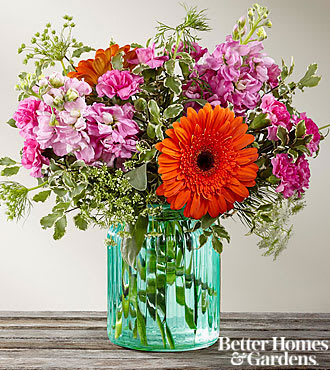
The Bloom Central flower delivery of the month for June in Myrtle Creek is the Into the Woods Bouquet
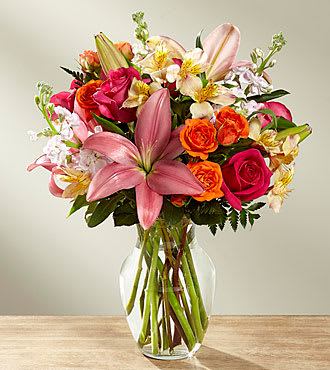
The Into the Woods Bouquet floral arrangement from Bloom Central is simply enchanting. The rustic charm and natural beauty will captivate anyone who is lucky enough to receive this bouquet.
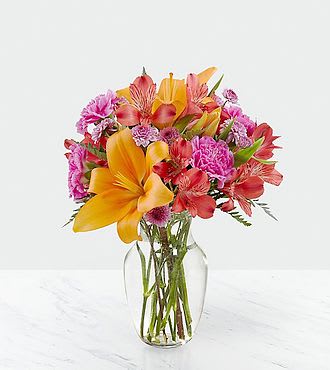
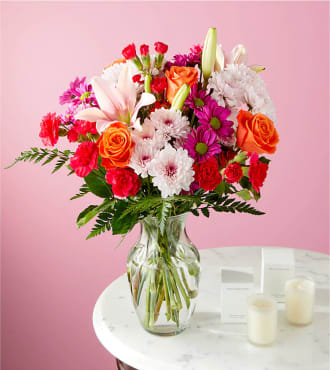
The Into the Woods Bouquet consists of hot pink roses, orange spray roses, pink gilly flower, pink Asiatic Lilies and yellow Peruvian Lilies. The combination of vibrant colors and earthy tones create an inviting atmosphere that every can appreciate. And don't worry this dazzling bouquet requires minimal effort to maintain.
Let's also talk about how versatile this bouquet is for various occasions. Whether you're celebrating a birthday, hosting a cozy dinner party with friends or looking for a unique way to say thinking of you or thank you - rest assured that the Into the Woods Bouquet is up to the task.
One thing everyone can appreciate is longevity in flowers so fear not because this stunning arrangement has amazing staying power. It will gracefully hold its own for days on end while still maintaining its fresh-from-the-garden look.
When it comes to convenience, ordering online couldn't be easier thanks to Bloom Central's user-friendly website. In just a few clicks, you'll have your very own woodland wonderland delivered straight to your doorstep!
So treat yourself or someone special to a little piece of nature's serenity. Add a touch of woodland magic to your home with the breathtaking Into the Woods Bouquet. This fantastic selection will undoubtedly bring peace, joy, and a sense of natural beauty that everyone deserves.
Myrtle Creek Florist
Myrtle Creek Flower Delivery - Frequently Asked Questions
- Does Bloom Central offer same-day flower delivery in Myrtle Creek?
- Yes. Place your order online before 1:00 PM and a local Myrtle Creek florist will hand-deliver your arrangement the same day. Orders can also be scheduled up to one month in advance.
- Is it safe to order flowers online?
- Absolutely! We utilize a secure, encrypted checkout to protect your personal and payment information. Visa, Mastercard, American Express, Discover, PayPal and Klarna are all accepted.
- What hospitals and care facilities does Bloom Central deliver to in Myrtle Creek?
- We deliver fresh flower arrangements to all hospitals, nursing homes and care facilities in Myrtle Creek Oregon, including: Adams House Assisted Living.
- What funeral homes does Bloom Central deliver sympathy flowers to in Myrtle Creek?
- We hand-deliver sympathy and memorial floral arrangements to all funeral homes near Myrtle Creek, including: Eagle Point National Cemetary, Hull & Hull Funeral Directors, Roseburg Memorial Gardens, Roseburg National Cemetery, Stephens Family Chapel, Wilsons Chapel of the Roses.
- What nearby cities does Bloom Central also deliver flowers to?
- In addition to Myrtle Creek, we deliver fresh flowers to many nearby cities including: Tri-City, Riddle, Canyonville, Winston, Green, Roseburg, Roseburg North, Glide
- What are the most popular flower arrangements at the Myrtle Creek florist?
- Three of our most popular arrangements at our Myrtle Creek florist are: Alluring Elegance Bouquet ($89.90), Floral Confetti Bouquet Set ($124.90), Intrigue Luxury Lily and Hydrangea Bouquet - 22 Stems ($237.90). All are available for same-day delivery.
More About Myrtle Creek
Are looking for a Myrtle Creek florist because you are not local to the area? If so, here is a brief travelogue of what Myrtle Creek has to offer. Who knows, perhaps you'll be intrigued enough to come visit soon, partake in some of the fun activities Myrtle Creek has to offer and deliver flowers to your loved one in person!
Morning in Myrtle Creek arrives like a slow exhalation. The mist lifts off the South Umpqua River in wisps that dissolve into the evergreen shoulders of the Douglas County hills. The town itself, population 3,500, give or take the dogs, huddles along Interstate 5 with a kind of unassuming grace, the kind you might miss if you blink between exits 102 and 108. But to blink here is to misunderstand the place. Myrtle Creek is the sort of town where the Chevron station cashier knows your coffee order by the third visit, where the postmaster waves as you pass the flagpole out front, where the barber still asks about your sister in Spokane. It is a town that insists on its own rhythm.
Drive down Main Street and you’ll see it: the way the sunlight slants through the maple trees lining the sidewalks, the way the old storefronts wear their histories like well-stitched quilts. The Myrtle Creek Diner, with its red vinyl booths and chrome trim, serves pancakes the size of hubcaps. The waitress calls you “hon” without irony. At the hardware store, a man in suspenders debates the merits of galvanized nails versus stainless. No one checks their phone. Time here feels less like a countdown than a conversation.

Same day service available. Order your Myrtle Creek floral delivery and surprise someone today!
The river is the town’s pulse. Kids leap from the railroad trestle into swimming holes in July. Fishermen wade hip-deep at dawn, casting lines for steelhead. Retirees set up lawn chairs by the water, swapping stories about the logging boom of ’78 or the winter the snowdrifts buried stop signs. There’s a footbridge near the city park where teenagers carve initials into cedar planks, their pocketknives ticking like metronomes. You can stand there at dusk, watching the current braid the sunlight into gold thread, and feel something unspool inside you, a quiet recognition that this is what it means to be small, to be part of a landscape that doesn’t need you to matter but lets you matter anyway.
History here isn’t confined to plaques. It’s in the creak of the covered bridge off North Old Pacific Highway, built in 1932 and still sturdy. It’s in the way the library’s genealogy section overflows with binders of census records and faded photos of stern-faced homesteaders. The local museum, housed in a former train depot, keeps a ledger from the 1800s listing trades: a bushel of apples for a pair of boots, a day’s labor for a sack of flour. The curator will tell you about the stagecoaches that once rattled through on the Applegate Trail, about the Kalapuya tribes who stewarded this land long before settlers came. She’ll say it all with a reverence that makes you want to sit very still, to listen like the ground listens.
What’s extraordinary about Myrtle Creek isn’t grandeur. It’s the way life composes itself in minor keys. A community garden sprouts tomatoes and zinnias. The high school football team plays under Friday night lights while grandparents keep score from pickup beds. At the annual Threshing Bee, families gather to watch antique tractors churn wheat, the air hazy with chaff and laughter. You can’t buy a latte here, but you can sit on a porch swing and count fireflies. You can’t stream a blockbuster, but you can borrow a VHS tape from the video store that somehow, miraculously, still exists.
Some might call it quaint. They’d be missing the point. This is a town that resists the frantic shorthand of modernity not out of stubbornness but clarity, a recognition that some ties are worth keeping snug. The woman who runs the flower shop remembers every prom corsage she’s ever made. The man at the feed store hums Patsy Cline while restocking chick starter. Every December, the Methodist church hosts a living nativity, and half the county shows up, huddled in scarves, sipping cocoa, pretending not to cry when the third-grader playing the angel forgets her lines.
Leave the freeway behind. Park by the river. Walk until your shoes gather dust. Myrtle Creek won’t astonish you with spectacle. It will ask you to slow down, to notice the lichen on the oak branches, the way the fog clings to the hills like a second skin. It will remind you that belonging isn’t something you find. It’s something you practice, day by day, in a place where the rain smells like pine needles and the word “neighbor” is still a verb.