



- Get Well
- Best Sellers
- Lilies
 $54.90
- $54.90
- $79.90
- $54.90
- $49.90
- $49.90
- $49.90
July 1, 2026
Braddock July Floral Selection
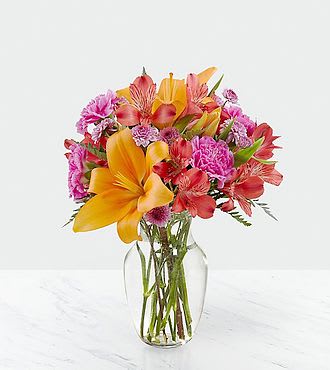
The Bloom Central flower delivery of the month for July in Braddock is the Light and Lovely Bouquet
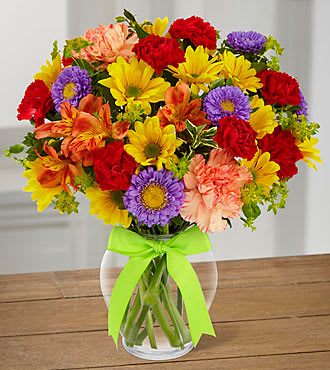
Introducing the Light and Lovely Bouquet, a floral arrangement that will brighten up any space with its delicate beauty. This charming bouquet, available at Bloom Central, exudes a sense of freshness and joy that will make you smile from ear to ear.
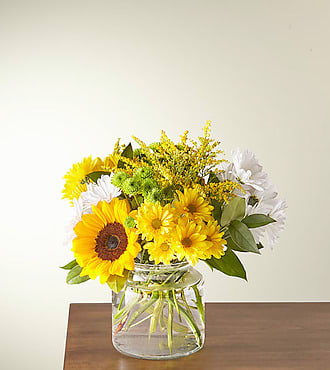
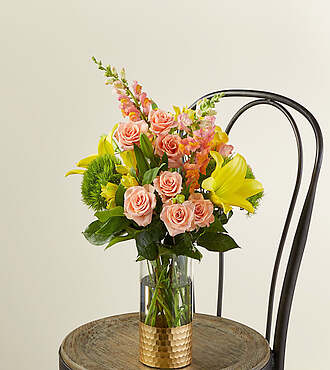
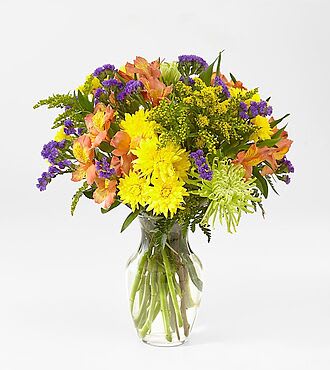
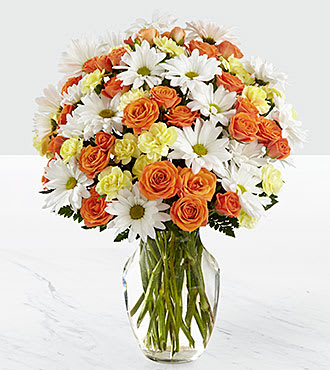
The Light and Lovely Bouquet features an enchanting combination of yellow daisies, orange Peruvian Lilies, lavender matsumoto asters, orange carnations and red mini carnations. These lovely blooms are carefully arranged in a clear glass vase with a touch of greenery for added elegance.
This delightful floral bouquet is perfect for all occasions be it welcoming a new baby into the world or expressing heartfelt gratitude to someone special. The simplicity and pops of color make this arrangement suitable for anyone who appreciates beauty in its purest form.
What is truly remarkable about the Light and Lovely Bouquet is how effortlessly it brings warmth into any room. It adds just the right amount of charm without overwhelming the senses.
The Light and Lovely Bouquet also comes arranged beautifully in a clear glass vase tied with a lime green ribbon at the neck - making it an ideal gift option when you want to convey your love or appreciation.
Another wonderful aspect worth mentioning is how long-lasting these blooms can be if properly cared for. With regular watering and trimming stems every few days along with fresh water changes every other day; this bouquet can continue bringing cheerfulness for up to two weeks.
There is simply no denying the sheer loveliness radiating from within this exquisite floral arrangement offered by the Light and Lovely Bouquet. The gentle colors combined with thoughtful design make it an absolute must-have addition to any home or a delightful gift to brighten someone's day. Order yours today and experience the joy it brings firsthand.
Braddock Florist
Braddock Flower Delivery - Frequently Asked Questions
- Does Bloom Central offer same-day flower delivery in Braddock?
- Yes. Place your order online before 1:00 PM and a local Braddock florist will hand-deliver your arrangement the same day. Orders can also be scheduled up to one month in advance.
- Is it safe to order flowers online?
- Absolutely! We utilize a secure, encrypted checkout to protect your personal and payment information. Visa, Mastercard, American Express, Discover, PayPal and Klarna are all accepted.
- What funeral homes does Bloom Central deliver sympathy flowers to in Braddock?
- We hand-deliver sympathy and memorial floral arrangements to all funeral homes near Braddock, including: Alfieri Funeral Home, Calvary Cemetery, Coston Saml E Funeral Home, Dalessandro Funeral Home & Crematory, Good Shepherd Cemetery, John N Elachko Funeral Home, McCabe Bros Inc Funeral Homes, McKeesport and Versailles Cemetery, Precious Pets Memorial Center & Crematory, Samuel J Jones Funeral Home, Savolskis-Wasik-Glenn Funeral Home, Schugar Ralph Inc Funeral Chapel, Soxman Funeral Home, Spriggs-Watson Funeral Home, Strifflers of Dravosburg-West Mifflin, Walter J. Zalewski Funeral Homes, White Memorial Chapel, Willig Funeral Home & Cremation Services.
- What churches does Bloom Central deliver flowers to in Braddock?
- We deliver fresh floral arrangements to all churches and places of worship in Braddock, including: Calvary African Methodist Episcopal Church, Holliday Memorial African Methodist Episcopal Zion Church, Resurrection Baptist Church.
- What nearby cities does Bloom Central also deliver flowers to?
- In addition to Braddock, we deliver fresh flowers to many nearby cities including: Rankin, Braddock Hills, Whitaker, North Braddock, Forest Hills, Duquesne, Swissvale, East Pittsburgh
- What are the most popular flower arrangements at the Braddock florist?
- Three of our most popular arrangements at our Braddock florist are: Pink Ribbon - A Florist Original ($59.90), Graceful Grandeur Rose Bouquet ($84.90), Hop into Spring Bouquet ($59.90). All are available for same-day delivery.
More About Braddock
Are looking for a Braddock florist because you are not local to the area? If so, here is a brief travelogue of what Braddock has to offer. Who knows, perhaps you'll be intrigued enough to come visit soon, partake in some of the fun activities Braddock has to offer and deliver flowers to your loved one in person!
Braddock, Pennsylvania, sits along the Monongahela River like a comma in a sentence the country forgot to finish. The sun rises here over the Edgar Thomson Steel Works, its chimneys still exhaling ghosts of industry into air that tastes faintly of iron and damp earth. Mornings begin with the clatter of freight trains, their wheels singing against tracks polished by decades of friction, a sound so constant it fades into the town’s bloodstream. To walk Braddock’s streets is to move through a paradox: the skeletal remains of a 20th-century titan now cradling something delicate, alive, and insistently hopeful.
The town’s history is written in brick and steel. A century ago, this was a place where furnaces roared through the night, where men emerged from shifts with soot ground into their pores like tattoos. Andrew Carnegie built his first mill here, and for a time Braddock pulsed as the heart of American industrial ambition. Then came the long exhale of decline, factories shuttering, population thinning, buildings crumbling into hieroglyphs of another era. What’s startling isn’t the loss, though. It’s what grows in the cracks.

Same day service available. Order your Braddock floral delivery and surprise someone today!
Today, Braddock’s vacant lots bloom. Community gardens rise where warehouses once stood, their soil nurtured by hands that remember how to work but now choose to coax life from ground once considered beyond repair. Tomato plants climb trellises made from salvaged rebar. Sunflowers nod where smokestacks once dominated the skyline. This greening isn’t metaphorical. It’s literal, tactile, a collaboration between humans and nature that feels less like surrender than reinvention. Volunteers gather on Saturdays, knees in dirt, laughing as they wrestle weeds. The act itself becomes a kind of defiance.
Art thrives in unexpected corners. Murals stretch across the sides of abandoned buildings, splashing color over gray brick. Local kids sketch designs alongside visiting artists, their voices mingling in debates over spray-paint techniques. An old church turned community center hosts poetry slams where teenagers rhyme about resilience, their verses bouncing off stained-glass windows that survived the collapse of the steel economy. The rhythm here isn’t the clang of machinery but the beat of creativity, irregular, unpredictable, alive.
Braddock’s revival isn’t a fairy tale. It’s messier, more human. You see it in the renovated library, a century-old Carnegie building where sunlight slants through high windows onto toddlers flipping board books. You hear it in the diner where retired steelworkers sip coffee beside teachers and nurses, trading stories that stretch across generations. The town’s mayor, a tattooed former bartender with a knack for pragmatism, talks about “small victories” with the fervor of a preacher, a new playground here, a repaved road there. Progress is measured in inches, not miles, but it accumulates.
What binds this place isn’t nostalgia. It’s the stubborn belief that a town’s value isn’t tied to what it produces but to the people who choose to stay, to rebuild, to plant literal and figurative seeds in soil others would call barren. Braddock’s streets whisper a question: What does it mean to endure? The answer lies in the gardens, the murals, the hum of a community that refuses to see itself as a relic. The future here isn’t some distant promise. It’s a thing being built daily, brick by brick, kale stalk by kale stalk, on a foundation both haunted and hopeful.
To visit is to witness a town rewriting its own story. The past isn’t erased, the mills still loom, the scars remain, but it’s no longer the only narrative. Braddock, in its unassuming way, becomes a mirror. It asks you to consider what it means to rise, slowly, doggedly, not despite the weight of history but because of it. The air smells different now. Less like ash, more like rain.