





- New Baby
- Best Sellers
- Under $100







July 1, 2026
Chestnuthill July Floral Selection
The Bloom Central flower delivery of the month for July in Chestnuthill is the Long Stem Red Rose Bouquet
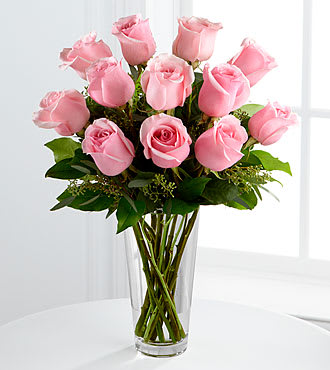
Introducing the exquisite Long Stem Red Rose Bouquet from Bloom Central, a floral arrangement that is sure to steal her heart. With its classic and timeless beauty, this bouquet is one of our most popular, and for good reason.
The simplicity of this bouquet is what makes it so captivating. Each rose stands tall with grace and poise, showcasing their velvety petals in the most enchanting shade of red imaginable. The fragrance emitted by these roses fills the air with an intoxicating aroma that evokes feelings of love and joy.
A true symbol of romance and affection, the Long Stem Red Rose Bouquet captures the essence of love effortlessly. Whether you want to surprise someone special on Valentine's Day or express your heartfelt emotions on an anniversary or birthday, this bouquet will leave the special someone speechless.
What sets this bouquet apart is its versatility - it suits various settings perfectly! Place it as a centerpiece during candlelit dinners or adorn your living space with its elegance; either way, you'll be amazed at how instantly transformed your surroundings become.
Purchasing the Long Stem Red Rose Bouquet from Bloom Central also comes with peace of mind knowing that they source only high-quality flowers directly from trusted growers around the world.
If you are searching for an unforgettable gift that speaks volumes without saying a word - look no further than the breathtaking Long Stem Red Rose Bouquet from Bloom Central! The timeless beauty, delightful fragrance and effortless elegance will make anyone feel cherished and loved. Order yours today and let love bloom!
Local Flower Delivery in Chestnuthill
Chestnuthill Flower Delivery - Frequently Asked Questions
- Does Bloom Central offer same-day flower delivery in Chestnuthill?
- Yes. Place your order online before 1:00 PM and a local Chestnuthill florist will hand-deliver your arrangement the same day. Orders can also be scheduled up to one month in advance.
- Is it safe to order flowers online?
- Absolutely! We utilize a secure, encrypted checkout to protect your personal and payment information. Visa, Mastercard, American Express, Discover, PayPal and Klarna are all accepted.
- What funeral homes does Bloom Central deliver sympathy flowers to in Chestnuthill?
- We hand-deliver sympathy and memorial floral arrangements to all funeral homes near Chestnuthill, including: Bachelor Brothers Funeral Services, Bringhurst Funeral Home, Chadwick & McKinney Funeral Home, Craft Funeral Home Inc of Erdenheim, Craft Givnish Funeral Home, Deborah L Wilson Funeral Home, Ellis Len E Funeral Home, Fitzpatrick Joseph E Funeral Director, Goldsteins Rosenbergs Raphael-Sacks, Ivy Hill Cemetery & Crematory, John J Bryers Funeral Home, Lownes Funeral Home, Moore & Snear Funeral Home, Rodriguez Funeral Home, Wescott Funeral Home, West Laurel Hill Cemetery, Wetzel and Son, William R May Funeral Home, Inc.
- What nearby cities does Bloom Central also deliver flowers to?
- In addition to Chestnuthill, we deliver fresh flowers to many nearby cities including: Effort, Sun Valley, Brodheadsville, Polk, Sierra View, Indian Mountain Lake, Eldred, Tunkhannock
- What are the most popular flower arrangements at the Chestnuthill florist?
- Three of our most popular arrangements at our Chestnuthill florist are: Fiesta Bouquet Set of 3 ($209.90), Beautiful Horizons Floor Basket ($134.90), Cheers to You Bouquet ($54.90). All are available for same-day delivery.
More About Chestnuthill
Are looking for a Chestnuthill florist because you are not local to the area? If so, here is a brief travelogue of what Chestnuthill has to offer. Who knows, perhaps you'll be intrigued enough to come visit soon, partake in some of the fun activities Chestnuthill has to offer and deliver flowers to your loved one in person!
The thing about Chestnuthill, Pennsylvania, is how it doesn’t announce itself. You’re driving northwest from the Lehigh Valley, past the commercial hum of Allentown, past the soft hills quilted with corn and soybean, past signs for Crayola factories and outlets selling discounted handbags, and then, somewhere between a stand of sugar maples and a bend in the road where the asphalt narrows, the air changes. It isn’t just the scent of pine or the way sunlight filters through oak leaves in late afternoon, though those things are part of it. It’s the quiet. Not silence, exactly, but a kind of auditory clarity: the creak of a porch swing, the distant churn of a tractor, the chatter of kids biking home from the lone elementary school, backpacks flapping like half-inflated balloons. You realize, maybe for the first time all day, that your shoulders have dropped an inch.
The town sits in Monroe County, snug against the western edge of the Pocono Mountains, a region whose name evokes both geography and mythology, a place where summer tourists flock to lakeside cabins, where winter transforms hills into sledding labyrinths. But Chestnuthill itself resists the glossy sheen of tourism. It is a town of unpainted barns and pickup trucks with local farm plates, of diners where the waitress knows your coffee order by the second visit, of intersections guarded by four-way stops instead of traffic lights. The soil here is fertile but stubborn, yielding crops only to those who’ve learned its rhythms. Farmers rise before dawn, their breath visible in the mist as they check fences, mend equipment, trade stories about the fox that got into the henhouse or the stubborn heifer who still won’t take to the milking parlor. There’s a rhythm to the labor that feels less like routine than ritual, a dialogue between human hands and ancient dirt.

Same day service available. Order your Chestnuthill floral delivery and surprise someone today!
What’s easy to miss, though, is how much the community thrives on small gestures. At the Chestnuthill Township Park, teenagers volunteer to coach peewee soccer, showing up early to line the fields with lime while their breath fogs in the crisp fall air. Neighbors organize potlucks where the potato salad comes in three varieties, mustard, mayo, German, and everyone insists their aunt’s recipe is the definitive one. The local library hosts reading hours where kids sprawl on beanbags, mouths agape as a retired teacher performs voices for a picture book about a lost hedgehog. Even the gas station attendant, a man named Stan with a handlebar mustache, keeps a jar of dog treats by the register because he knows every regular’s pet by name.
The landscape itself seems to collaborate in this project of belonging. Trails wind through state game lands, past glacial boulders and stands of hemlock, their needles softening the forest floor. In spring, the creeks swell with snowmelt, carving new paths through limestone. Deer emerge at dusk, ghosting across backyards to nibble at gardens, their presence a quiet reminder that the wild is never far. Yet the town doesn’t romanticize this proximity. It simply adapts. Gardeners plant marigolds to deter rabbits. Homeowners install motion-activated lights to avoid startling the bears. There’s a pragmatism here, a lack of pretense that feels almost radical in an era of curated selfhood.
What anchors Chestnuthill, ultimately, is its refusal to vanish into nostalgia. Yes, there’s a historical society that preserves 19th-century farm tools, and yes, the old train depot now houses a ceramics studio where retirees mold clay into mugs stamped with local flora. But drive past the fire hall on a Tuesday night and you’ll find the parking lot full, not for some heritage festival, but for a Zoomba class. The high school recently added a robotics team, their trophies displayed in a case beside the 1984 state wrestling champions. At the farmers market, a teenager sells organic kombucha next to her grandmother’s apple butter, and no one finds the juxtaposition strange.
This is the paradox of the place: It feels timeless precisely because it moves, because it metabolizes change without erasing what came before. You leave wondering if that’s the secret, not preservation, but continuity, the daily choice to tend something bigger than yourself. The choice, say, to plant a tree whose shade you’ll never sit in, or to wave at a stranger shoveling snow, knowing they’ll wave back.