




- Get Well
- Best Sellers
- Vased
 $54.90
- $54.90
- $79.90
- $54.90
- $49.90
- $49.90
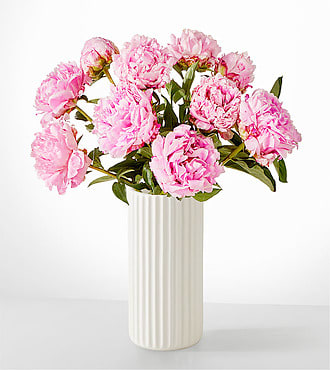
- $49.90
- $79.90
- $74.90
- $69.90
June 1, 2026
Dublin June Floral Selection
The Bloom Central flower delivery of the month for June in Dublin is the Classic Beauty Bouquet
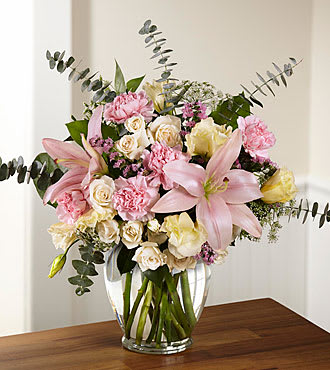
The breathtaking Classic Beauty Bouquet is a floral arrangement that will surely steal your heart! Bursting with elegance and charm, this bouquet is perfect for adding a touch of beauty to any space.
Imagine walking into a room and being greeted by the sweet scent and vibrant colors of these beautiful blooms. The Classic Beauty Bouquet features an exquisite combination of roses, lilies, and carnations - truly a classic trio that never fails to impress.
Soft, feminine, and blooming with a flowering finesse at every turn, this gorgeous fresh flower arrangement has a classic elegance to it that simply never goes out of style. Pink Asiatic Lilies serve as a focal point to this flower bouquet surrounded by cream double lisianthus, pink carnations, white spray roses, pink statice, and pink roses, lovingly accented with fronds of Queen Annes Lace, stems of baby blue eucalyptus, and lush greens. Presented in a classic clear glass vase, this gorgeous gift of flowers is arranged just for you to create a treasured moment in honor of your recipients birthday, an anniversary, or to celebrate the birth of a new baby girl.
Whether placed on a coffee table or adorning your dining room centerpiece during special gatherings with loved ones this floral bouquet is sure to be noticed.
What makes the Classic Beauty Bouquet even more special is its ability to evoke emotions without saying a word. It speaks volumes about timeless beauty while effortlessly brightening up any space it graces.
So treat yourself or surprise someone you adore today with Bloom Central's Classic Beauty Bouquet because every day deserves some extra sparkle!
Dublin Pennsylvania Flower Delivery
Dublin Flower Delivery - Frequently Asked Questions
- Does Bloom Central offer same-day flower delivery in Dublin?
- Yes. Place your order online before 1:00 PM and a local Dublin florist will hand-deliver your arrangement the same day. Orders can also be scheduled up to one month in advance.
- Is it safe to order flowers online?
- Absolutely! We utilize a secure, encrypted checkout to protect your personal and payment information. Visa, Mastercard, American Express, Discover, PayPal and Klarna are all accepted.
- What funeral homes does Bloom Central deliver sympathy flowers to in Dublin?
- We hand-deliver sympathy and memorial floral arrangements to all funeral homes near Dublin, including: Anton B Urban Funeral Home, Campbell-Ennis-Klotzbach Funeral Home, Connell Funeral Home, Garefino Funeral Home, Holcombe Funeral Home, Huff & Lakjer Funeral Home, James Funeral Home & Cremation Service, PC, James J Mcghee Funeral Home, James O Bradley Funeral Home, Joseph A Fluehr III Funeral Home, Judd-Beville Funeral Home, Ruggiero Funeral Home, Scarponi Funeral Home, St John Neumann Cemetery, Suess Bernard Funeral Home, Varcoe-Thomas Funeral Home of Doylestown, Williams-Bergey-Koffel Funeral Home Inc, Wright & Ford Family Funeral Home and Cremation Services.
- What nearby cities does Bloom Central also deliver flowers to?
- In addition to Dublin, we deliver fresh flowers to many nearby cities including: Plumsteadville, Hilltown, Bedminster, New Britain, Plumstead, Perkasie, East Rockhill, Sellersville
- What are the most popular flower arrangements at the Dublin florist?
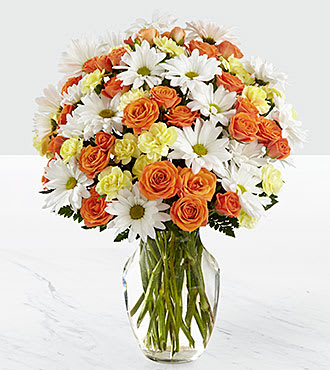
- Three of our most popular arrangements at our Dublin florist are: Darling Bouquet ($59.90), Sunshine Daydream Bouquet ($49.90), Radiant Citrus Bouquet ($64.90). All are available for same-day delivery.
More About Dublin
Are looking for a Dublin florist because you are not local to the area? If so, here is a brief travelogue of what Dublin has to offer. Who knows, perhaps you'll be intrigued enough to come visit soon, partake in some of the fun activities Dublin has to offer and deliver flowers to your loved one in person!
The sun crests the low hills east of Dublin, Pennsylvania, and spills light over the sort of small-town morning that feels both achingly specific and quietly universal. A woman in a puffy jacket walks a terrier past clapboard houses with shutters painted colors you’d name “buttercream” or “sage” if you sold paint for a living. At the intersection of Main and Maple, a boy on a bike pauses to let a school bus exhale its cargo of backpacks and high-pitched laughter. Dublin does not announce itself. It insists, instead, on the ordinary, which is to say it invites you to lean closer.
The town’s center clusters around a row of locally owned storefronts where proprietors memorize orders and wave at SUVs idling in the crosswalk. At the bakery, a man in an apron dusted with flour describes his sourdough starter as if recounting the lineage of a prizewinning racehorse. Next door, a barista steams milk for a latte art tulip while two retirees debate the merits of hybrid tomatoes. These exchanges are not transactions. They are rituals, tiny affirmations of a social contract written in hellos and held doors.

Same day service available. Order your Dublin floral delivery and surprise someone today!
Pine Lane Park stretches like a green lung at the edge of town. On weekends, parents push strollers along crushed gravel paths as kids dart ahead, chasing squirrels into stands of oak. A teenage couple shares earbuds on a bench, their shoulders touching. An elderly man in a baseball cap feeds cracked corn to sparrows, his movements slow, deliberate, a kind of meditation. The park does not dazzle. It offers shade, benches, the soft hum of life at low volume, a reprieve from the century’s fractal anxieties.
Every Fourth of July, Dublin’s residents gather near the firehouse for a parade that features tractors, scout troops, and a miniature horse dressed as Uncle Sam. Children scramble for candy tossed from floats. Later, families spread blankets on the football field to watch fireworks burst over the treeline. The explosions echo off the hills, and for a moment, the darkness feels like a shared secret. In autumn, the same field hosts a harvest festival where teenagers sell cider doughnuts under tents while a bluegrass band plays standards older than the amplifiers they’re plugged into.
History here is not a museum. It’s the 19th-century stone church whose congregation repoints the mortar each spring. It’s the one-room schoolhouse, now a museum, where third graders press palms against glass to peer at slate chalkboards. But Dublin is not trapped in amber. Solar panels glint on the middle school’s roof. A community garden thrives where a vacant lot once sagged. The past and present coexist without armistice or argument.
What lingers, after a visit, is the sensation of a place that knows its rhythms and refuses to apologize for them. Dublin’s gift is its lack of pretense. It asks only that you notice the way light slants through maples in October, or how the librarian’s eyes crinkle when she hands a child their first chapter book. These moments do not glitter. They glow. And in that glow, you might, if you’re paying attention, glimpse something like a thesis: that meaning thrives not in the grand, but the granular, the everyday stitches that hold the fabric of a town together.