





- New Baby
- Best Sellers
- Lilies





 $49.90

July 1, 2026
Portage July Floral Selection
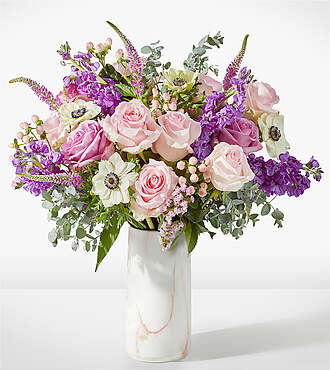
The Bloom Central flower delivery of the month for July in Portage is the Blooming Visions Bouquet
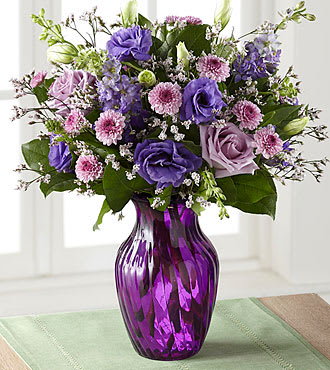
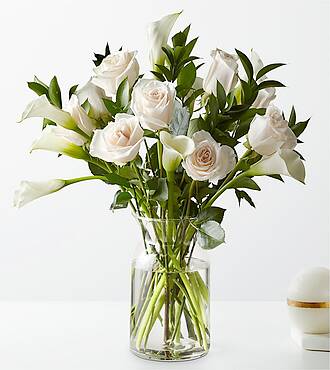
The Blooming Visions Bouquet from Bloom Central is just what every mom needs to brighten up her day! Bursting with an array of vibrant flowers, this bouquet is sure to put a smile on anyone's face.
With its cheerful mix of lavender roses and purple double lisianthus, the Blooming Visions Bouquet creates a picture-perfect arrangement that anyone would love. Its soft hues and delicate petals exude elegance and grace.
The lovely purple button poms add a touch of freshness to the bouquet, creating a harmonious balance between the pops of pink and the lush greens. It's like bringing nature's beauty right into your home!
One thing anyone will appreciate about this floral arrangement is how long-lasting it can be. The blooms are carefully selected for their high quality, ensuring they stay fresh for days on end. This means you can enjoy their beauty each time you walk by.
Not only does the Blooming Visions Bouquet look stunning, but it also has a wonderful fragrance that fills the room with sweetness. This delightful aroma adds an extra layer of sensory pleasure to your daily routine.
What sets this bouquet apart from others is its simplicity - sometimes less truly is more! The sleek glass vase allows all eyes to focus solely on the gorgeous blossoms inside without any distractions.
No matter who you are looking to surprise or help celebrate a special day there's no doubt that gifting them with Bloom Central's Blooming Visions Bouquet will make their heart skip a beat (or two!). So why wait? Treat someone special today and bring some joy into their world with this enchanting floral masterpiece!
Portage Pennsylvania Flower Delivery
Portage Flower Delivery - Frequently Asked Questions
- Does Bloom Central offer same-day flower delivery in Portage?
- Yes. Place your order online before 1:00 PM and a local Portage florist will hand-deliver your arrangement the same day. Orders can also be scheduled up to one month in advance.
- Is it safe to order flowers online?
- Absolutely! We utilize a secure, encrypted checkout to protect your personal and payment information. Visa, Mastercard, American Express, Discover, PayPal and Klarna are all accepted.
- What hospitals and care facilities does Bloom Central deliver to in Portage?
- We deliver fresh flower arrangements to all hospitals, nursing homes and care facilities in Portage Pennsylvania, including: Maple Winds Care Center.
- What funeral homes does Bloom Central deliver sympathy flowers to in Portage?
- We hand-deliver sympathy and memorial floral arrangements to all funeral homes near Portage, including: Alto-Reste Park Cemetery Association, Baker-Harris Funeral Chapel, Blair Memorial Park, Forest Lawn Cemetery, Frank Duca Funeral Home, Geisel Funeral Home, Grandview Cemetery, Grandview Cemetery, Hindman Funeral Homes & Crematory, Moskal & Kennedy Funeral Home, Richland Cemetery Association, Scaglione Anthony P Funeral Home, Stevens Funeral Home.
- What nearby cities does Bloom Central also deliver flowers to?
- In addition to Portage, we deliver fresh flowers to many nearby cities including: Summerhill, Lilly, Beaverdale, Cresson, Croyle, Ebensburg, Salix, Loretto
- What are the most popular flower arrangements at the Portage florist?
- Three of our most popular arrangements at our Portage florist are: Pop of Whimsy Bouquet ($64.90), Here's Looking at You Bouquet and Bear Set ($124.90), Piece of Cake Bouquet ($49.90). All are available for same-day delivery.
More About Portage
Are looking for a Portage florist because you are not local to the area? If so, here is a brief travelogue of what Portage has to offer. Who knows, perhaps you'll be intrigued enough to come visit soon, partake in some of the fun activities Portage has to offer and deliver flowers to your loved one in person!
Portage, Pennsylvania sits in a valley where the Alleghenies fold into themselves like a tired climber’s hands. The town is not so much built as nestled, its homes and storefronts hunkered low as if bracing for a wind that never arrives. The wind here is polite. It carries the scent of damp pine and diesel from the old railroad tracks that still cut through the center of town, a reminder that motion is possible even in places that seem to have settled into the earth’s creases. To drive into Portage on Route 53 is to witness a kind of stubbornness. The road bends but the town does not. It persists. There’s a beauty in that.
Mornings begin with the hiss of a school bus braking outside the red-brick elementary school. Children clatter down steps in jackets two sizes too big, their backpacks bouncing like overfilled balloons. The parents wave, then linger. They speak of the weather, how the fog clings to the hills until noon, how the creek swells in April, but what they’re really saying is we’re still here. The town’s rhythm is syncopated by these small affirmations. At the diner on Oak Street, regulars slide into cracked vinyl booths and order eggs with a precision that suggests ritual. The waitress knows who takes coffee black and who stirs in two creams. She knows because she remembers. Memory is currency here.

Same day service available. Order your Portage floral delivery and surprise someone today!
The railroad defines Portage in ways that feel both literal and spectral. In the 19th century, the Portage Railroad carried canal boats over the mountains, a feat of engineering that required pulleys and inclines and a faith in uphill momentum. The tracks remain, though the canal boats do not. Walk those rails today and you’ll find teenagers balancing on the iron seams, their laughter echoing off the slopes. Older residents sometimes pause to watch them. The teens don’t notice, but the elders aren’t watching the kids anyway. They’re seeing their own ghosts strung along the tracks, the shadow of a past where labor had a texture you could grip.
Downtown survives on a diet of small mercies. A hardware store sells nails by the pound. A barber trims necks with military care. The library, a Carnegie relic with stained-glass windows, hosts a reading group every Thursday. The books are overdue, the discussions meander, but the chairs fill. The librarian stamps due dates with a thunk that sounds like stay. Across the street, a park bench warms in the sun. An old man feeds sparrows from his palm. The birds dart and peck, their wings flickering like misplaced punctuation. He murmurs to them. It’s unclear who’s taming whom.
Autumn sharpens the air. High school football games draw crowds that huddle under stadium lights, their breath visible as they cheer a run toward nowhere in particular. The field’s chalk lines fade by halftime. No one minds. The score matters less than the act of gathering, of sharing a blanket, of feeling your voice merge with others into a single roar that climbs the valley walls. Later, walking home, the crunch of leaves underfoot becomes a kind of conversation. The town speaks through its seasons. Winter will arrive soon, draping the streets in a quiet so thick it hums.
Portage doesn’t dazzle. It doesn’t want to. Its gift is a quieter kind of revelation, the understanding that places like this, places that root instead of rise, hold stories in their soil. You can’t mine them. You have to kneel. To live here is to accept that some things move slowly: the creek carving its path, the rust on the tracks, the way a community bends but keeps its shape. The mountains loom, but they’re not looming over Portage. They’re leaning in. Listening.
By dusk, the streetlights flicker on, casting halos on the sidewalk. A woman walks her terrier past the shuttered movie theater. The marquee still advertises a film from 1998. She doesn’t glance up. She knows the title by heart. Some things endure not because they must, but because they’re allowed to. Portage allows. It’s a town that breathes in increments, patient as a compass needle finding true north. You could call it ordinary. You could. But ordinary, here, is a condition of grace.