




- New Baby
- Best Sellers
- Lilies








 $49.90
June 1, 2026
Rome June Floral Selection
The Bloom Central flower delivery of the month for June in Rome is the Beyond Blue Bouquet
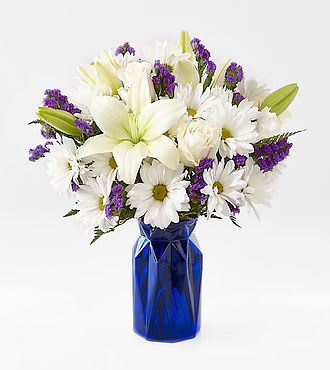
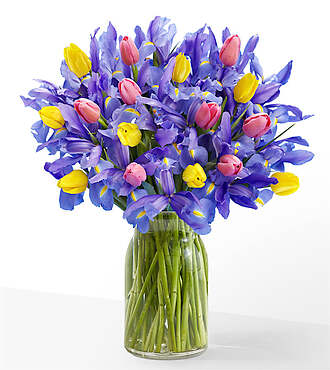
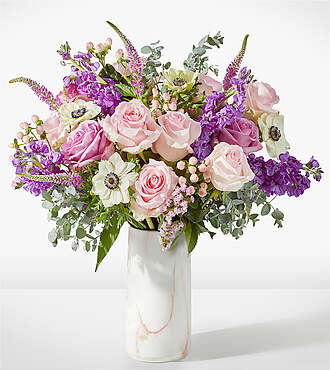
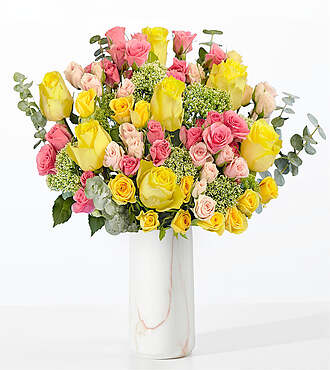
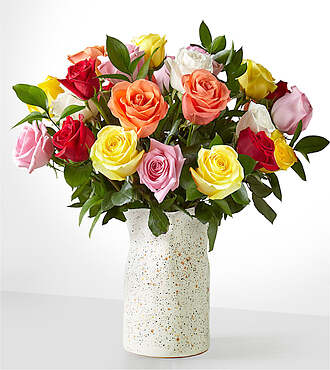
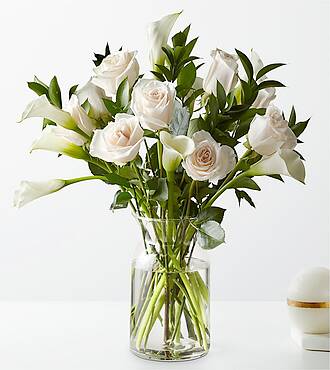
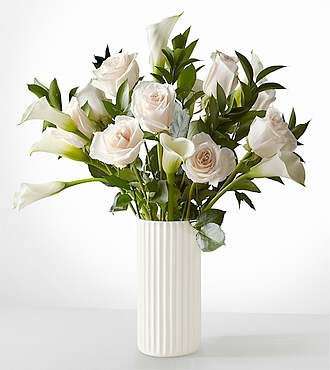
The Beyond Blue Bouquet from Bloom Central is the perfect floral arrangement to brighten up any room in your home. This bouquet features a stunning combination of lilies, roses and statice, creating a soothing and calming vibe.
The soft pastel colors of the Beyond Blue Bouquet make it versatile for any occasion - whether you want to celebrate a birthday or just show someone that you care. Its peaceful aura also makes it an ideal gift for those going through tough times or needing some emotional support.
What sets this arrangement apart is not only its beauty but also its longevity. The flowers are hand-selected with great care so they last longer than average bouquets. You can enjoy their vibrant colors and sweet fragrance for days on end!
One thing worth mentioning about the Beyond Blue Bouquet is how easy it is to maintain. All you need to do is trim the stems every few days and change out the water regularly to ensure maximum freshness.
If you're searching for something special yet affordable, look no further than this lovely floral creation from Bloom Central! Not only will it bring joy into your own life, but it's also sure to put a smile on anyone else's face.
So go ahead and treat yourself or surprise someone dear with the delightful Beyond Blue Bouquet today! With its simplicity, elegance, long-lasting blooms, and effortless maintenance - what more could one ask for?
Rome Pennsylvania Flower Delivery
Rome Flower Delivery - Frequently Asked Questions
- Does Bloom Central offer same-day flower delivery in Rome?
- Yes. Place your order online before 1:00 PM and a local Rome florist will hand-deliver your arrangement the same day. Orders can also be scheduled up to one month in advance.
- Is it safe to order flowers online?
- Absolutely! We utilize a secure, encrypted checkout to protect your personal and payment information. Visa, Mastercard, American Express, Discover, PayPal and Klarna are all accepted.
- What funeral homes does Bloom Central deliver sympathy flowers to in Rome?
- We hand-deliver sympathy and memorial floral arrangements to all funeral homes near Rome, including: Allen memorial home, Blauvelt Funeral Home, Chipak Funeral Home, Chopyak-Scheider Funeral Home, Coleman & Daniels Funeral Home, Cremation Specialist of Pennsylvania, Disque Richard H Funeral Home, Endicott Artistic Memorial Co, Greensprings Natural Cemetery Assoc, Hopler & Eschbach Funeral Home, Mc Inerny Funeral Home, Metcalfe & Shaver Funeral Home, Rice J F Funeral Home, Savage-DeMarco Funeral Service, Savage-DeMarco Funeral Service, Savino Carl J Jr Funeral Home, Semian Funeral Home, Wroblewski Joseph L Funeral Home.
- What nearby cities does Bloom Central also deliver flowers to?
- In addition to Rome, we deliver fresh flowers to many nearby cities including: Oil Creek, Sparta, Titusville, Bloomfield, Cherrytree, Corry, Union City, Pittsfield
- What are the most popular flower arrangements at the Rome florist?
- Three of our most popular arrangements at our Rome florist are: Bright Lights Bouquet with Lavender Basket ($54.90), Golden Gourd Pumpkin Bouquet ($59.90), Quality Time Bouquet ($54.90). All are available for same-day delivery.
More About Rome
Are looking for a Rome florist because you are not local to the area? If so, here is a brief travelogue of what Rome has to offer. Who knows, perhaps you'll be intrigued enough to come visit soon, partake in some of the fun activities Rome has to offer and deliver flowers to your loved one in person!
Rome, Pennsylvania, is the kind of place that doesn’t so much announce itself as gradually reveal its presence, like the slow unfurling of a road map on a passenger seat. The town’s name alone, a collision of imperial grandeur and rural practicality, hints at the quiet contradictions humming beneath its surface. To call it unassuming would be to ignore the way its single traffic light, dangling over the intersection of Main and Maple, becomes a metronome for the rhythm of daily life. Drivers pause here not out of obligation but habit, nodding to Mrs. Lutz, who sells dahlias from a folding table every Tuesday, or to the cluster of kids pedaling bikes toward the library, backpacks flapping like half-inflated balloons. There is a particular alchemy in how Rome’s residents convert routine into ritual, the mundane into something just shy of sacred.
The geography feels both deliberate and accidental. The Susquehanna River licks the town’s eastern edge, its water the color of oversteeped tea, while the hills to the west rise gently, as if the land itself is exhaling. Farmers here still plant by the almanac, their tractors etching temporary geometry into fields that, by August, bristle with cornstalks taller than anyone who tends them. At dusk, the sky stains itself in gradients no app filter could replicate, and the air fills with the scent of cut grass and distant rain. You might catch Mr. Hendrickson, who’s run the hardware store since the Nixon administration, leaning against his pickup, staring at the horizon as if trying to solve a riddle written in clouds.

Same day service available. Order your Rome floral delivery and surprise someone today!
What defines Rome isn’t its landmarks but its absences, no skyscrapers elbowing for space, no billboards shouting demands. Instead, there’s the diner on Third Street where the booths have memorized the shapes of their regulars, where the coffee tastes like nostalgia and the waitress, Dolores, remembers your order before you do. There’s the volunteer fire department’s annual pancake breakfast, a event so reliably cheerful it could power the town’s goodwill for months. There’s the way the librarian, Ms. Cho, slips extra bookmarks into the stacks for the kids who forget them, her small act of stewardship shaping a thousand afternoons.
Walk the sidewalks long enough and you’ll notice the hand-painted mailboxes, the porch swings swaying in dialogue with the breeze, the gardens where tomatoes grow fat and unselfconscious. Neighbors here speak in a language of raised chins and half-waves, a syntax so efficient it bypasses words entirely. Teenagers loiter outside the ice cream parlor, not because they’re bored but because they’ve inherited the unspoken pact that this spot is where the future gets quietly, collectively imagined. The past persists, too: the historical society’s clapboard museum displays Civil War letters and rotary phones, artifacts that whisper to visitors about continuity, about how progress doesn’t have to mean erasure.
Rome’s magic lies in its refusal to be anything but itself. It doesn’t beg for attention or spin nostalgia into a commodity. It simply exists, a pocket of sincerity in a world often drunk on its own velocity. Come autumn, when the trees ignite into copper and gold, the whole town seems to pause, not in surrender but in recognition, as if to say: This is enough. This is more than enough. You could drive through and miss it, sure. But slow down, linger, and you’ll feel it: the quiet pulse of a place that knows its own worth, a Rome built not on conquest but on the art of staying put.