




- Love & Romance
- Best Sellers
- Under $80
 $69.90



- $69.90

June 1, 2026
Vanport June Floral Selection
The Bloom Central flower delivery of the month for June in Vanport is the Love is Grand Bouquet
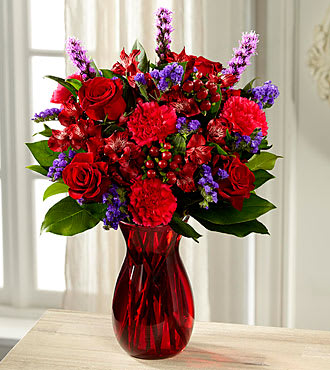
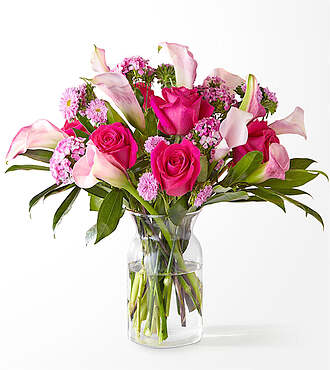
The Love is Grand Bouquet from Bloom Central is an exquisite floral arrangement that will make any recipient feel loved and appreciated. Bursting with vibrant colors and delicate blooms, this bouquet is a true showstopper.
With a combination of beautiful red roses, red Peruvian Lilies, hot pink carnations, purple statice, red hypericum berries and liatris, the Love is Grand Bouquet embodies pure happiness. Bursting with love from every bloom, this bouquet is elegantly arranged in a ruby red glass vase to create an impactive visual affect.
One thing that stands out about this arrangement is the balance. Each flower has been thoughtfully selected to complement one another, creating an aesthetically pleasing harmony of colors and shapes.
Another aspect we can't overlook is the fragrance. The Love is Grand Bouquet emits such a delightful scent that fills up any room it graces with its presence. Imagine walking into your living room after a long day at work and being greeted by this wonderful aroma - instant relaxation!
What really sets this bouquet apart from others are the emotions it evokes. Just looking at it conjures feelings of love, appreciation, and warmth within you.
Not only does this arrangement make an excellent gift for special occasions like birthdays or anniversaries but also serves as a meaningful surprise gift just because Who wouldn't want to receive such beauty unexpectedly?
So go ahead and surprise someone you care about with the Love is Grand Bouquet. This arrangement is a beautiful way to express your emotions and remember, love is grand - so let it bloom!
Vanport Pennsylvania Flower Delivery
Vanport Flower Delivery - Frequently Asked Questions
- Does Bloom Central offer same-day flower delivery in Vanport?
- Yes. Place your order online before 1:00 PM and a local Vanport florist will hand-deliver your arrangement the same day. Orders can also be scheduled up to one month in advance.
- Is it safe to order flowers online?
- Absolutely! We utilize a secure, encrypted checkout to protect your personal and payment information. Visa, Mastercard, American Express, Discover, PayPal and Klarna are all accepted.
- What funeral homes does Bloom Central deliver sympathy flowers to in Vanport?
- We hand-deliver sympathy and memorial floral arrangements to all funeral homes near Vanport, including: Beaver Cemetery & Mausoleum, Bohn Paul E Funeral Home, Devlins Funeral Home, Noll Funeral Home, Oak Grove Cemetery Association, Oliver-Linsley Funeral Home, Richard D Cole Funeral Home, Inc, Syka John Funeral Home, Sylvania Hills Memorial Park, Tatalovich Wayne N Funeral Home, Todd Funeral Home.
- What nearby cities does Bloom Central also deliver flowers to?
- In addition to Vanport, we deliver fresh flowers to many nearby cities including: Beaver, Rochester, Brighton, Center, Monaca, New Brighton, Patterson, Beaver Falls
- What are the most popular flower arrangements at the Vanport florist?
- Three of our most popular arrangements at our Vanport florist are: Well Done Bouquet ($49.90), Blushing Beauty Bouquet ($49.90), Gift of Warmth Wreath ($244.90). All are available for same-day delivery.
More About Vanport
Are looking for a Vanport florist because you are not local to the area? If so, here is a brief travelogue of what Vanport has to offer. Who knows, perhaps you'll be intrigued enough to come visit soon, partake in some of the fun activities Vanport has to offer and deliver flowers to your loved one in person!
Imagine a town that exists in the liminal space between memory and motion, a place where the past hums beneath the asphalt like a live wire. Vanport, Pennsylvania, is such a town. It sits along the Ohio River’s elbow, a community stitched together by railroad tracks and the kind of quiet resilience that turns grit into something like grace. The air here carries the scent of wet earth and diesel, a reminder that industry and nature share the same bloodstream. People move through Vanport with the steady rhythm of those who understand that progress is not a straight line but a series of adjustments, like a river finding its course after a storm.
Founded in the early 20th century as a company town for glassworkers, Vanport wears its history in the brick facades of repurposed factories and the way sunlight still catches the edges of old smokestacks, turning them into golden hour monuments. The streets curve like question marks, inviting you to slow down, to notice the hand-painted signs outside family-owned diners where regulars argue about high school football over pie that tastes like a shared secret. There’s a diner on Third Street where the booths have memorized the shape of generations. The owner, a woman named Marjorie, calls everyone “sweetheart” and remembers your order before you do.

Same day service available. Order your Vanport floral delivery and surprise someone today!
What defines Vanport isn’t its size, it’s the way time behaves here. Mornings unfold with the clatter of freight trains and the laughter of kids racing bikes down alleys lined with hydrangeas. Neighbors wave from porches cluttered with wind chimes and potted geraniums. The community center hosts bingo nights that double as town hall meetings, where debates about potholes and park renovations escalate into stand-up comedy routines. Everyone knows the script. Everyone plays their part.
The river, of course, is both protagonist and periphery. It carves the town’s borders, a liquid ledger of floods and rebirths. After the ’36 flood, residents rebuilt the levees higher, then planted sycamores along the banks as if to say, We see you, but we’re staying. Today, those trees form a cathedral of shade where teenagers dare each other to skip stones and old men fish for catfish they’ll never keep. The water reflects the sky in fragments, a mosaic of possibility.
Vanport’s pulse quickens each autumn when the high school football team, the Vikings, takes the field. The entire town attends games, not because they care about touchdowns but because they crave the collective breath-hold of a Friday night under stadium lights. The players, kids who bag groceries and mow lawns, become giants for a few hours, their helmets gleaming like mythic armor. Cheerleaders chant rhymes that have echoed for decades. The score matters less than the ritual, the way the crowd’s roar becomes a single, sustained note of belonging.
There’s a small library on Maple Avenue that smells of wood polish and ambition. Its shelves hold dog-eared paperbacks and local histories written by residents who refused to let their stories dissolve. The librarian, a retired steelworker named Carl, helps third graders craft dioramas of the Liberty Bell while nudging teens toward college applications. He wears suspenders and a smile that suggests he’s solved a puzzle the rest of us are still piecing together.
To visit Vanport is to witness a paradox: a town that embraces its roots while leaning into the next unknown. The future here isn’t a threat but a conversation. New families renovate old Victorians, painting them turquoise or sunflower yellow. A co-op garden sprouts where a warehouse once slumped. Teenagers film TikTok dances in the Walmart parking lot, their laughter bouncing off the same asphalt their grandparents once cruised in Chevys. The past doesn’t vanish; it evolves.
You leave Vanport wondering why more places don’t operate this way, why we build walls instead of levees, why we chase spectacle when subtleties sustain us. The town whispers a lesson without pretension: Community isn’t about agreement. It’s about showing up, season after season, to rebuild the sandbags and share the pie. It’s about knowing the river will rise and deciding, again, to plant trees.