




- New Baby
- Best Sellers
- Sympathy








 $297.90
- $64.90



July 1, 2026
Barnard July Floral Selection
The Bloom Central flower delivery of the month for July in Barnard is the Hello Gorgeous Bouquet
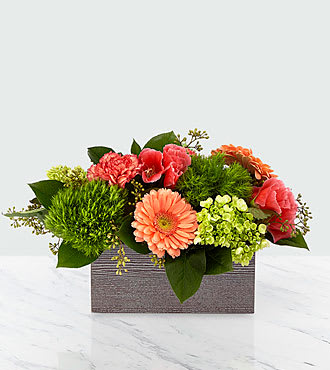
The Hello Gorgeous Bouquet from Bloom Central is a simply breathtaking floral arrangement - like a burst of sunshine and happiness all wrapped up in one beautiful bouquet. Through a unique combination of carnation's love, gerbera's happiness, hydrangea's emotion and alstroemeria's devotion, our florists have crafted a bouquet that blossoms with heartfelt sentiment.
The vibrant colors in this bouquet will surely brighten up any room. With cheerful shades of pink, orange, and peach, the arrangement radiates joy and positivity. The flowers are carefully selected to create a harmonious blend that will instantly put a smile on your face.
Imagine walking into your home and being greeted by the sight of these stunning blooms. In addition to the exciting your visual senses, one thing you'll notice about the Hello Gorgeous Bouquet is its lovely scent. Each flower emits a delightful fragrance that fills the air with pure bliss. It's as if nature itself has created a symphony of scents just for you.
This arrangement is perfect for any occasion - whether it be a birthday celebration, an anniversary surprise or simply just because the versatility of the Hello Gorgeous Bouquet knows no bounds.
Bloom Central takes great pride in delivering only the freshest flowers, so you can rest assured that each stem in this bouquet is handpicked at its peak perfection. These blooms are meant to last long after they arrive at your doorstep and bringing joy day after day.
And let's not forget about how easy it is to care for these blossoms! Simply trim the stems every few days and change out the water regularly. Your gorgeous bouquet will continue blooming beautifully before your eyes.
So why wait? Treat yourself or someone special today with Bloom Central's Hello Gorgeous Bouquet because everyone deserves some floral love in their life!
Barnard Vermont Flower Delivery
Barnard Flower Delivery - Frequently Asked Questions
- Does Bloom Central offer same-day flower delivery in Barnard?
- Yes. Place your order online before 1:00 PM and a local Barnard florist will hand-deliver your arrangement the same day. Orders can also be scheduled up to one month in advance.
- Is it safe to order flowers online?
- Absolutely! We utilize a secure, encrypted checkout to protect your personal and payment information. Visa, Mastercard, American Express, Discover, PayPal and Klarna are all accepted.
- What funeral homes does Bloom Central deliver sympathy flowers to in Barnard?
- We hand-deliver sympathy and memorial floral arrangements to all funeral homes near Barnard, including: Holden Memorials, Hope Cemetery, Knight Funeral Homes & Crematory, Pruneau-Polli Funeral Home, Ricker Funeral Home & Crematory, Rock of Ages, Roy Funeral Home, Stringer Funeral Home, Twin State Monuments, VT Veterans Memorial Cemetery.
- What nearby cities does Bloom Central also deliver flowers to?
- In addition to Barnard, we deliver fresh flowers to many nearby cities including: Bridgewater, Woodstock, Royalton, Sharon, Bethel, Hartford, Hartland, Chittenden
- What are the most popular flower arrangements at the Barnard florist?
- Three of our most popular arrangements at our Barnard florist are: Peachy Pumpkin ($59.90), Fate Luxury Rose Bouquet - 48 Stems of 24-inch Premium Long-Stemmed Roses ($299.90), Gracefuls Bouquet ($49.90). All are available for same-day delivery.
More About Barnard
Are looking for a Barnard florist because you are not local to the area? If so, here is a brief travelogue of what Barnard has to offer. Who knows, perhaps you'll be intrigued enough to come visit soon, partake in some of the fun activities Barnard has to offer and deliver flowers to your loved one in person!
Barnard, Vermont, hides in plain sight. The town perches on the eastern edge of the Green Mountains, a place so small it risks being mistaken for a typo on a map. Visitors driving Route 12 might blink and miss the turnoff, but those who slow down, who let the two-lane road unspool at its own pace, find a village that feels both lost in time and fiercely present. This is the paradox of Barnard: a community where the past isn’t preserved so much as lived, where the rhythms of daily life sync with the creak of porch swings and the rustle of sugar maples in October.
Silver Lake anchors the town like a liquid compass. In summer, kids cannonball off docks while parents wave from Adirondack chairs. Canoes drift under skies so blue they hum. Come winter, ice fishermen drill holes and swap stories, their breath hanging in clouds that vanish toward the hills. The lake freezes thick enough to hold the weight of pickup trucks, yet locals still test it with cautious boots each December, a ritual as old as the barns dotting the valleys.

Same day service available. Order your Barnard floral delivery and surprise someone today!
The Barnard General Store operates as the town’s nerve center. Its wooden floors groan underfoot, and the shelves sag with mason jars of local honey, knit mittens, and artisanal cheeses that taste like the earth feels in spring. The cashier knows everyone by name, asks about your mother’s knee surgery, and remembers you take two sugars in your coffee. Conversations here aren’t transactions. They’re updates in a collective oral history, a chronicle of births, harvests, and the stubborn persistence of frost heaves on back roads.
Drive past the store and you’ll find farmstands unmanned but for honor-system cigar boxes. Tomatoes still warm from the sun cost a quarter. Zucchinis the size of forearms go for free. Trust here isn’t a virtue but a default setting, as innate as the instinct to wave at every passing car, even if you don’t recognize the driver.
The surrounding hills cradle the town in a way that feels maternal. Hiking trails wind through forests so dense they mute cell signals, forcing hikers to confront an unfamiliar silence. This isn’t wilderness for postcard vistas. It’s a place where you notice the fractal veins of a fern, the way light filters through hemlocks, the fact that your own heartbeat syncs with the crunch of leaves underfoot.
Barnard’s residents include carpenters who measure twice and cut once, teachers who’ve taught three generations of the same family, and retirees who spend mornings tending gardens that could supply a midsize grocery. Teenagers lob baseballs at the town field until dusk, their laughter echoing off the library’s granite steps. The library itself is a converted 19th-century church, its stained glass replaced by shelves of paperback mysteries and DVDs, but the reverence remains.
Autumn sharpens the air into something crystalline. Leaf peepers migrate through, cameras aimed at foliage that burns redder here than seems botanically possible. Locals nod politely but keep routines unchanged, split firewood, patch roofs, stockpile jars of pickled beets. They know the tourists will leave by November, taking their noise with them, leaving the land to exhale into winter.
There’s a particular grace to how Barnard resists the 21st century’s centrifugal force. No traffic lights interrupt the flow. No chain stores dilute the character. The town hall hosts potlucks where casseroles outnumber attendees, and debates over road repairs turn into poetry. People show up. They argue, then they laugh. They remember that progress doesn’t have to mean rupture.
To call Barnard quaint feels condescending. Quaint implies a diorama, a stage set. This place is too alive for that. Its beauty isn’t performed. It’s accumulated, layer upon layer of small gestures, shared labor, and the quiet understanding that a town survives by tending its roots as surely as its trees. You leave Barnard wondering why everywhere else feels so loud, so frantic, so intent on becoming rather than being. And then you realize: It’s because most places aren’t Barnard.