





- Best Value
- Best Sellers
- Under $60
 $49.90



- $49.90

June 1, 2026
Pittsford June Floral Selection
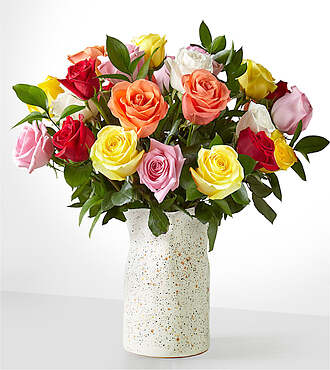
The Bloom Central flower delivery of the month for June in Pittsford is the Long Stem Red Rose Bouquet
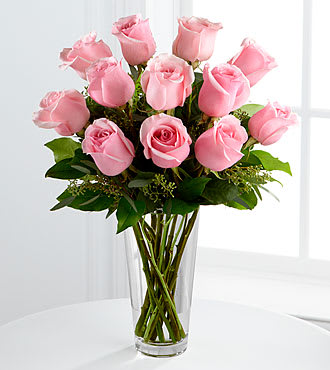
Introducing the exquisite Long Stem Red Rose Bouquet from Bloom Central, a floral arrangement that is sure to steal her heart. With its classic and timeless beauty, this bouquet is one of our most popular, and for good reason.
The simplicity of this bouquet is what makes it so captivating. Each rose stands tall with grace and poise, showcasing their velvety petals in the most enchanting shade of red imaginable. The fragrance emitted by these roses fills the air with an intoxicating aroma that evokes feelings of love and joy.
A true symbol of romance and affection, the Long Stem Red Rose Bouquet captures the essence of love effortlessly. Whether you want to surprise someone special on Valentine's Day or express your heartfelt emotions on an anniversary or birthday, this bouquet will leave the special someone speechless.
What sets this bouquet apart is its versatility - it suits various settings perfectly! Place it as a centerpiece during candlelit dinners or adorn your living space with its elegance; either way, you'll be amazed at how instantly transformed your surroundings become.
Purchasing the Long Stem Red Rose Bouquet from Bloom Central also comes with peace of mind knowing that they source only high-quality flowers directly from trusted growers around the world.
If you are searching for an unforgettable gift that speaks volumes without saying a word - look no further than the breathtaking Long Stem Red Rose Bouquet from Bloom Central! The timeless beauty, delightful fragrance and effortless elegance will make anyone feel cherished and loved. Order yours today and let love bloom!
Pittsford Florist
Pittsford Flower Delivery - Frequently Asked Questions
- Does Bloom Central offer same-day flower delivery in Pittsford?
- Yes. Place your order online before 1:00 PM and a local Pittsford florist will hand-deliver your arrangement the same day. Orders can also be scheduled up to one month in advance.
- Is it safe to order flowers online?
- Absolutely! We utilize a secure, encrypted checkout to protect your personal and payment information. Visa, Mastercard, American Express, Discover, PayPal and Klarna are all accepted.
- What funeral homes does Bloom Central deliver sympathy flowers to in Pittsford?
- We hand-deliver sympathy and memorial floral arrangements to all funeral homes near Pittsford, including: Baker Funeral Home, Brewer Funeral Home, Holden Memorials, Hope Cemetery, Knight Funeral Homes & Crematory, Pruneau-Polli Funeral Home, Ricker Funeral Home & Crematory, Rock of Ages, Roy Funeral Home, Stringer Funeral Home, Twin State Monuments, VT Veterans Memorial Cemetery.
- What nearby cities does Bloom Central also deliver flowers to?
- In addition to Pittsford, we deliver fresh flowers to many nearby cities including: Proctor, West Rutland, Brandon, Rutland, Castleton, Chittenden, Mendon, Leicester
- What are the most popular flower arrangements at the Pittsford florist?
- Three of our most popular arrangements at our Pittsford florist are: Greater Glory Basket ($119.90), Blooming Embrace Bouquet ($59.90), Bit of Sunshine Basket ($109.90). All are available for same-day delivery.
More About Pittsford
Are looking for a Pittsford florist because you are not local to the area? If so, here is a brief travelogue of what Pittsford has to offer. Who knows, perhaps you'll be intrigued enough to come visit soon, partake in some of the fun activities Pittsford has to offer and deliver flowers to your loved one in person!
Pittsford, Vermont, sits in the kind of New England landscape that makes you wonder if someone’s quietly orchestrating the seasons just to show off. The town is small enough that the postmaster knows your ZIP code before you finish saying hello, yet expansive in the way its hills hold the morning fog like a breath. People here move with the unhurried rhythm of those who understand that urgency is a language spoken elsewhere. The Otter Creek carves through the valley, patient and brown, its surface flickering with the shadows of maples that have been turning gold every October since before the first railroad maps forgot to include this place.
You notice things here. A boy in a red jacket waits for the school bus beside a mailbox shaped like a barn, kicking pebbles into the drainage ditch while his breath hangs in the air. A woman in gardening gloves waves to the UPS driver, who already has her package half-out the window. The driver’s name is probably Stan. Stan knows everyone. The town hums with these minor intimacies, the kind that accumulate over decades until they become a sort of infrastructure. You can’t build a sidewalk from them, but you also can’t have a community without them.

Same day service available. Order your Pittsford floral delivery and surprise someone today!
The general store sells pickled eggs and light bulbs. The floorboards creak in a Morse code of foot traffic, farmers at dawn buying coffee, kids after school clutching dollar bills for candy, retirees debating the merits of propane heaters versus wood stoves. The cashier, a high school sophomore named Kaylee, memorizes your order by the third visit. She’ll nod at your usual sandwich before you ask. There’s a dignity in this, a sense that being known is its own currency.
Autumn is the town’s secret collaborator. Maples ignite. Pumpkins appear on porches overnight, as if the soil itself decided to decorate. The elementary school’s annual Harvest Fest draws families to the green, where kids bob for apples and adults sip cider, their laughter sharp in the crisp air. You’ll see a man in a flannel shirt teaching his granddaughter how to stack hay bales into a maze. He doesn’t say much. He shows. She watches, then mimics. The lesson is in the doing.
Winter arrives like a librarian, shushing the world under snow. Plows scrape Route 7 before dawn. Smoke curls from chimneys. At the town garage, salt trucks idle like half-awake dragons. Children sled down the hill behind the library, their mittens caked in ice, their cheeks the color of radishes. An old-timer at the diner remarks that cold this pure used to be normal. He says it like he’s worried someone might try to improve it.
Spring thaws the fields into mud. Sugar houses exhale steam. The high school baseball team practices in hats and gloves, their breath visible as they sprint between drills. A teacher in her 60s spends weekends pruning the lilacs around the historical society, telling anyone who lingers that these bushes were planted by a Civil War widow. The story may be apocryphal, but the blossoms are real.
Summer is green and loud with cicadas. The library runs a reading program where kids track hours like junior academics. A farmer down on Furnace Road lets tourists pet his calves. The Methodist church hosts a weekly potluck, and the salads all have mayonnaise in them. At dusk, neighbors walk dogs along the creek, nodding as they pass. Fireflies rise from the tall grass.
What’s easy to miss, if you’re just passing through, is how much intention lives here. The way the town council debates sidewalk repairs with the gravity of philosophers. How the volunteer fire department practices drills every Tuesday, voices crackling over radios. The fact that the middle school’s lone French teacher has handwritten every conjugation chart since 1998. It’s a place that persists not by accident but by choice, a thousand choices, made daily by people who understand that a town isn’t something you have. It’s something you do.
You leave thinking about the word “enough.” The hills are enough. The creek is enough. The way the librarian says “See you next week” is enough. In a world that spins on the fuel of more, Pittsford suggests another metric, one measured in frost heaves and potluck napkins and the quiet certainty that you belong to a map smaller, and more precise, than any app could ever zoom.