





- Best Value
- Best Sellers
- Thank You
 $49.90




- $49.90
- $79.90
July 1, 2026
La Conner July Floral Selection
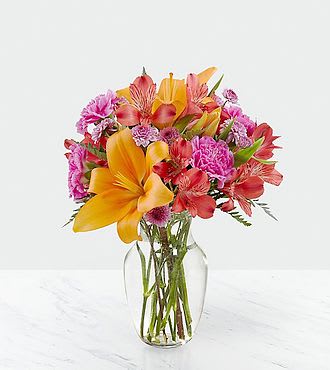
The Bloom Central flower delivery of the month for July in La Conner is the Happy Day Bouquet
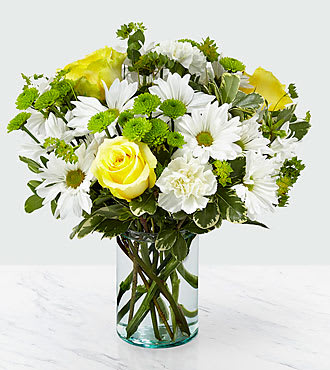
The Happy Day Bouquet from Bloom Central is simply adorable. This charming floral arrangement is perfect for brightening up any room in your home. It features a delightful mix of vibrant flowers that will instantly bring joy to anyone who sees them.
With cheery colors and a playful design the Happy Day Bouquet is sure to put a smile on anyone's face. The bouquet includes a collection of yellow roses and luminous bupleurum plus white daisy pompon and green button pompon. These blooms are expertly arranged in a clear cylindrical glass vase with green foliage accents.
The size of this bouquet is just right - not too big and not too small. It is the perfect centerpiece for your dining table or coffee table, adding a pop of color without overwhelming the space. Plus, it's so easy to care for! Simply add water every few days and enjoy the beauty it brings to your home.
What makes this arrangement truly special is its versatility. Whether you're celebrating a birthday, anniversary, or simply want to brighten someone's day, the Happy Day Bouquet fits the bill perfectly. With timeless appeal makes this arrangement is suitable for recipients of all ages.
If you're looking for an affordable yet stunning gift option look no further than the Happy Day Bouquet from Bloom Central. As one of our lowest priced arrangements, the budget-friendly price allows you to spread happiness without breaking the bank.
Ordering this beautiful bouquet couldn't be easier either. With Bloom Central's convenient online ordering system you can have it delivered straight to your doorstep or directly to someone special in just a few clicks.
So why wait? Treat yourself or surprise someone dear with this delightful floral arrangement today! The Happy Day Bouquet will undoubtedly uplift spirits and create lasting memories filled with joy and love.
La Conner Florist
La Conner Flower Delivery - Frequently Asked Questions
- Does Bloom Central offer same-day flower delivery in La Conner?
- Yes. Place your order online before 1:00 PM and a local La Conner florist will hand-deliver your arrangement the same day. Orders can also be scheduled up to one month in advance.
- Is it safe to order flowers online?
- Absolutely! We utilize a secure, encrypted checkout to protect your personal and payment information. Visa, Mastercard, American Express, Discover, PayPal and Klarna are all accepted.
- What funeral homes does Bloom Central deliver sympathy flowers to in La Conner?
- We hand-deliver sympathy and memorial floral arrangements to all funeral homes near La Conner, including: Affordable Burial & Cremation Services, Burley Funeral Chapel, Choice Cremations of The Cascades, Fernhill Cemetery, Radiant Heart After-Care for Pets, Solie Funeral Home & Crematory.
- What nearby cities does Bloom Central also deliver flowers to?
- In addition to La Conner, we deliver fresh flowers to many nearby cities including: Whidbey Island Station, Mount Vernon, Oak Harbor, Burlington, Lake Ketchum, Anacortes, Stanwood, Big Lake
- What are the most popular flower arrangements at the La Conner florist?
- Three of our most popular arrangements at our La Conner florist are: Pure Beauty Mixed Roses ($84.90), Always Smile Luxury Bouquet ($99.90), Blooming Visions Bouquet ($69.90). All are available for same-day delivery.
More About La Conner
Are looking for a La Conner florist because you are not local to the area? If so, here is a brief travelogue of what La Conner has to offer. Who knows, perhaps you'll be intrigued enough to come visit soon, partake in some of the fun activities La Conner has to offer and deliver flowers to your loved one in person!
La Conner, Washington, sits like a quiet dare at the edge of the Swinomish Channel, a town that seems both stubbornly present and half-dreamed, its wood-frame buildings huddled close as if swapping secrets about the tides. The air here carries the tang of salt and silt, the kind of smell that makes you feel like you’ve inhaled a memory before you’ve even made one. To walk its streets is to move through a paradox: a place that insists on its smallness even as it opens into vistas so wide they swallow time. The water glints steel-gray under Pacific Northwest skies, and the bridges, oh, the bridges, curve over the channel like questions posed by an engineer-poet, their spans connecting not just land but eras. On one side, a marina bobs with boats that have names like wayward children; on the other, a bluff rises steeply, crowned with old Victorians that peer down like benign grandparents.
The town’s heartbeat is its boardwalk, a plank-lined path where locals and visitors perform a kind of slow, mutual courtship. Artists in cluttered studios wave at passersby, their hands smudged with clay or paint, while shopkeepers arrange sea-glass jewelry in windows as carefully as if displaying relics. You notice how everyone here seems to have a project, a knit scarf half-done, a garden plot spilling kale, a quiet rebuttal to the notion that productivity requires frenzy. At the co-op, a teenager bags heirloom apples with the focus of a monk, and you wonder if the apples taste better here because they’re weighed by hands that know them.

Same day service available. Order your La Conner floral delivery and surprise someone today!
Beyond the channel, the Skagit Valley unfurls in quilted patches of farmland, a geometry so lush it feels like a shared hallucination. In spring, tulip fields ignite the horizon, their colors so violent and pure they seem to shout at the gray sky. Farmers move through rows with the patience of saints, their boots sucking at mud that’s been fertile since before the word “sustainable” became a mantra. Migratory birds pause here, too, great snow geese that descend in legions, their calls stitching the air. You get the sense that this land has been a waystation for centuries, a place where things stop not because they’re tired, but because they’ve remembered something beautiful.
Back in town, the museum perches on a hill, its rooms filled with the art of Northwest Coast Indigenous peoples, totem poles that stretch toward the ceiling, masks that hold whole stories in their grooves. The docent speaks softly about continuity, her fingers brushing a woven basket’s edge as if it might wake. Outside, a heron stands motionless in the marsh, its reflection doubling its grace. You think about how some places refuse to be merely scenery. La Conner doesn’t want your awe; it asks your attention.
By dusk, the light turns the channel to liquid gold, and the bridges become silhouettes. Couples stroll with no particular urgency, their laughter mingling with the creak of dock lines. A fisherman mends his net on the wharf, each knot tied with a rhythm that suggests music. You realize, suddenly, that the town’s charm isn’t in its postcard views or its quirky shops, it’s in the way it holds time. Not frozen, not sped up, but gently cradled, like something both precious and ordinary. The wind picks up, carrying the scent of rain that hasn’t fallen yet. You feel the odd urge to apologize for ever having been in a hurry.
Later, driving east, you glance back. The town’s lights flicker like distant ships, and you understand why people come here. It’s not to escape, but to remember how small a life can be and how vast. La Conner stays with you, not as a destination, but as a quiet argument against the lie that bigger means better, that faster means alive.