




- Anniversary
- Best Sellers
- Under $100
 $69.90

June 1, 2026
Kiel June Floral Selection
The Bloom Central flower delivery of the month for June in Kiel is the High Style Bouquet
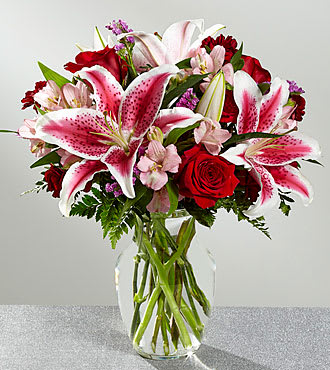
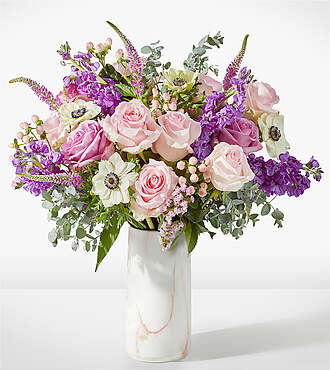
Introducing the High Style Bouquet from Bloom Central. This bouquet is simply stunning, combining an array of vibrant blooms that will surely brighten up any room.
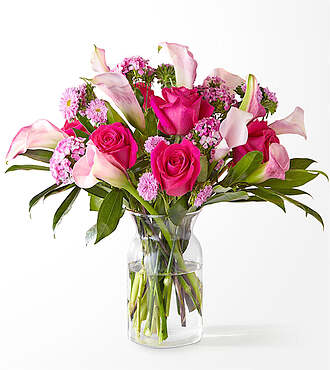
The High Style Bouquet contains rich red roses, Stargazer Lilies, pink Peruvian Lilies, burgundy mini carnations, pink statice, and lush greens. All of these beautiful components are arranged in such a way that they create a sense of movement and energy, adding life to your surroundings.
What makes the High Style Bouquet stand out from other arrangements is its impeccable attention to detail. Each flower is carefully selected for its beauty and freshness before being expertly placed into the bouquet by skilled florists. It's like having your own personal stylist hand-pick every bloom just for you.
The rich hues found within this arrangement are enough to make anyone swoon with joy. From velvety reds to soft pinks and creamy whites there is something here for everyone's visual senses. The colors blend together seamlessly, creating a harmonious symphony of beauty that can't be ignored.
Not only does the High Style Bouquet look amazing as a centerpiece on your dining table or kitchen counter but it also radiates pure bliss throughout your entire home. Its fresh fragrance fills every nook and cranny with sweet scents reminiscent of springtime meadows. Talk about aromatherapy at its finest.
Whether you're treating yourself or surprising someone special in your life with this breathtaking bouquet from Bloom Central, one thing remains certain: happiness will blossom wherever it is placed. So go ahead, embrace the beauty and elegance of the High Style Bouquet because everyone deserves a little luxury in their life!
Kiel Wisconsin Flower Delivery
Kiel Flower Delivery - Frequently Asked Questions
- Does Bloom Central offer same-day flower delivery in Kiel?
- Yes. Place your order online before 1:00 PM and a local Kiel florist will hand-deliver your arrangement the same day. Orders can also be scheduled up to one month in advance.
- Is it safe to order flowers online?
- Absolutely! We utilize a secure, encrypted checkout to protect your personal and payment information. Visa, Mastercard, American Express, Discover, PayPal and Klarna are all accepted.
- What hospitals and care facilities does Bloom Central deliver to in Kiel?
- We deliver fresh flower arrangements to all hospitals, nursing homes and care facilities in Kiel Wisconsin, including: Care Partners Kiel, Field Of Dreams Assisted Living, Oak Creek Assisted Living - Kiel, Pathways To A Better Life 1, Pathways To A Better Life 2.
- What funeral homes does Bloom Central deliver sympathy flowers to in Kiel?
- We hand-deliver sympathy and memorial floral arrangements to all funeral homes near Kiel, including: Harrigan Parkside Funeral Home, Knollwood Memorial Park, Olson Funeral Home & Cremation Service, Pfeffer Funeral Home & All Care Cremation Center, Reinbold Novak Funeral Home, Zabels Modern Monument.
- What churches does Bloom Central deliver flowers to in Kiel?
- We deliver fresh floral arrangements to all churches and places of worship in Kiel, including: Saint Peters United Church Of Christ.
- What nearby cities does Bloom Central also deliver flowers to?
- In addition to Kiel, we deliver fresh flowers to many nearby cities including: Schleswig, New Holstein, Rhine, Elkhart Lake, Meeme, Herman, Greenbush, Chilton
- What are the most popular flower arrangements at the Kiel florist?
- Three of our most popular arrangements at our Kiel florist are: Apple Picking Bouquet ($44.90), Musings Luxury Calla Lily Bouquet by Vera Wang ($397.90), Hope and Serenity Bouquet ($79.90). All are available for same-day delivery.
More About Kiel
Are looking for a Kiel florist because you are not local to the area? If so, here is a brief travelogue of what Kiel has to offer. Who knows, perhaps you'll be intrigued enough to come visit soon, partake in some of the fun activities Kiel has to offer and deliver flowers to your loved one in person!
Kiel, Wisconsin, sits in the sort of American geography that doesn’t make postcards but carves itself into memory through textures: the hum of cicadas in August maples, the soft clatter of screen doors, the way light slants over cornfields at dusk like something poured from a pitcher. This is a town where the past isn’t preserved behind glass but lingers in the grain of daily life, a place where the railroad tracks still cut through the center like a spine, their occasional freight groans a reminder that some rhythms endure even as the world beyond accelerates into abstraction. To drive into Kiel is to enter a paradox: a community both stubbornly specific and quietly universal, a pocket of the Upper Midwest where the word “neighbor” remains a verb.
The first thing you notice is the soundscape. Mornings here begin with the chatter of black-capped chickadees, the hiss of sprinklers arcing over lawns, the creak of porch swings bearing the weight of generations. By midday, the whir of machinery from small factories blends with the laughter of kids pedaling bikes down Fremont Street, backpacks flapping. The local bakery, a family-run operation with a hand-painted sign, emits buttery warmth that seeps into the sidewalk, and you’ll find no QR codes on its menu, just laminated sheets recommending the cherry strudel. At the hardware store, a clerk might pause mid-transaction to explain the difference between galvanized and stainless steel nails, not because you asked but because he senses you’re the sort who cares about getting it right.

Same day service available. Order your Kiel floral delivery and surprise someone today!
What Kiel lacks in grandeur it compensates for in density, of stories, of care. The high school’s football field doubles as a communal living room every Friday night, where touchdowns are celebrated with the same vigor as the marching band’s off-key crescendo. The public library, a redbrick relic with creaky floors, hosts toddlers for story hour and retirees for genealogy workshops, its shelves curated by a woman who remembers every book you borrowed in sixth grade. Even the sidewalks seem designed for connection: wide enough for two strollers to pass side by side, dotted with benches where elders hold court, their conversations punctuated by waves at familiar trucks.
History here isn’t a museum exhibit but a living layer. The old depot, now a museum, displays photos of Swiss immigrants who settled the area, their stern faces belying the grit required to turn marshland into homesteads. Their descendants still farm those fields, though the tractors have GPS now, and the annual Community Days festival mixes polka with pop covers, the beer tents replaced by stands selling rhubarb pie and lemon shake-ups. The fire department’s pancake breakfast, a fundraiser so popular it requires traffic cones, draws families in Packers jerseys and church groups debating the merits of maple versus blueberry syrup.
Yet Kiel isn’t frozen in amber. Solar panels glint atop barns, and the tech-ed class at the high school builds drones to monitor crop health. The Sheboygan River, once a utilitarian channel for industry, now teems with kayaks on summer weekends, its banks threaded with trails where teenagers snap selfies and couples push strollers. Progress here isn’t a bulldozer but a trowel, incremental, deliberate, rooted in consensus. When the town debated renovating the park pavilion, the meeting lasted three hours but ended with handshakes, a compromise that added ADA ramps while preserving the original cedar shingles.
To outsiders, such details might feel small, even quaint. But to linger here is to sense the calculus undergirding it all: a community that measures success not in skyline height but in continuity, in the ability to hand down a world where front porches face each other, where the loss of a single tree on Main Street sparks a fundraiser, where the word “we” still does heavy lifting. In an era of fracture, Kiel feels less like a throwback than a blueprint, a reminder that the future might depend not on reinvention but on tending, patiently, to what’s already here.