





- Love & Romance
- Best Sellers
- Sympathy
 $69.90



- $297.90
- $64.90





July 1, 2026
Pulaski July Floral Selection
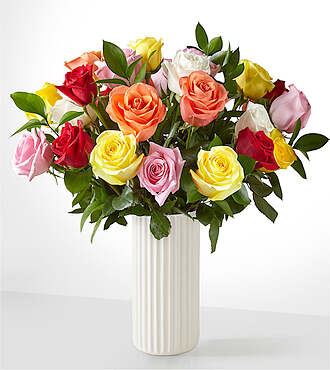
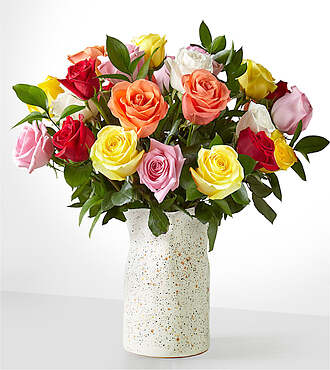
The Bloom Central flower delivery of the month for July in Pulaski is the Graceful Grandeur Rose Bouquet
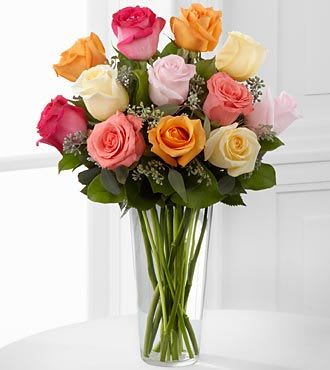
The Graceful Grandeur Rose Bouquet from Bloom Central is simply stunning. With its elegant and sophisticated design, it's sure to make a lasting impression on the lucky recipient.
This exquisite bouquet features a generous arrangement of lush roses in shades of cream, orange, hot pink, coral and light pink. This soft pastel colors create a romantic and feminine feel that is perfect for any occasion.
The roses themselves are nothing short of perfection. Each bloom is carefully selected for its beauty, freshness and delicate fragrance. They are hand-picked by skilled florists who have an eye for detail and a passion for creating breathtaking arrangements.
The combination of different rose varieties adds depth and dimension to the bouquet. The contrasting sizes and shapes create an interesting visual balance that draws the eye in.
What sets this bouquet apart is not only its beauty but also its size. It's generously sized with enough blooms to make a grand statement without overwhelming the recipient or their space. Whether displayed as a centerpiece or placed on a mantelpiece the arrangement will bring joy wherever it goes.
When you send someone this gorgeous floral arrangement, you're not just sending flowers - you're sending love, appreciation and thoughtfulness all bundled up into one beautiful package.
The Graceful Grandeur Rose Bouquet from Bloom Central exudes elegance from every petal. The stunning array of colorful roses combined with expert craftsmanship creates an unforgettable floral masterpiece that will brighten anyone's day with pure delight.
Pulaski Wisconsin Flower Delivery
Pulaski Flower Delivery - Frequently Asked Questions
- Does Bloom Central offer same-day flower delivery in Pulaski?
- Yes. Place your order online before 1:00 PM and a local Pulaski florist will hand-deliver your arrangement the same day. Orders can also be scheduled up to one month in advance.
- Is it safe to order flowers online?
- Absolutely! We utilize a secure, encrypted checkout to protect your personal and payment information. Visa, Mastercard, American Express, Discover, PayPal and Klarna are all accepted.
- What hospitals and care facilities does Bloom Central deliver to in Pulaski?
- We deliver fresh flower arrangements to all hospitals, nursing homes and care facilities in Pulaski Wisconsin, including: Hil Maple Crest, Sun Valley Homes II The Pines.
- What funeral homes does Bloom Central deliver sympathy flowers to in Pulaski?
- We hand-deliver sympathy and memorial floral arrangements to all funeral homes near Pulaski, including: Appleton Highland Memorial Park, Blaney Funeral Home, Fort Howard Memorial Park, Hansen Family Funeral & Cremation Services, Hansen-Onion-Martell Funeral Home, Harrigan Parkside Funeral Home, Jones Funeral Service, Lyndahl Funeral Home, Malcore Funeral Home & Crematory, Malcore Funeral Homes, McMahons Funeral Home, Muehl-Boettcher Funeral Home, Newcomer Funeral Home, Nicolet Memorial Park, Pfeffer Funeral Home & All Care Cremation Center, Proko-Wall Funeral Home & Crematory, Simply Cremation, Wichmann Funeral Homes & Crematory.
- What nearby cities does Bloom Central also deliver flowers to?
- In addition to Pulaski, we deliver fresh flowers to many nearby cities including: Pittsfield, Chase, Angelica, Lessor, Little Suamico, Morgan, Suamico, Howard
- What are the most popular flower arrangements at the Pulaski florist?
- Three of our most popular arrangements at our Pulaski florist are: Tricks and Treats Pumpkin ($59.90), Springtime Spritz Bouquet ($64.90), Graceful Garden Basket ($69.90). All are available for same-day delivery.
More About Pulaski
Are looking for a Pulaski florist because you are not local to the area? If so, here is a brief travelogue of what Pulaski has to offer. Who knows, perhaps you'll be intrigued enough to come visit soon, partake in some of the fun activities Pulaski has to offer and deliver flowers to your loved one in person!
The town of Pulaski, Wisconsin, sits in the soft crease of the state’s eastern elbow, a place where the sky stretches itself thin over soybean fields and the air smells like cut grass and possibility. If you’ve never heard of it, that’s part of the point. Pulaski doesn’t announce itself. It exists in the way a sturdy oak does, rooted, patient, quietly generous with its shade. Drive through on a Tuesday morning, and you’ll see the high school’s marquee blinking reminders about bake sales, the fire station’s bay doors open like arms, the diner’s neon sign humming a pink promise of pie. This is a town where the sidewalks roll up by nine, but not before everyone’s had a chance to wave at someone they recognize.
What’s immediately striking is the way time moves here. It doesn’t so much pass as pool. In Pulaski, you can still find a hardware store that lets you open an account on a handshake, a library where the librarian knows your kids’ reading levels, and a park where the swings’ chains creak in a wind that carries the gossip of crows. The pulse of the place is syncopated by seasons: winters that turn the world into a snow globe, springs so green they hurt your eyes, summers that smell of tractor oil and lilac, autumns that crisp the edges of every leaf into a copper hymn. People here measure years not in deadlines but in rituals, the Friday fish fry, the Memorial Day parade, the way the entire town seems to pause when the Friday-night football score tightens.

Same day service available. Order your Pulaski floral delivery and surprise someone today!
The heart of Pulaski, though, isn’t in its calendar but in its contradictions. This is a community built by immigrants, Polish farmers, Belgian tradesmen, German dreamers, who carved lives out of the stubborn Midwest soil. Their legacy isn’t just in the St. Edward’s spire or the polka festivals that still draw accordion-lovers from three states over. It’s in the way people here hold both grit and grace in the same hand. A farmer might spend dawn to dusk wrestling with a combine, then come home and plant tulips along his driveway because “they look nice.” A retired teacher might spend her mornings tutoring kids for free, her afternoons birdwatching with the zeal of a ornithologist. There’s a quiet understanding here that beauty and labor aren’t enemies but cousins.
Walk into the Family Restaurant on Main Street, and you’ll see vinyl booths full of men in seed caps debating the merits of four-wheel drive, teens in band uniforms laughing over milkshakes, a grandmother tracing her finger down a menu as if it were a sacred text. The coffee is bottomless, the waitress knows your usual, and the pie crusts are flaky enough to make you forgive all manner of human sin. It’s easy to romanticize this, to frame it as a relic of some lost Americana. But Pulaski isn’t nostalgic. It’s too busy adapting. The same families that once milked cows now write code in home offices above their garages. The same streets that hosted horse-drawn buggies hum with the electric buzz of school buses. Progress here isn’t a threat; it’s just another crop to tend.
Maybe that’s the thing about Pulaski: It believes in continuity. The creek that snakes behind the elementary school still freezes thick enough for skating. The same oak that shaded picnics in 1932 still drops acorns onto pickup trucks. And every summer, when the fair comes to town, the Ferris wheel lights blink the same pattern they have for decades, a Morse code message that says, improbably, joyfully, We’re still here. You get the sense, standing under those lights, that this is a town built not just on geography but on a kind of faith: that smallness is not a limitation, that community is a verb, that some places manage to be both a sanctuary and a compass.
Pulaski, in the end, feels less like a dot on a map than a hand on your shoulder. It reminds you that the world is vast, yes, but it’s also possible to live in a way that doesn’t shrink from that vastness, to plant tulips, to wave at strangers, to rise early and tend to something.